
Andoni: A certain distance and coolness exists between Albania and Kosovo
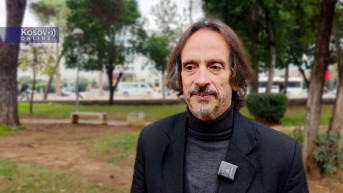
Tirana-based political analyst Ben Andoni told Kosovo Online that relations between Albania and Kosovo continued to be burdened by a lack of closeness and concrete cooperation.
“The prime ministers and presidents of the two countries, with minor variations in protocol, traditionally gather in Vlora to celebrate Flag Day together. In recent years, this has become something of a ritual, particularly since Kosovo declared independence. It is the ceremonial aspect that connects the two countries, but over time, because of the conflict between Rama and Kurti, we have seen that sometimes the Kosovo Prime Minister attends the celebration and sometimes the President. This is the only occasion when the two countries find some kind of common ground, if we can call it that,” Andoni said.
He stressed that Flag Day should be marked in a more festive manner.
“We are supposedly in a status quo, but that does not justify the lack of closeness between our two countries, which should be much closer. This year’s Flag Day has a particular dimension because a protest will be held in Tirana on the same day and, at least according to the organizers’ announcements, it is expected to draw a very large turnout. In Kosovo, I believe everything will be much more subdued, since this is not the anniversary of any major event, so the commemoration will be more in line with protocol,” Andoni said.
Speaking about changes in the attitude of Kosovo citizens toward Albania, Andoni noted that immediately after Kosovo declared independence, there had been a particularly strong attachment to Albania among the population, but that this had changed over time.
“In the first years of Kosovo’s statehood, citizens generally had great admiration for Albania. Initially, this was linked to nostalgia and inertia—that is, feelings that had developed before the 1990s, when Albania and Kosovo were isolated from one another. After the 1990s, the Kosovo diaspora began coming to Albania, while relations between Yugoslavia and Albania became somewhat more liberalized. Support for national unification was also very high according to public opinion polls at the time, although it declined over the years. I do not know exactly where it stands today, but support for unification with Albania could be around 70 percent, compared with 99 percent at that time. I believe politicians, particularly in Kosovo, have had a major influence on shaping a distinct state identity, giving it specific identity characteristics and thereby distinguishing it from Albania’s clearly defined and historically established identity, which has existed since 1912,” he explained.
He further stressed that a certain degree of distance and coolness existed between Albania and Kosovo.
“This is the result of the maturation of the state of Kosovo, despite the many problems it faces. It is also influenced by the position of official Tirana, which is more focused on the European integration process than on a long-term plan for unification with Kosovo,” Andoni said.
When it comes to economic cooperation, Andoni said that Albania and Kosovo had signed a large number of agreements to date, but that their implementation had not kept pace with the frequency of political meetings and official ceremonies.
“We have around 190 economic agreements with Kosovo. During the nine joint sessions of the two governments, which were discontinued two years ago, a large number of agreements and memoranda were signed. One of the points Mr. Kurti raised, and for which he was also criticized, was that we should first examine how the agreements already reached have been implemented before considering signing new ones. I think Kurti is right in this case. It seems that the two countries have been more concerned with signing agreements and organizing ceremonial events—in other words, ‘selling’ nationalism and emphasizing the closeness between the two countries—than with concrete cooperation. I believe the most significant cooperation has been achieved in the military sphere,” Andoni said.
Speaking about cooperation in the field of national security, he said that Albania and Kosovo cooperated for different reasons and provided mutual assistance.
“And then there is the economy. Today, Kosovo is the only country to which Albania exports more than it imports from it, and that is one of the most important facts we can highlight,” Andoni said.
Turning to relations between Albania and Kosovo in the context of European integration and the issue of the Kosovo Specialist Chambers in The Hague, Andoni said that Tirana was in a different position from Pristina because of its accession negotiations with the European Union.
“The Albanian authorities, because of their position and the negotiating process they are conducting with the European Union, must uphold European standards at all times. This is particularly important at a time when the EU has made it clear to Kosovo that it opposes the proposed amendments to the Law on the Specialist Chambers in The Hague, which is before the Assembly after President Siroka Pulja returned it for reconsideration. This has brought Albania closer to the European Union’s position than Kosovo is. Even in Kosovo, there is no clearly defined position on what the law should look like or how it should be amended. I believe Kosovo will therefore face many problems with the European Union in the future,” Andoni stressed.
He further noted that Albania had currently decided to respect Kosovo’s position opposing the decision in The Hague and that Prime Minister Edi Rama had spoken openly about the issue rather than seeking to influence the judicial proceedings directly.
“Tirana has decided to maintain a certain distance from the opposing positions, bearing in mind that Rama is frequently the target of criticism in Kosovo. On the other hand, in Kosovo, the Democratic Party of Kosovo has taken the leading role in advocating for the protection of the four former KLA commanders, while other parties also support that initiative. Nevertheless, it is clear to them that the proposed amendments to the law will not contribute significantly to their efforts,” Andoni concluded.


0 comments