
Maroevic: Flag Day will test Albanian unity this year, Kurti and Rama facing domestic problems
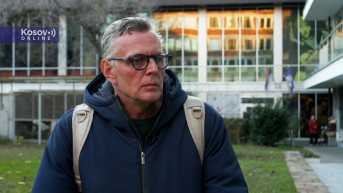
RTS web portal editor Rade Maroevic says that, at present, there are not only problems between Tirana and Pristina, but also internal problems in Kosovo, North Macedonia and Albania, where protests have been taking place for weeks, and that Flag Day will be a test of Albanian unity.
“Kurti is currently facing several problems. The biggest are the verdicts against former KLA commanders, although he does not want to address the issue too openly. There is also pressure from other political parties, as well as from the Democratic League of Kosovo, for investigations into crimes not to end with the period currently covered, but to be extended to the period when supporters of Ibrahim Rugova’s party at the time suffered the greatest losses. In that sense, Kurti’s pressure regarding southern Serbia is partly a consequence of the pressure being exerted on him by political parties that emerged from the KLA and by the Democratic League of Kosovo,” Maroevic told Kosovo Online.
Maroevic noted that Edi Rama was seeking to use European integration to divert attention from the evident problems he was facing domestically, while disagreements also existed among Albanian political parties in North Macedonia.
“Ali Ahmeti and his Democratic Union for Integration would like to return to power and replace the current coalition of Albanian parties, but they have not been able to do so. Therefore, I would say that Flag Day at this moment symbolizes the greatest political disunity within the Albanian political spectrum in the Balkans,” Maroevic stressed.
Speaking about whether Albania and Kosovo had aligned positions regarding the Specialist Chambers in The Hague, Maroevic said that this too remained an open question.
“When we look back at the period from the 1990s to the present day, the Socialists in Albania have always been very close to the KLA, Hashim Thaci and, later, the Democratic Party of Kosovo. On the other hand, Sali Berisha’s Democratic Party was closer to Ibrahim Rugova. This is precisely where the difference in the two parties’ approaches toward Kosovo can be seen, and that difference has remained to this day.
Sali Berisha is also dissatisfied with the fact that Hashim Thaci has been convicted twice within a six-month period, but his approach to those verdicts is not as pronounced or as forceful as Edi Rama’s. Apart from currently viewing this as one of his political assets, Rama also carries a certain historical legacy that he, in a way, has to follow,” Maroevic said.
Asked whether Edi Rama’s potential departure from power would change relations between Tirana and Pristina, Maroevic said that it was currently unclear who could succeed him.
“The Socialist Party in Albania is currently the only major and stable political force. Everything emerging on the political scene, including the protests, still lacks clear political articulation. It may acquire one, or it may not.
If elections were called again, those who have participated in the protests would probably have to form some kind of movement in an attempt to oust Edi Rama’s government. Otherwise, if that does not happen, Edi Rama’s government will continue to dominate the Albanian political scene. He has invested enormous energy in weakening all opposition political parties,” Maroevic concluded.


0 comments