
Andric Rakic: The EU has the strongest interest in resolving Belgrade–Pristina relations
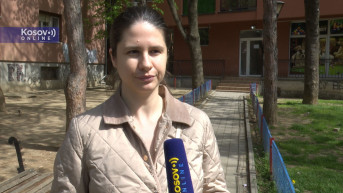
Program Manager of the NGO “New Social Initiative,” Milica Andric Rakic, stated that the Brussels Agreement, signed on this day 13 years ago, remains a topic in both Belgrade and Pristina—but perhaps most of all for the European Union, which, she says, has the greatest interest in resolving their relations in order to continue its enlargement process in the Western Balkans.
“Almost everyone mentions the Brussels Agreement. It remains a topic in Belgrade, in Pristina, and for the European Union as well. Perhaps most of all for the EU, because Belgrade and Pristina have run out of motivation to engage in the dialogue. For some time now, Belgrade has not been able to gain anything from the dialogue. Pristina achieves more through actions outside the dialogue, and the EU is the only party that has the strongest interest—at least on paper. Objectively, both Belgrade and Pristina do have significant reasons to participate in the dialogue, but when you look at actual actions, it is the EU that is most interested in resolving their relations so that it can proceed with enlargement in the Western Balkans,” Andric Rakic told Kosovo Online.
Although, as she notes, everyone refers to it, that does not mean the dialogue process is in a “good phase”—on the contrary, it has effectively not been functioning for some time.
She points out that the reasons why Belgrade and Pristina participate in the dialogue are fundamentally opposed, which undermines the importance of the process and reduces its effectiveness.
She further notes that the European Union consistently insists on dialogue, with the support of the Quint countries and KFOR, but that despite this, there has been no tangible effect.
“Albin Kurti has, over the past four years, achieved much more through actions outside the dialogue and faces few consequences when doing so. That is why there is little incentive for him to engage seriously in the dialogue, particularly in implementing those parts of the Ohrid Agreement that relate to self-governance for the Serbian community. As long as he is able to change realities on the ground outside the dialogue without serious repercussions—why would he move closer to the dialogue? He will continue to pursue a policy that has so far proven highly effective for his objectives and yields far more results than the dialogue,” Andric Rakic explains.
She adds that the problem with such an approach is that it is short-term, and that Kosovo, if it aims to become part of the European Union, will ultimately have to address all aspects of the dialogue.

0 comments