
Antonijevic: EP report summarizes problems of the Serbian community in Kosovo, change in position of non-recognizing EU states just a wish

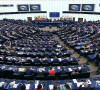
Lawyer Milan Antonijevic believes that the report on Kosovo adopted yesterday by members of the European Parliament is objective, as the EP’s rapporteur for Kosovo, Riho Terras, conveyed the issues faced by the Serbian community in Kosovo, from incidents to the failure to establish the Community of Serb Municipalities, and pointed out shortcomings in the rule of law, as well as certain progress.
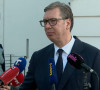
"The report provides a full picture of the state of rights and human rights in Kosovo and sufficiently addresses the Serbian community and the problems it faces in Kosovo. It presents a summary that is also mentioned in other reports by the EU and the State Department. It is a good collection of everything the Serbian community and Kosovo society as a whole are dealing with, and offers an overview of how to overcome this crisis. It also mentions that institutions responsible for elections and the media have been losing independence, particularly in recent months," Antonijevic told Kosovo Online.
Given that Terras, after the report’s adoption, stated at a press conference that he plans to speak with diplomats from the five EU member states that do not recognize Kosovo and will make efforts to achieve progress on recognition, Antonijevic says that such attempts to change the stance of those EU states currently seem somewhat naive.
"Without a clearly open dialogue and the necessary support for such a dialogue, I think it is really hard to expect change. The countries that haven’t recognized Kosovo have done so because of internal political reasons, due to concerns about parts of their own communities possibly attempting something similar to what Kosovo did. Therefore, it is difficult to expect that Spain or some other European countries will change their stance at this moment. That part of the report and his speech reflects certain aspirations, rather than current possibilities or the present balance of power and sentiment within the EU," he explains.
Terras also called on the EU to lift sanctions on Kosovo, but Antonijevic reminds that their introduction was tied to the need to de-escalate the situation.
"If you look at the number of incidents in Kosovo and the unilateral measures Kosovo has taken in recent weeks and months, I am not so sure there is a strong argument for lifting the sanctions. This requires work. I believe the Serbian community should express its view and have the opportunity to speak about the pressures it faces, and that the Kosovo authorities must take this seriously. That is a prerequisite for lifting these measures and for Kosovo to continue on its European path. The European path benefits the Serbian community too, not by skipping steps, but because that path itself provides protection for minority communities and reduces the maneuvering space for anyone involved in negotiations, whether you recognize that state or not. Negotiations benefit minority communities and human rights because, at that stage, EU member states are deeply engaged in evaluating whether a country should progress on the European path based on compliance with these conditions," Antonijevic concluded.

0 comments