
Apostolovic: Serbia Ready for Cluster 3, Membership of Pristina in the Council of Europe Unacceptable
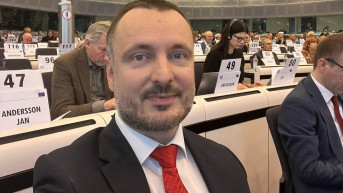
The Head of the Serbian Mission to the EU, Danijel Apostolovic, emphasized today that there is evident progress in Serbia regarding meeting the criteria for EU membership, stating that Serbia has long been ready for the opening of Negotiation Cluster 3 on competition and inclusive growth. However, he noted that Serbia's negotiations with the EU are "held hostage by unfortunate and difficult geopolitical circumstances," adding that Kosovo's membership in the Council of Europe is unacceptable, as reported by RTV.
Apostolovic, speaking at the joint consultative committee of Serbia and the EU, also addressed the Belgrade-Pristina dialogue and the issue of Kosovo's membership in the Council of Europe, stating that the international community and many EU member states should be ashamed of their actions in advocating for Kosovo's membership in the Council of Europe.
"This is at the very least unacceptable. This is a dangerous precedent that will have serious consequences. The entire international community is aware that, as I have already emphasized, Pristina has failed to establish the Community of Serbian Municipalities for 11 years. This is hypocrisy, double standards, and a disregard for their own signature on the Brussels Agreement," said Apostolovic.
Regarding the dialogue with Pristina, he said the situation remains alarming because, as he emphasized, "Pristina continues with provocations and unilateral actions, thus jeopardizing overall peace and stability in the entire region."
"For 11 years, we have been waiting for the establishment of the Community of Serbian Municipalities. So far, I do not see light at the end of this tunnel, nor an appropriate reaction or adequate pressure on Pristina to do so," he noted.
On the other hand, he underscored that Serbia has remained constructive and fulfilled all of its obligations.
"Moreover, the suspension of Serbia's payment transactions and the use of the dinar as a means of payment have made the lives of Serbs in the Province even more unbearable, displacing the Serbian people from Kosovo and Metohija. With this decision, Serbs in the Province are deprived of their earnings - salaries, pensions, and social assistance, putting them on the brink of a humanitarian catastrophe," pointed out Apostolovic.
He added that he will continue to urge all relevant actors to take this issue seriously because, as he emphasized, "it is high time to take responsibility and ultimately prevent the dialogue from failing."
Speaking about EU-Serbia relations and the accession process, Apostolovic emphasized that Serbia continues to implement all necessary reforms related to the EU and reminded that so far, Serbia has opened 22 chapters, of which two have been closed, as well as two clusters under the new methodology.
However, he pointed out that although Cluster 3 has been ready for opening for some time, EU member states, despite the European Commission's recommendations for its opening, still need to reach a consensus on this matter.
"If we look at the criteria, progress is evident, as confirmed in previous EC reports on Serbia," said Apostolovic.
He highlighted the progress Serbia has made in the rule of law and other areas, and all clusters, and stressed that work is underway to further meet the criteria for their opening or closure, which will soon be evident through an accelerated integration and reform agenda within the Growth Plan for the Western Balkans.
"If the accession process had truly been merit-based, Cluster 3 would have already been opened. However, it is now evident that our negotiations are hostages to unfortunate and difficult geopolitical circumstances," said Apostolovic.
He assessed that there is a misunderstanding of Serbia's position, primarily regarding energy dependence on Russia, and that Serbia's support for the territorial integrity and sovereignty of Ukraine, its stance on war at international forums, as well as significant humanitarian aid, are "completely and unjustly overshadowed by the fact that we have not imposed sanctions on Russia."
He also noted that Serbia has proven to be a reliable partner in preventing the circumvention of EU sanctions.
He added that despite all obstacles and the current impasse in EU negotiations, Serbia will continue to do its part, carefully considering and implementing EC recommendations in a transparent and inclusive manner.
"Civil society plays a very important role here. We see you as a significant partner in this process, and I believe that cooperation with the National Convention on the EU has already yielded good results," said Apostolovic, and emphasized that Serbia's mission to the EU will make additional efforts to ensure even better cooperation with civil society organizations.
One of the topics of the joint consultative committee of Serbia and the EU will also be the recent elections in Serbia, Apostolovic emphasized the constructive approach of Serbian political leadership and institutional actors regarding further improvement of electoral conditions through the implementation of ODIHR recommendations.
He emphasized that Serbia is committed to improving the electoral environment and continuing its partnership with OSCE/ODIHR, and that ODIHR has been officially invited to observe the local elections in Belgrade and the upcoming local elections in Serbia.
He emphasized that the highest officials of Serbia, especially President Aleksandar Vucic and former Prime Minister, now President of the National Assembly Ana Brnabic, have shown political will to implement the recommendations from the final ODIHR report.
Apostolovic stressed that Serbia is a sovereign country and that its decisions will be made by its competent institutions, as provided and prescribed by legislation.
The 17th meeting of the Joint Consultative Committee EU-Serbia is taking place in Brussels today, a platform established within the institutional framework of the Stabilization and Association Agreement (SAA) between the EU and Serbia, enabling representatives of the EU and Serbian civil society to monitor accession negotiations, discuss issues of common interest, and express concerns on Serbia's path to the EU.
During the meeting, discussions will be held, among other topics, on the elections in Serbia, the possibilities of the Growth Plan for the Western Balkans in Serbia, as well as the state of the rule of law in Serbia.


0 comments