
Arezina: China will provide support for what Belgrade and Pristina agree upon in the dialogue
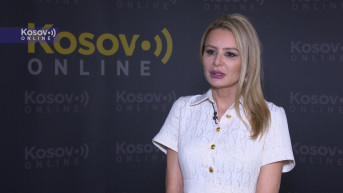
Each of China's investments and projects carried out in Serbia is of great importance to the relationship between the two states, and with each of these projects, these relations reach new, higher levels. Sanja Arezina, an expert in international relations and the author of the book "China in Europe", says in an interview with Kosovo Online regarding the third Belt and Road Forum held in Beijing, during which the Serbian delegation led by President Aleksandar Vucic will sign significant agreements with China.
Regarding whether the expansion of economic cooperation can be a kind of "guarantee" for China's political support for Serbia when it comes to reaching a final solution to the Kosovo issue, especially when the proposal for that solution comes before the UN Security Council, where China has veto power, Arezina suggests that Serbia can expect that Beijing will continue to support it. However, China will use its veto power in the UN Security Council only when its key interests are at stake.
"The Chinese Ambassador has announced that the strategic partnership with Serbia is likely to be elevated to a higher level at some point. Within that partnership, China is strengthening political cooperation, and through all these investments, it shows great trust in its Serbian partners because it is not a small matter to invest $4.2 billion in a country. Following this logic, it is essential for Beijing to protect all these investments. To achieve this, a safe environment is necessary, both in Serbia itself and in the entire region. In this context, the question of Kosovo and its unilateral declaration of independence in 2008 is highly significant. We can expect that China will continue to support Serbia in the near future. Still, at the same time, we must always keep in mind that all major powers, including China, primarily look out for their own interests. Within their interests, China has its key interests, or as it is called, 'core interests', and it is indicative that China only uses its veto in the United Nations when these core interests are at stake," Arezina says.
Our interviewee believes that China will undoubtedly provide support for everything that Belgrade and Pristina agree upon within the dialogue.
"The EU negotiating framework speaks of a final solution that should be a legally binding agreement, but at this moment, we cannot accurately assess when such a solution might be reached. Speaking on this topic is quite precarious, but when it comes to the dialogue and reaching a solution, President Vucic himself, based on the EU proposal from February and the implementation annex from March, stated that Serbia was ready to adhere to clearly defined red lines. These red lines pertain to the fact that Serbia will never recognize the independence of the so-called Kosovo and will not allow Kosovo to enter the UN. As for China and their support in this matter, we are already receiving significant assistance from them. We saw, after the crisis that escalated in May, that the Chinese Ministry of Foreign Affairs issued a statement in support of Serbia's territorial integrity and sovereignty, advocating for a solution between the two parties in line with their agreement. Following this logic, we cannot expect significant involvement in our country's internal affairs from China because they advocate for non-interference in the internal affairs of other states. However, they will undoubtedly support everything that Belgrade and Pristina agree upon within the dialogue. If a final solution is reached under the pressure of various international factors and it is unfavorable to Serbia, China will react within the UN Security Council regarding how that solution aligns with its national interests," Arezina says.
As she adds, we are all aware that great powers often primarily protect their national interests in international settings, and the interests of smaller states are of lesser importance.
"However, China has so far proven to be a good and grateful friend who steadfastly stands by the lines of that friendship. In that sense, everything that will happen in the future, and potentially within the United Nations, will represent a kind of agreement between Belgrade and Beijing," Arezina says.
Speaking about the current visit of the Serbian delegation to China in the context of the third Belt and Road Forum, she emphasizes that this Forum is expected to bring new agreements to Serbia, both on a strategic and commercial level.
"The visit to China by President Aleksandar Vucic is very important for Serbia, as well as for China, which is a traditional partner of Serbia with whom we have had a comprehensive strategic partnership since 2016. The President has already announced the signing of a free trade agreement that we have been waiting for two years. This agreement is expected to primarily abolish tariffs and, perhaps even more importantly, non-tariff barriers with China, including various quotas, labels, packaging, etc., which China imposes on all its trading partners. At the same time, we expect a significant influx of Chinese investments in Serbia, and Serbia is expected to become a kind of hub for various investments coming from the region to Serbia, continuing on to China. Thanks to this agreement, Serbia can expect indirect replenishment of its budget in the medium and long term, and, at the same time, cheaper products will come from China, benefiting the citizens and making the economy more competitive," Arezina says.
In addition to this, as she adds, several more strategic agreements will be signed, including the appointment of the "Bank of China" as the clearing bank for the exchange of Chinese yuan, a mid-term plan for the implementation of the Belt and Road Initiative from 2023 to 2025, and a protocol for exporting fresh apples to China.
"When it comes to commercial agreements, there will be the signing of contracts for the implementation of two expressways - Backi Breg-Srpska Crnja and the other for Belgrade-Zrenjanin-Novi Sad. We also have agreements that should facilitate the establishment of the first metro line in Belgrade, the purchase of five high-speed trains from China, and various additional benefits to be realized within the Mihajlo Pupin Science Park," Arezina says.
Our interlocutor reminds us that Serbia and China have a traditional friendship dating back to the visit of President Tito to China, during which both party and state relations were established between China and Yugoslavia.
"Since the dissolution of Yugoslavia, Serbia and China have maintained very good relations, which were particularly deepened in 2009 when China became Serbia's fourth pillar of foreign policy. Subsequently, there has been a noticeable influx of various Chinese investments and the provision of preferential loans for the implementation of numerous projects. Within the framework of China's cooperation mechanism with Central and Eastern European countries, Serbia has emerged as a significant partner. When this mechanism was integrated into the Belt and Road Initiative, Serbia and China continued to build their relationship on an upward trajectory, especially in 2016 when a comprehensive strategic partnership was signed between the two countries. Within the relationship between the two countries, we must emphasize the strong political ties, where they support each other's sovereignty and territorial integrity. Serbia supports China's One China principle, and, in turn, we receive significant assistance from China regarding the preservation of Kosovo within Serbia's borders. In this regard, Serbia collaborates with Chinese partners within various international organizations and on a bilateral level," Arezina concludes.



0 comments