
Vladisavljev: China will have an aligned position with Serbia on the issue of Kosovo's UN membership
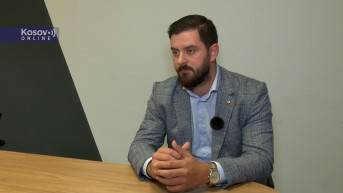
Stefan Vladisavljev, the Program Coordinator of the BFPE Foundation, believes that the cooperation between China and Serbia and the strengthening of economic relations are very important, however, he adds that political cooperation is equally important and that even in delicate situations, such as the attempt to admit Kosovo to the United Nations, China will respect Belgrade's stance.
"There are several different forms of economic cooperation between Serbia and China. Primarily, these were infrastructure projects for which Serbia mainly obtained loans from Chinese banks and engaged Chinese companies. Another form is direct investments. Some of the direct investments we've witnessed include the purchase of the Smederevo Steel Plant, the Bor mining company, the construction of a tire manufacturing factory in Zrenjanin, and the third form is trade exchange and cooperation, where China has become Serbia's second-largest trading partner, and it is expected that there will be further enhancement of relations through the signing of free trade agreements," Vladisavljev says.
He emphasizes that political cooperation is crucial in addition to the high level of economic cooperation.
"Besides this economic cooperation, what has always been evident are certain political alignments on important issues, both for Serbia and China. Primarily, it's China's expression of its stance, emphasizing the principled position regarding the territorial integrity and sovereignty of the Republic of Serbia. On the other hand, Serbia's stance supports China's policy that considers all disputed territories China has as part of integral China, or what is called the central administration of China emanating from Beijing. When we consider these two aspects of cooperation, there are clear alignments on these issues. If we hypothetically consider a scenario where the question of Kosovo's UN membership comes before the UN Security Council or the UN General Assembly, we can expect alignment on this matter as well," Vladisavljev says.
He points out that China also faces challenges regarding its territorial sovereignty.
"We first need to consider two important aspects: first, the outcome of the dialogue process between Belgrade and Pristina, or what Belgrade's stance will be on the question of Kosovo's membership in international organizations. The second is China's position on the principle of territorial integrity at that moment. When we talk about China's position, I firmly believe that it won't change, not because of the situation in Serbia and Kosovo, but because China has its own challenges regarding territorial sovereignty, and I don't think that situation will change," our interlocutor says.
According to Vladisavljev, China's position would be primarily defined by Serbia's stance on the potential membership of Kosovo in international organizations, precisely due to the continuous development of relations between Serbia and China.
"China will act in the way that Serbia assesses as the best case at that moment, not because Serbia can impose anything on China, but because China has a principle of respecting the positions of states and parties in certain relations in accordance with international law," Vladisavljev says.


0 comments