
Arsic, Elek and Odalovic: The most difficult period for Serbs in Kosovo since 2004

The Rector of the University of Pristina temporarily seated in Kosovska Mitrovica, Nebojsa Arsic, the President of the Serb List, Zlatan Elek, and the Chairman of the Commission for Missing Persons of the Government of Serbia, Veljko Odalovic, warned this evening that Serbs in Kosovo are facing the most difficult period since 2004. However, they stressed that today’s pressures are not being carried out through open violence but through administrative measures that could have far-reaching consequences for the education system, institutions, and the everyday life of the Serbian community, Euronews Serbia reports.
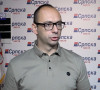
Rector Arsic assessed that the period currently experienced by Serbs in Kosovo is “the most difficult since the 2004 pogrom,” warning that the announced administrative measures could have far-reaching consequences for the education system and the survival of the Serbian community.
“Since 2004, this is the most difficult period. Instead of open violence, a more perfidious path is now being taken – administrative measures which, if implemented, will have very serious consequences,” Arsic told Euronews Serbia.
Speaking about the impact of the announced regulations on higher education, Arsic emphasized that the consequences for the university would be catastrophic.
According to him, a large number of professors coming from central Serbia do not possess Kosovo documents, which could prevent them from residing and working there. In addition, one-third of the students come from central Serbia and northern Montenegro, while a smaller number come from other former Yugoslav republics.
“All of them could find themselves in a situation where longer stays are prohibited, which means they would not be able to attend classes or fulfill their academic obligations,” the rector warned.
The university currently has around 7,000 active students enrolled in undergraduate, master’s, and doctoral studies, while the total number of enrolled students is slightly below 11,000. The university employs approximately 1,100 people – 780 teaching staff and associates, and more than 300 administrative employees.
“If the law were implemented, around 500 professors would immediately lose the right of residence, and about 2,000 students would be unable to attend classes,” Arsic stated.
He added that the consequences would not affect only the education system, but also the local economy, since, as he said, “the entire city largely lives off the university.”
Arsic also pointed to additional problems, such as the registration of official vehicles. According to him, the university had to re-register more than 20 vehicles with license plates from cities in central Serbia, after which, he claims, informal pressure followed to re-register them with Kosovo plates.
“A model was suggested to us whereby we would ‘gift’ the vehicles to someone so they could be re-registered. These are not private vehicles, but university property,” Arsic said, describing this as continuous pressure.
The rector emphasized that administrative decisions, although formally legal in nature, have deep social and demographic consequences.
“If there is no timely response, the consequences will be long-term – not only for the university, but for the survival of the Serbian community in Kosovo and Metohija,” Arsic concluded.
Elek: New Law in Pristina Leads to Administrative Persecution of Serbs in Kosovo
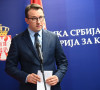
The President of the Serb List, Zlatan Elek, assessed that the election of a new government in Pristina, headed by Albin Kurti, does not inspire any optimism among Serbs, but rather additional concern and resentment.
Elek stated that during the previous mandate, the authorities in Pristina adopted what he described as unilateral and escalatory decisions directly aimed against the interests of the Serbian people, without consultations with representatives of the Serbian community.
“We see no indication that relations will improve in the near future. That is why it is more necessary than ever for Serbs in Kosovo and Metohija to be united and cohesive, with the support of the Republic of Serbia,” Elek said.
Speaking about the security situation, Elek noted that Serbs are currently more concerned about administrative decisions and new laws than about isolated incidents.
“These administrative bans fundamentally change people’s lives and threaten the survival of the entire community. Their implementation means a change in everyday life and additional uncertainty for Serbs in Kosovo and Metohija,” he said.
Particular concern surrounds the Law on Foreigners, which is expected to enter into force on March 15. Elek claims that its implementation could have serious consequences for the healthcare and education systems operating within the system of the Republic of Serbia.
According to him, the law stipulates that doctors and professors from central Serbia must seek approval from Kosovo institutions for residence and work, which could lead to entry bans or even deportations.
“This directly endangers the functioning of the Clinical Hospital Center in Kosovska Mitrovica, as well as health centers in Zvecan, Leposavic, and Zubin Potok. We are talking about hundreds of employees and, indirectly, thousands of patients,” Elek said.
He added that the law could also affect the movement of ambulances with license plates from central Serbia, further complicating the referral of patients to tertiary healthcare centers in Kragujevac, Nis, Belgrade, and Novi Sad.
“If you deny someone the right to treatment, you are denying them the right to life,” Elek stressed.
The President of the Serb List announced that the political organization would address representatives of the international community, including the Quint countries, the European Union, KFOR, and UNMIK, requesting that the law be withdrawn or postponed.
“Our goal is not conflict. We are seeking a compromise – the withdrawal or postponement of the law until an agreement is reached that will allow the uninterrupted functioning of the healthcare and education systems,” Elek stated.
He emphasized that the Serbian community is seeking, as he said, “only the right to work, to receive medical treatment, and to live with dignity in the 21st century.”
Odalovic: A Third, Institutional Pogrom Against Serbs Is Underway in Kosovo
The Chairman of the Commission for Missing Persons of the Government of Serbia, Veljko Odalovic, assessed that Serbs in Kosovo are facing a “third pogrom,” which, as he stated, is institutional in nature and has far-reaching consequences.
Recalling the events of 1999 and 2004, Odalovic pointed out that those pogroms were accompanied by physical violence, the expulsion of hundreds of thousands of people, killings, disappearances, and the burning of homes, churches, and monasteries.
“What we are witnessing today is an institutional pogrom. Its consequences may be long-term, and this weighs on the conscience of the international community,” Odalovic said.
He stated that “the unilateral declaration of Kosovo’s independence, on a territory that was under international administration pursuant to UN Security Council Resolution 1244, represents a precedent and the twilight of international law.”
He recalled that in 1999, tens of thousands of international soldiers from multiple countries arrived in Kosovo with a mandate to ensure security for all communities.
“Pogroms occurred before their eyes. We expected security and equal space for life and prosperity, but instead we received violations of international law and the disregard of their own decisions,” Odalovic said.
Referring to the Brussels Agreement of 2013, he emphasized that its essence was the establishment of the Community of Serb-Majority Municipalities (CSM), as a mechanism for the collective protection of Serbian rights.
“The first six points of the agreement refer to the CSM. That was the guiding principle of the entire process – for Serbs to exercise collective rights through an institutional framework, particularly in the areas of healthcare and education,” Odalovic stated.
According to him, had the CSM been established, today’s crises related to education and healthcare would not exist, as these issues would have been addressed through institutional dialogue.
Odalovic considers the announced administrative measures, including the obligation to obtain work and residence permits for employees coming from central Serbia, to be direct pressure on Serbian institutions in Kosovo.
He explained that doctors, professors, and other staff would have to seek approvals from Pristina’s institutions, and that permits could be issued only if their institutions are registered and accredited within the Kosovo system.
“This is a perfidious attempt to incorporate our university and healthcare system into their institutional framework. If you are not registered in that system, your request will be rejected,” Odalovic said.
He warned that such practice could lead to difficulties in treating patients and in the functioning of educational institutions, as part of the staff comes from central Serbia, while patients are treated in institutions operating under the system of the Republic of Serbia.
Odalovic concluded that Serbs in Kosovo are not seeking privileges, but guaranteed rights – the right to work, education, healthcare, and a safe life.
0 comments