
Arsovski: Von der Leyen’s messages to Skopje more cautious; unclear how EU will engage in resolving dispute with Bulgaria
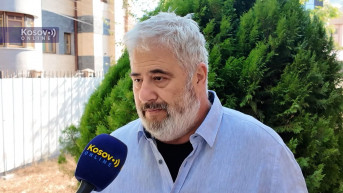
Analyst Petar Arsovski assessed that the messages delivered by European Commission President Ursula von der Leyen during her visit to Skopje were more cautious than those addressed to Montenegro and Albania, noting that, for the first time, it had been explicitly stated that those two countries were expected to become European Union members by 2030.
Commenting on von der Leyen’s visit to Skopje today and her meeting with North Macedonian Prime Minister Hristijan Mickoski, Arsovski said that both positive and more cautious messages had been conveyed.
“On the positive side, there is first of all Mickoski’s own tone. He has moved away from antagonism toward the EU and a narrative about unfair treatment and is now talking about dialogue and EU involvement. The positive messages from von der Leyen are that they are prepared to make very rapid progress with Macedonia, as well as her acknowledgment of the good reform results and the Growth Plan. What remains unclear—and perhaps this is not quite the message we had expected, although it is better than nothing—is that she still does not point to bilateral talks ahead of the Roadmap,” Arsovski stressed.
Regarding a possible resolution of the dispute with Bulgaria, Arsovski said it was still unclear how the EU would become involved in bilateral talks.
“It has not been confirmed whether a concrete step will be taken as part of the previously scheduled visit by Mucunski to Bulgaria, or whether a separate meeting will be held devoted solely to the bilateral dispute between Macedonia and Bulgaria. Whether the EU will be involved is still unclear, because von der Leyen announced it as a joint step, but there is no confirmation that an EU representative will be present. From the messages that emerge from the European Commission meeting on October 5 and 6 and the European Council meeting on October 15 and 16, we will know whether there is a concrete step forward or merely another expression of political support or encouragement,” he said.
Referring to the messages von der Leyen had delivered to other countries in the region during the week, Arsovski assessed that they were clearer and more encouraging for Montenegro and Albania.
“They are better and clearer than the message for us. There is an evident geopolitical appetite within the EU for new alliances, under pressure from antagonism with the United States, an acceleration of enlargement in the Balkans with concrete commitments already being made to Montenegro and Albania, outreach to Canada, acceptance of Iceland’s position, and outreach to Australia. In other words, the EU wants a larger, so to speak, geopolitical footprint. In that sense, the messages to Montenegro and Albania were clearer, more explicit and more encouraging. It has already been explicitly stated that Montenegro and Albania are expected to become members by 2030. This is the first time the President of the European Commission has used such language. These are therefore encouraging messages for the region and may create additional pressure on us to unlock, or rather unblock, the process,” Arsovski concluded.


0 comments