
Post-election Calculations: Does Kosovo Face a "Bulgarian Scenario"?
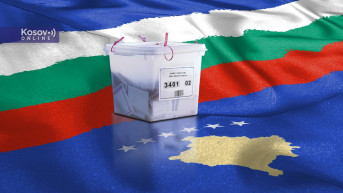
The election results in Kosovo are clear, and for many, expected, but the post-election calculus is extremely complicated. Kurti and Self-Determination have the most votes but lack a majority. The opposition holds a majority but is unwilling to form coalitions. The most realistic option is a minority government of limited duration, but all options are on the table—including a "Bulgarian scenario" of repeating elections, believe interlocutors from Pristina and Belgrade for Kosovo Online.
Written by: Arsenije Vuckovic
Despite the electoral process in Kosovo not yet being concluded, the majority of analysts predict a period in which it will be very difficult to form a new government that can complete its four-year term.
In such post-election calculus, more than 40 percent of the votes won by Self-Determination for this party will be a Pyrrhic victory because they will most likely be unable to form a government on their own.
Political scientist Avdi Smajlaj warns that if the parties do not agree beforehand, the process of forming a new government could lead to an "institutional deadlock."
"This is a situation that can lead us to an institutional deadlock, a blockade. However, since Self-Determination is the winner, it is up to them to make efforts to form a government," Smajlaj emphasizes.
Claims are also increasingly being made that this "deadlock" could lead to repeated elections.
"I fear that we are facing the Bulgarian scenario, where we have consecutive elections, one after the other, because political parties are dissatisfied with their results and cannot form a stable government," stressed analyst Iliir Deda.
Period of Political Crisis
Milos Pavkovic, an associate at the Center for European Policies, has no doubt that Kosovo is entering a period of political crisis.
"We are definitely entering a period of political crisis," Pavkovic states in a conversation with Kosovo Online.
Pavkovic emphasizes that the biggest problem is the fact that "Self-Determination's coalition potential is zero."
"No Albanian party wants to form a government with them," says Pavkovic.
He sees three ways in which Kosovo might exit the current situation, one of which is the "Bulgarian scenario."
"The first scenario is for Kurti to manage to form a government with the MPs from minority communities, possibly with some defectors from other Albanian parties. That would be the 'Kurti 3' government. The second is the 'anti-Kurti coalition'—a front of all Albanian parties plus the Serb List, which would form a government and send Kurti to the opposition, which is very problematic. In the history of Kosovo politics, it has never happened that the Serb List was the one that tipped the scales for forming a new government. Albanian parties have never decided on such a step. Therefore, one should be cautious about this scenario," emphasizes Pavkovic.
The third scenario is new elections.
"According to Kosovo law, the party that wins the most votes gets the mandate to form a government and has 15 days to do so. If they fail, the party with the second-highest number of votes gets the mandate, and if they cannot form a government, new elections are called," says Pavkovic.
He reminds us that this is possible because local elections are already planned for the fall, and presidential elections are at the beginning of the next year.
"Parties will also take this into account when forming potential coalitions to create a government," Pavkovic points out.
However, he warns that the "Bulgarian scenario"—repeating elections—would be the least favorable for the Serb List and the Serbian community in Kosovo.
"Such a scenario would certainly not suit the Serb List and the Serbian community because Kurti would be the prime minister in a caretaker capacity and would likely continue to use his nationalist and sovereigntist card to pressure the Serbian community in order to further strengthen his electoral base in future elections," says Pavkovic.
At the same time, by calling new elections, Kurti would gain additional time to strengthen his voter base, raising questions about how the international community would react to such an option.
"It is very uncertain how the international community will respond to new elections and a new campaign. There is a tendency for Kurti to lose international support, which has been reduced to a minimal level," the analyst specifies.
Therefore, for the opposition parties of the Albanian block, the best scenario would be support from Kosovo's key partners: the USA, France, Germany, and the United Kingdom.
"This could harm Kurti, but it would help the opposition gain more votes and then be in a more comfortable position to form a government without the Serb List in repeated elections," Pavkovic believes.
Reality of a Minority Government
Contrary to him, Mazlum Baraliu, a university professor from Pristina, believes that forming a minority government, which will be limited until April next year when presidential elections are planned, is much more likely than the "Bulgarian scenario."
"I don't believe in the 'Bulgarian scenario' because it was quite serious. They had four or five election cycles in two years. But it will be difficult to form a new government. Any government that is formed will be a minority, short-term in nature. And most likely will last until April next year when a president will be elected. Whatever government is then will need to have two-thirds of the MPs to be able to elect him," Baraliu tells Kosovo Online.
He believes that the opposition is capable of forming a minority government, but that Self-Determination can do it as well.
"It will be hard, but I think the opposition can, if it agrees, form such a minority government. But, the party that won the elections, Self-Determination, can do so too with other parties in coalition," Baraliu specifies.
He primarily sees a possible alliance between Self-Determination and the Democratic Party of Kosovo.
"I even think a coalition is possible between Self-Determination and one of the opposition parties, primarily PDK, to form a stable government that could last much longer than a year," Baraliu is convinced.
In the event that a new government is not formed, this analyst believes that the vacuum in the Belgrade-Pristina dialogue will continue.
"As long as a new government is not constituted, new institutions will not be able to implement anything in foreign policy," he concludes.
"The deciding factor"
Stefan Surlic, Assistant Professor at the Faculty of Political Sciences in Belgrade, is convinced that in the current political circumstances in Kosovo, the Serb List could play a crucial role as the "deciding factor" in the formation of Kosovo's future government.
In an interview with Kosovo Online, Surlic explains that this will largely depend on the behavior of the Democratic League of Kosovo - the party that has not explicitly stated it would not form a coalition with the Self-Determination Movement.
If their stance is somewhat softer, he notes, they could form a coalition with Self-Determination or remain consistent in their refusal to enter coalitions, considering new elections as the only solution.
"In that case, it may sound extreme, but the Serb List is actually the 'deciding factor' that will determine the behavior of all other political actors in Kosovo. Depending on how the Serb List is perceived in the parliament and any future coalition, we will have either a stable government in Kosovo or a 'Bulgarian scenario,'" emphasizes Surlic.
He adds that at this moment, neither Self-Determination nor the Serb List are considering forming a coalition, so it is possible that the Serb List could be part of the opposition block.
"But what could be a problem is a kind of 'game of chicken' where Self-Determination might accuse opposition parties of making a coalition with the Serb List because they consider them allies of terrorists. In this context, opposition parties could be targeted by nationalist public opinion, accused of being a 'Trojan horse' to Kosovo's statehood, a 'Trojan horse' to a stable political system, and then opposition parties might buckle under such nationalist pressure and opt for elections instead of forming a broader coalition," explains Surlic.
In other post-election scenarios, Surlic reminds us that there were whispers before the elections that the future government could be formed by Self-Determination and the Democratic Party of Kosovo.
"But, that was under the condition that PDK was in third place. Now we have a completely different political environment. PDK is in second place and would like to claim the prime minister's position," Surlic specifies.
He believes that for opposition parties, forming a broader coalition instead of a coalition with Self-Determination would be much more acceptable.
"They know that such a coalition with Self-Determination would mean a loss of identity and the absence of any real power. Self-Determination has shown a kind of authoritarian and absolutist governance under Albin Kurti," Surlic emphasizes.
He adds that the ideal solution is a broad "anti-Kurti coalition," but that it entails a "very complex political process" in the upcoming period.
"The ideal solution is a broad 'anti-Kurti coalition,' but in such a scenario, the problem is creating a lasting, stable coalition agreement, dividing ministries, and also reconciling all the negative messages sent to each other in the past period.
However, a coalition of three parties plus minority communities, including the Serb List, would require a very complex political process in the coming not only days but also months," Surlic specifies.
At the same time, he does not exclude the possibility that Albin Kurti might change his rhetoric and accept cooperation with one of the opposition parties.
"Most likely with the Democratic League of Kosovo since it is now the third option and since they have experience with coalition agreements. However, any coalition would mean softening the so far very extreme and radical policies that Self-Determination has led. Thus, if Self-Determination remains in power, it would mean concessions to the international community, to coalition partners, and primarily an improvement, normalization of relations between Belgrade and Pristina, which would of course mean a better status for the Serbian community in Kosovo," concludes Surlic.
"Maneuvering"
For political analyst from Pristina, Shkelzen Maliqi, the most realistic scenario is that the opposition comes together to form a new government.
"I do not believe in a 'Bulgarian' or 'Israeli' scenario where elections are continuously repeated. The votes are indeed divided, but the opposition has the majority. If they can agree, Kurti can only maneuver to prolong the crisis around forming a government," Maliqi believes. Albin Kurti and Self-Determination are at an advantage because they will receive the mandate first.
The problem, this analyst points out, is that they lack partners.
"During the campaign, and even before, they have declared against everyone. In his victory speech, Kurti called the opposition animals, yet he did not win. He neither achieved his goal of winning 500,000 votes nor does he have the majority to form a government with the minorities. He could potentially do so if he includes the Serb List or the Serbian minority, but that would cause him to lose trust among his electorate," says Maliqi.
He also believes it is difficult to expect that Kurti could form a coalition with any of the parties that received the most votes, such as LDK or PDK.
"They are all in very bad relations. He might possibly make a deal with Ramush (Haradinaj, ABK), but I believe even he would not enter into that combination," Maliqi specifies.
He also highlights that the opposition has the opportunity to "maneuver" by following the mood of the international community in Kosovo to form a "grand coalition."
"The ambassadors and the Quint insist on forming a grand coalition. They will offer to create a government of all political forces. However, Kurti will probably not join this government regardless of the fact that he has made both the Brussels and Ohrid Agreements and agreed to the Franco-German plan. But, he does not want to be the implementer of these, as he has also been blocking them," emphasizes Maliqi. On the other hand, he is convinced that a government formed by the opposition could fulfill the international obligations taken and then organize new elections.
This, he specifies, is possible either in the autumn when regular local elections are scheduled or at the beginning of next year when presidential elections are due.
International Factor
Former ambassador and member of the Forum for International Relations, Branka Latinovic, says that the post-election logic in Kosovo will largely depend on the international factor, primarily the EU, which is not interested in the electoral processes causing any kind of destabilization.
"In this case, I think a lot depends on the international factor, primarily the EU, but also other actors. It is evident that no one from the West wants the region to be destabilized and that the key word for the region now is 'stability'," Latinovic points out in an interview with Kosovo Online. She explains that stability in the Western Balkans is important for the EU not only because of the situation in Ukraine but also because of the new American administration.
"Europe does not want any surprises nor anything that could give Trump a reason to criticize it," Latinovic emphasizes.
She is convinced that the outcome of the electoral process in Kosovo will greatly depend on the moves of the EU High Representative for Foreign Affairs and Security Policy, Kaja Kallas, as well as the new EU mediator in the Belgrade-Pristina dialogue, Peter Sorensen.


0 comments