
Baraliu: The current government has failed to secure any recognition; Spain has taken an important step

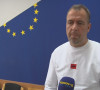
Mazllum Baraliu, a professor of Constitutional Law at the University of Pristina, assessed that in recent years, the process of new recognitions of Kosovo had been halted, and he attributed that to both external and internal situations within Kosovo and also, as he said, the actions of the Ministry of Foreign Affairs of Serbia.
According to Baraliu, much of the progress regarding new recognitions of Kosovo depends on international sentiment, however, he emphasizes that "important centers of power," both in Europe and beyond, seemed inclined to recognize the independence of Kosovo by as many countries as possible.
"However, in recent years, due to the situation, both external and internal in Kosovo, this has somehow stopped. This government has not managed to secure any recognition, except for the one from Israel, which was actually the merit of the former US President Donald Trump, and an agreement resulting from the situation in Washington. In recent days, some countries in the Arab world have started lifting visas for certain categories and the UAE for the entire population of Kosovo; there is some progress, but it is not what Kosovo institutions and some countries would desire. So far, more than 117 countries have recognized Kosovo. Dacic stated that around 10 countries had withdrawn recognition. No one really knows what happened, but there is a diplomatic struggle between Belgrade and Pristina in that direction," Baraliu stated for Kosovo Online.
Among the five European Union countries that have not yet recognized Kosovo, it seemed that Greece would be the first to do so, Baraliu says, however, he adds that there are no concrete steps in that direction for now.
"Greece was ready, as some very important sources said a year or two ago. However, it stopped because the current government of Kosovo did not participate in the gas pipeline that would pass through Greece. Because of that, it seems Greece has not declared its stance or taken steps. However, it is evident that Greece, in addition to offices opened in Athens and Pristina, has very good economic relations with Kosovo and is trying to play a constructive role, in my opinion. They consider themselves a leading country in the Balkans, especially because they are members of the European Union and NATO. They can influence the improvement of relations and the stabilization of the situation in the Balkans. Therefore, Greece plays a constructive role. However, it has not taken a concrete step toward recognizing Kosovo yet," Baraliu points out.
On the other hand, Baraliu claims that Spain has taken a very important step by recognizing Kosovo passports.
"It is a very important step because passports are a symbol of statehood and states, as only states issue passports. Spain, the last of the five EU countries that do not recognize Kosovo, has recognized Kosovo passports; the others did it earlier. So, this is one step closer to recognition or, in quotation marks, tolerating that Kosovo takes certain measures toward integration. Representatives of Spain have said that they would not obstruct these integration steps of Kosovo into the European Union. However, they were quite adamant regarding recognition; they said they would never do it. Even a few weeks ago, representatives of Spanish sports did not recognize representatives of Kosovo sports. However, concerning passports, this is a very good step for Kosovo and stability, both in Kosovo and the Balkans. I think this is also a good sign that the EU will probably have a change in policy toward the Balkans and Kosovo. After the events in Ukraine and the lessons regarding the policy that the EU pursued toward Russia and other countries, especially toward the Balkans, that should change. And that means that, sooner or later, if they want stability and progress in the Balkans and Europe, they will have to recognize all Western Balkan countries," Baraliu concluded.


0 comments