
Latinovic: It is not excluded that London will take the lead in exerting pressure on the European five that do not recognize Kosovo
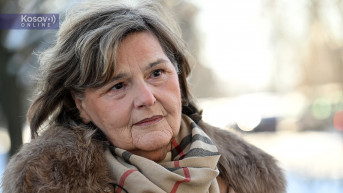
Branka Latinovic, Vice President of the Forum for International Relations, sees Spain's decision to recognize Kosovo passports as not surprising, and she points out that it should not be associated with the fact that this move came just a few days after the announcement by British Foreign Secretary David Cameron that London would help Pristina gain new recognitions.
"One should be fair to our Spanish friends, and this should not be dramatized because it was not a national decision. The decision to abolish visas for Kosovo citizens, or to introduce visa liberalization, was not made by the Spanish government but by the European Commission. Spain, not only being a member of the Schengen area but also one of its advocates, has, in a way, a moral obligation not to question the functioning of Schengen. It has been the only Schengen member state so far that has not allowed citizens from Kosovo, with Kosovo passports, to enter Spain. Now, I think it simply wants to show those general values," Latinovic says for Kosovo Online.
She continues to emphasize that Spanish officials were explicit in stating that this act should not be connected in any way to the active recognition of Kosovo and does not question Spain's stance.
"That stance is very strict. It's important to remember that Spain mentions the territory of Kosovo in all this, and there are no major surprises in that," she says.
Regarding the politics of Great Britain, Latinovic points out that after leaving the EU, London's ability to directly influence through that forum has decreased, however, it can still influence through NATO since, except for Cyprus, all other Union states that have not recognized Kosovo are members of the Alliance.
"This should be more about the line of possibilities for the influence of Great Britain, or the new British minister, who, as we see, has started very dynamically, especially concerning our region, i.e., Kosovo and Metohija, which is very sensitive and significant for us. It is something that is constantly present on the agenda of those countries, especially countries that have great ambitions to act on the European and global stage, and that should not be surprising. It's just a matter of dynamics, how it is achieved. Sometimes it's more intensive, sometimes it's a standstill, and sometimes it's an announcement that something is going to happen," Latinovic points out.
According to her, Cameron's statement should also be connected with the internal situation in Serbia.
"If you have a good internal situation and the functioning of the state at the European level, then the possibilities for someone to draw attention to you in such a way that they can influence what is sensitive to you are small. If you have a situation like today, especially what happened in Kosovo and Metohija regarding the Banjska case, which Cameron emphasized in his statement in parliament, then you have such statements," she explains.
When asked if she expects increased pressure on the European five – Spain, Greece, Slovakia, Romania, and Cyprus – to change their stance and whether these pressures will come from Great Britain, which, according to some interpretations, intends to take over the "baton" in the dialogue between Belgrade and Pristina from the EU and the US, given that this is an election year for them, Latinovic says that it is "a good assessment and a good thesis."
"Considering that after Brexit, the UK began to build its stronger image as a geopolitical player, not only in Europe but also in the Pacific and the Middle East, in that context, it could be interpreted in that way. Especially since Cameron is an experienced politician, of strong caliber. It should not be forgotten that he was also a prime minister who implemented the decision to hold a referendum on Britain's exit from the EU. He will certainly give a personal touch to the whole process, striving to engage in the current conditions, as it is an election year for both the European Parliament and the European Commission, to absorb a lot and for the UK to take on and thereby emphasize its importance, both in Europe and on the international stage," Latinovic notes.
She also commented on the fact that the "weakest link" among the European five that do not recognize Kosovo could be Greece.
"Greece is mentioned in this context because it has taken some steps that other members of the five have not done. It has opened a trade office in Pristina. It is independent of the embassy in Belgrade, and all other diplomatic offices that these other members have are tied to embassies, not independent but detached departments. They monitor the situation on the ground and cover practical steps regarding their citizens. A larger number of them also have contingents within KFOR. Whether Greece will take that one step that would be even more significant, I think at this moment there are no indications for that. But it should not be ruled out, depending on what happens in the Western Balkans and in Europe after the elections," Latinovic concludes.


0 comments