
Baraliu: Dialogue stalled due to EU's failed policy; both Kosovo and Serbia are losing out
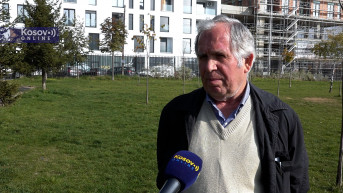
University professor from Pristina, Mazllum Baraliu, says that both Kosovo and Serbia are losing due to the stalled negotiations and that the greatest responsibility lies with the European Union, which, he says, is conducting an unsuccessful foreign policy toward the Balkans, especially regarding the dialogue between Belgrade and Pristina.
Baraliu notes that more than 39 agreements have been made since 2011, but that the dialogue has stalled during the terms of Albin Kurti and Aleksandar Vucic.
"These political representatives aren’t solely responsible; the greater responsibility may lie with the EU’s foreign policy. The approach and underlying long-term Western and EU policies, particularly toward the Balkans and globally, need to change. We have conflicts in Europe, in Ukraine, and wars in the Middle and Near East, so a different policy and strategy are required," the professor states.
He believes that the current EU policy is short-sighted and ineffective, both globally and in the Balkans, particularly regarding the Kosovo-Serbia dialogue, because, as he says, it is neither decisive nor impartial.
“This is why there is no success, and there won’t be any, at least until after the elections in Kosovo. We will see what the new approach of Ms. Kaja Kallas and others will bring. I think there is hope, and then we might see changes and progress in the dialogue,” Baraliu said.
He believes that both Vucic and Kurti are using the stalled dialogue to "buy time."
“This benefits Serbia more, as it now expects, with the Kremlin publicly promising that the war in Ukraine will end in a victory for the Russian Federation, that the geostrategic landscape in the Balkans, Europe, and for Russia and its allies will change. In this sense, Serbia is buying time and behaving fluidly, asymmetrically, and ‘long-term,’” he explains.
On the other hand, Kosovo benefits from the situation due to the elections.
“No one is decisive enough to allow the concessions demanded from Kosovo. Even in Serbia, there is no leader, least of all Vucic and his establishment, willing to fulfill what was required by the Brussels Agreement and the Ohrid Annex. That is why I believe that both sides, in a way, prefer to prolong the dialogue, governing while the West and East, as Erich Maria Remarque might say, see nothing new,” Baraliu suggests.
He emphasizes that the international community neither encourages nor helps the dialogue.
“A unified policy is needed toward all Balkan countries and an approach that would be, so to speak, adequate, even non-standard. The Balkans should be integrated into the EU as a package as soon as possible, without bureaucratic standards and demands. Perhaps in that shared home of a united Europe, a Europe of values and democracy, we would calm down and cooperate,” the professor from Pristina says.
Without such integration, he says, the region will continue its policy of conflict.
"And the people don’t want that. In this democratic age, the 21st century, when paths to cooperation are opening and developing everywhere, democratic components here are lagging. Why? No one in their right mind supports this. It seems we haven’t followed or understood what’s happening around us to be included in those currents, so that citizens could benefit from the circulation of goods, ideas, capital, science, and culture… We are holding each other back, and they aren’t helping us integrate into Europe and the world,” he concludes.
He stresses that even the United Nations acts completely powerless.
“The world community, and the European Union as the most important regional organization in this part of the world, unfortunately, in my deepest conviction, are acting and presenting themselves as powerless and ineffective in addressing the issues they face,” Baraliu says.


0 comments