
Baraliu: I do not expect Sorensen’s demands to be implemented because Kosovo is in a political crisis
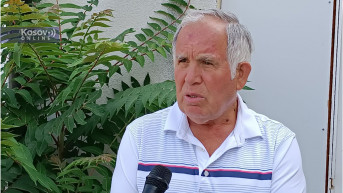
Constitutional law professor Mazllum Baraliu, one day after the visit of the EU Special Envoy for Dialogue Peter Sorensen, stated that he does not expect Sorensen’s messages and demands for the urgent implementation of the Ohrid Agreement to be carried out because Kosovo is in a political crisis.
“I think that in the current situation, no one can do anything in a positive direction because we are in a political crisis, as is Serbia. So I do not think there will be any results. It is certainly good that work is being done on this, and it is good that communication between Brussels, Kosovo, and Serbia is not interrupted, but in the current situation with these internal problems, we cannot deal with dialogue,” Baraliu said.
Regarding the Constitutional Court’s upcoming decision related to the constitution of the parliament, since the temporary measure is in effect until tomorrow, Baraliu says he expects the Constitutional Court to make a clear decision that will leave no room for interpretation by the parties.
“We should have a decision tomorrow. Preferably, the Constitutional Court will be efficient because it has not proven to be so far. I think there will be a delay of a few days, and that decision should be well explained in detail so that political parties, which each view it differently, are told what to do, given a deadline, and maybe it should be clearly stated, something the court did not say in its 2014 decision, that if the party with the most mandates does not have enough votes, the rights transfer to another political group, as is stated in the Constitution in the case of government formation,” Baraliu explained.
After President Vjosa Osmani announced that she is withdrawing the request she submitted to the Constitutional Court regarding the constitution of the parliament, due to the appointment of a Serb as the judge rapporteur in that case – and the court responded that case assignments to judge rapporteurs are based on procedural rules, Baraliu says that each side has its rights but that there is no need to create scandals.
He adds that he expected the Constitutional Court to combine the requests from the parliamentary parties and President Osmani since they are related.
“The president or anyone responsible for submitting requests to the Constitutional Court has the right to do so. In this case, the president cited some of her reasons, and they were serious reasons for her. The court has the right to proceed with that request if it considers it relevant. Moreover, the court responded that there is a certain order by which cases are assigned to judges. Both sides have rights; there is no need to make a scandal out of it. The Constitutional Court should have combined the requests of the president and the two political parties because the essence of the problem is the same. However, that was not done, but the court also has the right to do that because it is independent,” Baraliu concluded.



0 comments