
Barber: Vucic and Rama’s proposal the best path to prevent instability in the Balkans and the EU
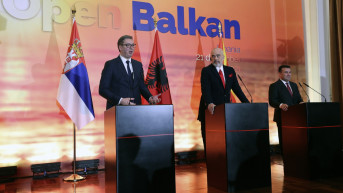
The proposal by Aleksandar Vucic and Edi Rama that EU candidate countries become part of the single market and a visa-free Schengen zone is the best way to prevent instability in the Western Balkans and Europe, according to Tony Barber, longtime Europe editor and columnist of the Financial Times.
“From the standpoint of practical politics, full EU membership will likely remain out of reach in the near future, reinforcing instability in a part of Europe where the European Union can least afford it. The best way forward is to implement the Vucic-Rama plan, showing people both in the Western Balkans and in the EU that a shared future is mutually beneficial,” Barber wrote in an opinion piece for the Brussels portal EUalive.
Regarding the initiative by the Serbian president and the Albanian prime minister, which they presented in a joint article in Frankfurter Allgemeine Zeitung at the end of February, Barber notes that “such ideas are already circulating in Brussels, as well as in Berlin and Paris.”
“The arguments in their favor are twofold. First, economic integration would benefit both the Western Balkans and existing EU member states. Second, a new approach would avoid tricky issues such as changing the composition of the European Commission, adding members to the European Parliament, altering EU voting procedures, and above all granting veto rights to new members,” he stated.
According to the British commentator, the Vucic-Rama proposal “should not be seen as a substitute for full EU membership, which must remain the long-term goal for the Western Balkans,” as reported by N1.
He added that it will not be easy for all countries in the region to meet the conditions even for access to the single market and that much hard work on reforms is still needed.
“Although new research shows that Western Balkan countries are roughly where other candidates were at the time of accession, much hard work on reforms will still be required,” Barber noted.
However, he added, EU enlargement is an area where Europeans “have the power to shape events to their advantage,” and the Balkan region should be a priority for the EU when it comes to enlargement.
Barber reminds that a single EU member state can block collective EU actions by using a veto, which makes other EU countries “nervous about future paralysis if six or more countries were to enter the bloc, all with veto rights.”
“The Vucic-Rama initiative seeks to alleviate these fears,” he added.
“Failure to enlarge will leave countries seeking to join the EU vulnerable to internal tensions and external interference. This, in turn, will undermine the security of the continent as a whole. It is encouraging that both the EU and some candidate countries are finally thinking about enlargement in a sufficiently creative way to allow many aspiring members to be brought under the EU umbrella within five years,” Tony Barber concluded.



0 comments