
Borrell: Rapid implementation of the agreement is the only way to normalization; cooperation with Russia is the opposite of the way to the EU

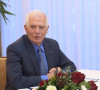
The High EU Representative for Foreign and Security Policy, Josep Borrell, said today, after the session of the Council of Foreign Ministers of the Union, that the quick and full implementation of all agreements reached in the dialogue between Kosovo and Serbia was the only way to normalization and underlined that cooperation with Russia was not in accordance with the European way.
Borrell, at the press conference, emphasized that he had reiterated that the EU had a large share in reaching an agreement between the two parties that had been in conflict in recent years and that the Union wanted to support them on the road to normalization.
He emphasized that tensions and mutual provocations had to stop, and the lack of constructiveness and the negative atmosphere had to be reversed, because membership in the EU required cooperation, stating that countries that once had been in conflict should become neighbors, friends, and partners and live together.
"That's why we want a quick and full implementation of the agreements reached because that's the only possibility for the normalization of relations. Being a member of the EU means being ready to cooperate and act as a good neighbor, overcoming all the problems from the past," Borrell underlined.
He said that EU foreign ministers met regularly with their counterparts from the Western Balkans and that he believed that this could happen more often.
He pointed out that the topic of the conversation had been Russian influence, that is, Moscow's attempt to obstruct the candidate's European path.
He said that the strategic commitment of certain countries had been welcomed, but that there were still countries that had not harmonized their foreign policy with the EU.
He cited Serbia as an example and added that the EU had warned countries that had not harmonized their foreign policy that close relations with Moscow were not in accordance with the accession process and harmed national interests.
Borrell said that the EU wanted to see progress in the enlargement process and that now it was necessary to take advantage of the dynamics that Ukraine had encouraged with its progress.
"We sent a strong message that now is the time for the countries of the Western Balkans to speed up reforms, to harmonize with European standards, and to prepare their societies for membership. It is a unique opportunity that must be used," he explained.


0 comments