
Borrell: Agreed positions on the European proposal; further discussions on implementation follow
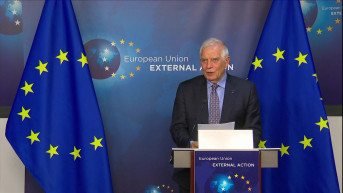
The High EU Representative for the Foreign and Security Policy, Josep Borrell, has reported this evening, after a high-level meeting within the Kosovo-Serbia dialogue, that the two sides agreed that there is no need for further discussions on the European proposal and that the discussion on the modalities of its implementation is ahead.
Borrell, at the press conference, where questions from journalists were not allowed, said that today in Brussels, the first high-level meeting within the dialogue was held this year and the eighth since he has begun his mandate as the High EU Representative.
The vice president of the European Commission said that the focus of the meeting had been on the European proposal for the normalization of relations between Kosovo and Serbia.
"This is an important development since we have been faced with crisis management since last summer because we had constant crises. We were trying to control the tensions on the field. We are now moving on from crisis management and looking for a structured solution for the normalization of relations. What we discussed today is a European proposal, which is supported by 27 member states," he emphasized.
Borrell said that this proposal had been presented to the parties in September and that since then there had been shuttle diplomacy.
He reported that since last September when the European proposal had been presented for the first time, the EU envoy for dialogue Miroslav Lajcak had traveled to the region on several occasions - he had been 10 times in Pristina and eight times in Belgrade.
This shows, he underlines, that there was intense diplomatic activity.
Borrell said that Serbian President Aleksandar Vucic and Kosovo Prime Minister Albin Kurti had showed their willingness to find a solution today.
"Vucic and Kurti agreed today that there was no need for further discussion on the European proposal, which had the name - agreement on the path towards the normalization of relations between Kosovo and Serbia. Since they have agreed on it, it will soon be published on the EU website," he announced.
Borrell pointed out that the citizens of Serbia and Kosovo would benefit from this agreement, as it foresees the possibility of free travel with the use of their passports, identity cards, and license plates.
"It makes it possible for people to study and work regardless of where they got their degrees. The agreement can create new economic opportunities through increased business support and new investments. It provides greater opportunities for employment without bureaucracy. It means more trade because certificates will no longer be subject to discussion. For the Serbs in Kosovo, it will mean more security, predictability, especially when it comes to their protection and their rights, including the Serbian Orthodox Church, as well as cultural and religious heritage," he explained.
Borrell expressed the hope that the agreement could be the basis for overcoming the past, as well as establishing trust.
"The parties expressed their readiness to implement the agreement. We have a long list of unimplemented agreements. The parties agreed to discuss the modalities of implementation. They expressed their readiness to start the implementation of the agreement, but further negotiations are due to the modalities of implementation. This means that the shuttle diplomacy will continue and that we will have a new meeting of the two leaders in March with the aim of finalizing the agreement on the implementation annex, which is an integral part of the agreement," he added.
He reported that the EU had reminded the parties of the obligation to implement all previously reached agreements, which had remained valid and binding.
"In mid-March, Lajcak will be in Kosovo and Serbia again to continue talks and prepare the next high-level meeting. We expect the parties to approach the process constructively. Both sides agreed to avoid unilateral actions that could cause tensions on the ground and prevent the agreement," he underlined.
Borrell expressed his belief that the agreement would set relations on a new sustainable level.
According to him, the agreement was important for the entire region and showed that progress was possible.
"Progress has been made today and thanks to the parties in the conversation, but at the same time there is still a lot of work ahead of us so that what was agreed today is implemented. It is important to agree, but it is even more important to implement what has been agreed," Borrell stressed, expressing the hope that an agreement would be reached by the next EU Council.


0 comments