
Brankovic: A closed UN Security Council session may be requested by those who do not want the public to hear the truth about Kosovo
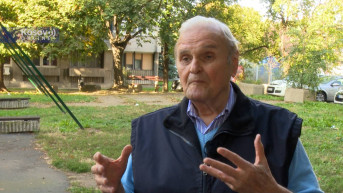
Long-time diplomat and former Ambassador to the United Nations, Branko Brankovic, says for Kosovo Online that United Nations Security Council sessions have often been closed to the public, especially in crisis situations. Speaking about the possibility that tomorrow's session on Kosovo might be closed, he says that such a request can be made at the beginning of the session, and its adoption would require the consent of the majority in the Security Council.
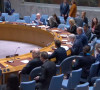
The possibility of tomorrow's UN Security Council session, during which the regular report of the UN Secretary-General on the work of UNMIK and the situation in Kosovo will be discussed, being held behind closed doors was announced by UN Secretary-General Antonio Guterres. He stated that a change in format would allow for a "more candid discussion of the challenges of implementing the February agreements".
Brankovic points out that open sessions are attended not only by the media but also by representatives of various missions at the UN. However, in crisis situations, Security Council members sometimes want to discuss the most important matters among themselves and then decide whether to release the stenographic records.
"I spent five years in New York, and we were members of the Security Council during the Middle East conflict. Every other or third session was closed. This is nothing new," Brankovic says.
He explains that the decision to hold the session as open or closed is made at the beginning of the session, and it requires a majority to vote "in favor" of closing the session.
"It's a procedural matter. It requires nine 'in favor' votes, and there are no vetoes for this. Before the session starts and before everyone gathers in the meeting room, there is a large room next to it where daily consultations are held. In that room, everyone tries to reach a common denominator beforehand to avoid a debate during the session. They discuss whether or not the session will be closed. Whether the session will be closed remains an open question, as well as who will propose it and whether it will have nine 'in favor' votes for it to pass," our interlocutor says.
Brankovic notes that a closed session means no press, no representatives of any mission, and then a decision is made on whether the stenographic records, which contain the speeches of the representatives, the discussions, and everything else, will be printed and made available to everyone in all six official languages or not. He mentions that stenographic records are made not only for the Security Council but for the sessions of any UN body, in a single copy provided to the Secretary-General. The Security Council decides whether to distribute them or not.
"I don't know who will request that this session be closed to the public, but I have the impression that it will be those who do not want the public to hear once again everything that Serbian President Aleksandar Vucic said at the UN General Assembly and the truth about Kosovo because it did not benefit many, especially those who use double standards. On the contrary, they received serious political setbacks because of it. They tried to diminish what Vucic said about the situation regarding Banjska, but Serbia had nothing to do with it. The Banjska situation looks like external interference," Brankovic assesses.
He further explains that, when all is said and done, the session can be closed because Albin Kurti received a significant political setback in Brussels, and it was stated that he was to blame for everything.
"That's what Josep Borrell and Miroslav Lajcak said, but the Americans don't like it, and they had to do something to help Kurti recover from the blows he took. At the same time, their idea was to try to distance the Security Council as far as possible from everything Vucic said, which resonated throughout the international community," Brankovic says.
Brankovic also notes that he wouldn't be surprised if the session were postponed.
"Don't be surprised if, at the last moment, they request the postponement of the session. I wouldn't be surprised because it's too fresh for someone from our side – the President or the Foreign Minister – to come and once again show the whole world what's happening in Kosovo. They want it to be closed to prevent a repetition of what happened with Vucic's speech because there's nothing else to tell them except that they are using double standards, which are against the principles of international law," he points out.
Brankovic is convinced that three countries – Great Britain, France, and the United States – would very much like to postpone the session, but he adds that they can propose it, but it must be put to a vote.
"It remains to be seen how the others will vote, in addition to the two votes from Russia and China," Brankovic said, pointing out that a division of opinions was seen regarding Israel – five votes for the Russian resolution, four against, and six Security Council members who abstained.
"That is a significant indicator," he notes.
He adds that even if the session is closed or postponed, stenographic records will be available, and their distribution will be decided by voting, without the right of veto on that decision.

0 comments