
Brnabic: The EU has stated that Serbia is committed and engaged in the dialogue
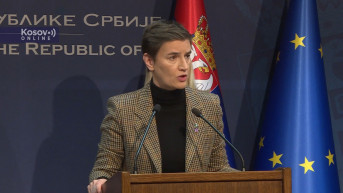
Prime Minister of Serbia, Ana Brnabic, stated that it was important that the European Commission's report noted that Serbia had remained committed and engaged in the dialogue on the normalization of relations between Belgrade and Pristina.
She emphasized that the European Commission had recognized clear progress in Serbia's European integration process.
"This is evidenced by the fact that there is no area in the Report where regression has been recorded, except in three areas where stagnation has been noted, such as, for example, fisheries, where some progress has been recorded. In all key areas, some progress has been recorded, especially in the rule of law, the economy, and fundamental rights", Brnabic said.
She added that there had been some progress in the reform of the judiciary, which represented a higher grade compared to last year's report.
"Several steps have been taken to reduce political pressure on the judiciary, which is a significant and challenging reform", Brnabic points out and adds that there has been limited progress in the fight against corruption, acknowledging that she is to blame because the Government has not acted quickly enough.
Regarding media freedom, Brnabic points out that there have been numerous disinformation campaigns suggesting that European integration would be halted by adopting media laws. However, according to the report, there has been limited progress in this area, which is still better than last year's report.
As for the economy, the Prime Minister notes that the report states that Serbia is well-prepared and has made some progress.
This is a better assessment compared to the previous year and adds that Serbia has achieved good progress in economic transformation.
In terms of foreign policy, there is neither progress nor regression, the Prime Minister says.
"It's because we haven't imposed sanctions on Russia, but we don't have the regression we had last year", she stated.
When asked to comment on the report by the United Group portal that "The drafts of media laws call into question Serbia's orientation towards the European Union", Brnabic emphasized that such headlines could be seen when trying to implement reforms in Serbia.
"When you want to implement challenging reforms such as changing the Constitution in the field of the judiciary, holding a referendum to have an independent judiciary and independent judicial system when every step is aligned with the Venice Commission and the Council of Europe, and when you receive all positive assessments from the Commission, you still have people who call themselves 'Europeans' and say not to participate in the referendum and vote against", Brnabic said.
She points out that the same is true when it comes to the adoption of media laws.
When the Serbian Government attempts to implement serious reforms, there is a "bunch of do-gooders" in Serbia who criticize it.
"One grabs your jacket and pulls you back, another holds your hand, a third beats you on the head, the fourth trips you and kicks your shins. That's what it looks like to implement reforms in Serbia. Then they all come and complain that we are not moving fast enough", she says.
She assesses that when there is a responsible opposition and civil society organizations, the quality of reforms is essential, not who is implementing them.
"In Serbia, if Aleksandar Vucic wants an independent judiciary, then we want the state to control who appoints judges. In Serbia, if Ana Brnabic wants to introduce the Press Council into the media law, she can't. In our country, if we really want to pass such a law, regardless of the fact that we've been working with the EU the whole time, we will announce in all media that if you adopt it, you've halted Serbia's European path", she said.
She concludes that the opposition in Serbia is interested in using reforms for political purposes, even if they slow down Serbia's European path.

0 comments