
Cakolli: The appointment of Laban as rapporteur should not be grounds for withdrawal from a constitutionally important case
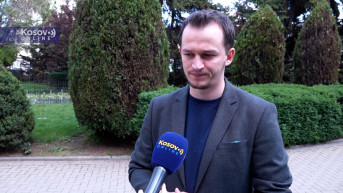
Eugen Cakolli from the Kosovar Democratic Institute stated that a procedural element—such as the appointment of Judge Radomir Laban as the rapporteur in the request submitted by Kosovo President Vjosa Osmani to the Constitutional Court regarding the formation of the Assembly—should not serve as grounds for withdrawal from a case of exceptional constitutional importance.
He made this comment in response to Osmani’s decision earlier today to withdraw her request from the Constitutional Court.
“The President has decided to withdraw her request from the Constitutional Court, citing the appointment of Judge Radomir Laban as rapporteur as the reason. While it is legitimate for any institution to have reservations about certain individuals—especially when there are repeated reports from security agencies regarding threats to the constitutional order—if, after eight years of such reports, no investigation or criminal charge has been initiated (given that judges do not have immunity outside the scope of their duties), it is difficult to justify how a procedural element, such as the appointment of a rapporteur judge, can serve as grounds for withdrawing from a case of such constitutional significance,” Cakolli wrote on Facebook.
He added that it is important to note that the rapporteur judge does not determine the outcome of the request, nor the content of the ruling.
“If a three-member panel proposes that the request be declared inadmissible and no other judge objects, the case is closed. But if even one judge disagrees, the case is passed on to the full court for consideration. At that point, every issue is decided by majority vote—both on admissibility and on the merits. Even if the rapporteur judge is not part of the majority, the President of the Court may appoint another judge to draft the final text of the decision,” Cakolli emphasized.
He explained further that, moreover, withdrawal of the request does not necessarily mean it will not be considered.
“The Court has the right to continue the proceedings if it determines that there is a significant public interest. And in a situation where the Assembly has not been constituted within the constitutional deadline, and the country finds itself in an institutional vacuum, there is no doubt that this is one of the most serious cases that requires a clear response from the only body mandated to provide it,” Cakolli said.
He concluded that for all the above reasons, the Court should fully review this matter:
“First and foremost because of its importance for the constitutional functioning of institutions. But also for the protection of the Court’s own institutional integrity and the preservation of public trust in the Court’s decisions as those of a collective body, not as the result of one judge’s actions. Especially since the current demands of political parties do not clearly address the legal consequences of the Assembly not being constituted within 30 days,” Cakolli stated.



0 comments