
Celic: Belgrade should use diplomatic means to reiterate the obligation that no repressive measures be taken against barricade participants
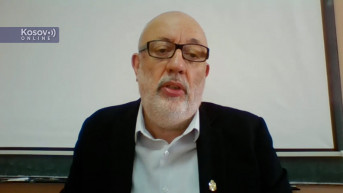
Dusko Celic, assistant professor at the Faculty of Law at the University of North Mitrovica, believes that the warrants issued by the Special Prosecutor's Office in Pristina for 11 Serbs due to their participation in the 2022 barricades in northern Kosovo could be annulled if Washington and Brussels were to remind Pristina of the assurances it gave three years ago that no arrest lists for participants in the barricades existed.
Celic also states that even if Belgrade only received verbal guarantees from the United States and the European Union in 2022 that there would be no repressive measures against those involved in the barricades—guarantees on the basis of which the barricades were removed—there is no legal reason why those assurances should not be upheld.
"If we interpret this strictly under the Vienna Convention on the Law of Treaties, even oral agreements are binding. An oral contract is valid if the parties agree to it. A good example is the Tito–Brandt agreement from 1973. There have even been verbal agreements between Belgrade and Pristina themselves, such as those on ID cards or license plates—all of which were informal. Therefore, it’s evident that parts of this arrangement were oral, and we should now expect those oral provisions—partially confirmed by the EU or the U.S. State Department—to be honored," Celic told Kosovo Online.
However, he notes that when it comes to Serbs in Kosovo, matters have long been governed by force rather than law—and once again, law is retreating and being defeated by politics and power.
"Legal experts and Belgrade's negotiators should remind the international community of the guarantees it gave, including the oral elements of the agreements, which are part of the whole and must be respected equally to the written ones. Pristina cannot behave as if it is at a buffet, picking what it likes and discarding what it doesn't, especially when it comes to persecuting Serbs. If that were allowed, hundreds or thousands of Serbs could face criminal prosecution by Pristina. That must not be permitted, as there is no legal, political, or moral justification for it," Celic emphasized.
He assessed that Pristina, by issuing warrants, is skillfully taking advantage of the current international climate in which Kosovo is not a priority for the U.S., but rather on the sidelines.
"It is up to Serbia to use all available diplomatic means to point out the obligation—not only Pristina's obligation but also that of Washington and Brussels—since they undertook it during the negotiation process, whether as direct facilitators or indirect participants in the background, as was the case with the U.S. Serbia must remind them that they, too, bear responsibility for the state of human rights of Serbs in Kosovo and Metohija," Celic concluded.


0 comments