
Celic: Pristina isn't even implementing the agreement ratified by its assembly, yet it seeks new signatures
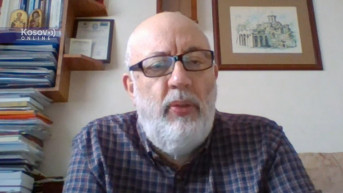
Dusko Celic, a professor at the Faculty of Law at the University of Pristina with a temporary seat in Kosovska Mitrovica, says that the authorities in Pristina are calling for a complete distortion of facts when they demand the signing of agreements from last year's dialogue, about which there are reservations from Belgrade regarding certain points, while at the same time, agreements that have long been signed and on which there is no dispute about consent are not implemented.
"We have witnessed in all these 11, 12 years, during the Brussels negotiating process, that one side, Belgrade, implements agreements, while the other side, Pristina, does not even implement those agreements ratified by their assembly and which are part of their, as they say, internal legal order. We have seen that the 2013 agreement has not been implemented, especially its most important, most elementary segment concerning the Community of Serb Municipalities. We do not know the extent of Albin Kurti's autonomy and the authorities in Pristina, but it is clear that agreements by Pristina are implemented very selectively, as they see it as a buffet table. They would implement everything that benefits them, and on the other hand, the crumbs that remain, at least from the perspective of Serbs in Kosovo and Metohija, they refuse to implement," Celic says.
According to his assessment, Pristina resorts to a complete distortion of facts and seeks the signing of some agreements that may not have been concluded.
"We witness that there are reservations regarding certain points from last year's agreements, according to Belgrade, and the president of the state publicly and clearly speaks about it. However, agreements that have long been signed and on which there is no dispute about consent are openly not implemented. This is evidenced by their measures regarding the abolition of payment transactions. There is an obvious desire to further obstruct the 2013 agreement," our interlocutor believes.
To achieve the implementation of agreements, he adds, Brussels has mechanisms, which Serbia has been made aware of through the EU accession negotiation process.
"Whereas I want to believe that there are red lines in Belgrade, that despite one of the priorities of our state being accession to the European Union, there are red lines as to how far the interests of the state can be compromised. The question is how effective Brussels' mechanisms of pressure on Pristina are? It is evident that the United States plays a decisive role when it comes to Brussels negotiations, even though they are not formal participants in the negotiations, they are certainly the most significant shadow participants and have the most significant influence when it comes to Pristina. That's why to me, the whole story about what will be on the agenda in Brussels somewhat resembles a game without boundaries. I expect that there will likely be something on the table to address the problems that Pristina has generated over the past month with its unilateral decisions, I don't believe that Kurti's nomination will be on the agenda," Celic says.
In his assessment, for years, it has been shown that the entire Brussels negotiating format has been imposed on Serbia in terms of the unequal relationship between the parties.
"We have, on one side, a sovereign state, which, based on Resolution 1244, has a justified interest in Kosovo and Metohija as part of its territory, and on the other side, the self-proclaimed authorities of that territory. The EU and US facilitators openly and directly support Pristina. All problems arise from this unequal negotiating framework imposed on us in 2010," Celic believes.



0 comments