
Celic: Quasi-institutional chaos in Pristina; Apart from Osmani, no authority is in a full mandate
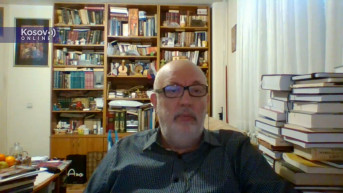
Duško Celic, Assistant Professor at the Faculty of Law of the University of Pristina with a temporary seat in Kosovska Mitrovica, stated for Kosovo Online that a form of quasi-institutional chaos has emerged in Pristina, the architect of which is Albin Kurti, and that currently only Vjosa Osmani is in a full mandate, which expires on 4 April.
Bearing in mind that, after the failure to elect a new president, Osmani dissolved the Assembly, Celic points out that no authority in Pristina—neither the Assembly nor the Government—is currently operating with a full mandate, except for Osmani until the expiration of her term.
As he explains, this situation is not altered by the provisional measure adopted yesterday by the Constitutional Court, since there is still no decision on the merits regarding the Government’s request for the Constitutional Court to assess the constitutionality of Osmani’s decree.
Celic says it can be assumed that the Constitutional Court will grant some additional time for the election of the president, given that only one electoral round was held “at the last minute.”
“According to their rules, three electoral rounds must be attempted, and only then would the automatic dissolution of the Assembly follow,” Celic says, while at the same time pointing to another provision stating that the president must be elected no later than 30 days before the expiration of the previous president’s mandate, in this case that of Vjosa Osmani.
“That deadline has expired, and it indicates that the Assembly’s mandate has also expired,” our interlocutor emphasizes.
He assesses that the situation created after the failed presidential election demonstrates the inability of the Albanian political majority to govern itself.
“It also reveals a deep division within Albanian political society—not in relation to the Serbs, because unfortunately they are united on that issue regardless of their differences, but rather regarding the distribution of internal political and systemic power,” Celic states.
According to him, the reason for entering what he describes as chaos unprecedented in any territory of Europe, and probably beyond, lies in the fact that Albin Kurti likely does not wish, or does not have the capacity, to share power with anyone at this moment, either in the legislative or presidential sense.
If the Constitutional Court does not resolve the situation by 4 April, he says, total institutional chaos will ensue, since the Government has been operating in a technical mandate following the dissolution of the Assembly.
Such a situation, he believes, suits Kurti because he effectively governed throughout the previous year in a technical mandate, without formal parliamentary oversight.
“I fear that the situation of institutional chaos, in which Kurti’s government remains in a technical mandate, will unfortunately lead to further systemic deterioration of the rights of Serbs, given the announced implementation of the Law on Foreigners, as well as some form of integration of the education and healthcare systems. I fear that in such circumstances Kurti will have completely free hands to do whatever he wishes. I believe this will serve as an alarm for international actors to reconsider their positions and finally understand that the Albanian political majority is unable to govern itself or the institutions in Kosovo and Metohija, and that they may take measures that are not merely advisory,” he states.
Yesterday, the Constitutional Court of Kosovo issued a provisional measure regarding the decree of President Vjosa Osmani on the dissolution of the Assembly. The measure, which remains in force until 31 March, prohibits “any action by the President of Kosovo in relation to the decree of 6 March, as well as any action by the Assembly of Kosovo,” until the Court issues its final decision.



0 comments