
Chollet: Kosovo is a close partner of the US, and we have an important relationship with Serbia
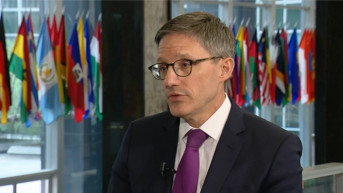
US Department of State Counselor Derek Chollet said before his visit to the Balkans that Kosovo was a close partner of the US, and that Washington had an important relationship with Serbia, Beta reports.
Chollet will lead the US delegation during his visit to the region next week, whose member will also be the US Special Envoy for the Western Balkans, Gabriel Escobar. He told the Albanian service of the Voice of America that the US was "trying to do everything it can to be a good partner to Serbia as well."
"Kosovo is a very good friend of the US and a close partner. We also have an important relationship with Serbia. We are trying to do everything in our power to be a good partner to Serbia as well because they work with us within the framework of the process facilitated by the European Union and which we fully support to achieve a better solution for both countries," Chollet said regarding the comment that the US did not treat Serbia as harshly as it did Kosovo.
Asked about the harsher US rhetoric toward the government in Pristina in the past two weeks, Chollet said it was about a "specific issue related to the enforcement of regulations on re-registration of vehicles."
"The Secretary of State (Antony Blinken) spoke to the Prime Minister (Albin Kurti), and I had several conversations with him. What I can say is that on November 23, we had an agreement to put that issue aside so that there would not be more instability and so that we could focus on the status of EU-mediated negotiations on normalization, including recognition, and that is something where we will do everything we can to support that," Chollet stated.
Chollet noted that the US "wants to see that Kosovo continues to move towards greater European integration" and added that "negotiations between Serbia and Kosovo with the help of the EU are a key element in this."
"We are focused on the normalization of relations, which is based on mutual recognition. These talks can be a step in that process so that Kosovo can continue on the path to greater integration," Chollet pointed out.
He stated that the US "very much supports the peace process (negotiations between Serbia and Kosovo), which was made possible by the European Union," indicating that Washington "worked hard with both sides and supported them."
"I know a new round of negotiations is coming up in the coming weeks, and we're very supportive of that process. I don't want to go into the details, but one of the things I'll be talking about in Pristina, and later in Belgrade, is that the US will continue to support the Europeans in their efforts," he added.
On the occasion of the mayoral elections of four Serb-majority municipalities in the north of Kosovo, scheduled for December 18 and 25, Chollet reiterated the US position that the conditions for holding them were not favorable and that they should be postponed.
"We were clear in saying it was not the right time for elections given the sensitivity of the moment. The situation is very tense, and we want to make sure that the conditions are favorable for these elections to be free and fair. Kosovo is a multi-ethnic democracy, like the US. We are proud of the work that the US has done in the last 20 years to help establish democracy in Kosovo. Therefore, with due respect, we believe that these elections should be held at a time and in a way that would not cause greater instability," Chollet said.
He also said that discussions on the elections in the north of Kosovo postponement would be "one of the main topics" that he would discuss next week with Kosovo President Vjosa Osmani and Prime Minister Kurti.
The State Department announced that Chollet would visit Kosovo, Serbia, Bosnia and Herzegovina, North Macedonia, Montenegro, Croatia, and Brussels from December 12 to 17 to emphasize the US's continued commitment to peace, stability, and prosperity in the region.
The main topics of his talks will be energy security, progress on the path to the EU, and dialogue on the normalization of Belgrade-Pristina relations, the State Department stated.
Chollet will begin his visit to the region in Pristina, where he will stay on December 12 and 13. He will be in Belgrade on December 13, and the next day in Sarajevo and Skopje. He will visit Podgorica and Zagreb on December 15, and he will end his European tour in Brussels, where he will discuss cooperation in a number of global issues with partners from the EU and NATO on December 16 and 17.
comments