
Christian Wehrschütz: Pristina will have to form the CSM
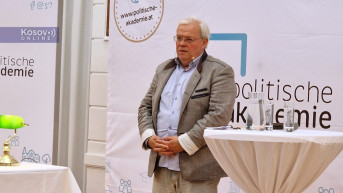
Christian Wehrschütz, a long-time correspondent for the Austrian public service ORF from the Western Balkans, believes that Western countries' pressure on Pristina will be so intense that it will be unable to avoid the formation of the Community of Serb-majority Municipalities, but that he does not see any carrot at the moment by which the EU would force Serbia to sign any agreement.
Wehrschütz, a reporter from the battlefields in this region, now also from Ukraine, who often stayed in Serbia and Kosovo, assessed for Kosovo Online that no agreement was reached in Ohrid last Saturday.
"I was just in Kosovo, and I spoke with the former minister of foreign affairs and some other people, who said that there is no agreement until Serbia recognizes Kosovo's independence or allows Kosovo's membership in the UN," he says.
When asked if some kind of agreement could be reached by the end of the year, at the insistence of the EU and the US, Wehrschütz said that in politics, the rule "never say never" applied, but that he did not see such a possibility for now.
"For now, realistically, I don't see any carrot for Serbia to sign the agreement," he said.
Pristina refuses to form the CSM, but Wehrschütz believes it will have to do so anyway.
"Kurti said in the parliament that there must be some kind of organization, the CSM. It is not known yet how it will be formed and what it will look like, but I think the pressure will be so intense that there will have to be such an organization," Wehrschütz noted.
When asked whether Russia used the NATO aggression against the FRY in 1999 as a justification for the attack on Ukraine, from which Wehrschütz has been reporting for the last eight years, he said no, but added that the bombing was one of the steps in which trust between the West and Russia was lost during those years.
Yeltsin was very weak at the time, but in that context, he recalls, the Balkans played its role, in a negative sense.
He also recalled the Russian seizure of the Pristina airport after the bombing, which, he added, had been the first confrontation between the West and Russia.
"There was the question of the third world war then, and that was a big step for the end of the honeymoon between the West and Russia," Wehrschütz said.


0 comments