
Costa: Normalisation of relations key to the European future of Kosovo and Serbia
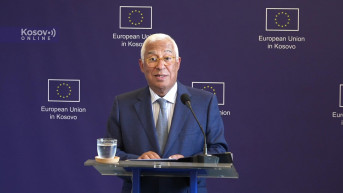
President of the European Council António Costa stated today in Pristina that the normalisation of relations is essential for the European future of both Kosovo and Serbia.
Speaking at a press conference, Costa underlined that dialogue is crucial for progress on the European path and noted that some progress has been achieved, adding that the implementation of the Ohrid Agreement must now be ensured.
Recalling that elections will be held in Kosovo this weekend, Costa said he had conveyed a clear message to his interlocutors in Pristina that partnership comes with responsibility.
“The European Union can support Kosovo, but it cannot do Kosovo’s homework. Kosovo needs strong and functional institutions capable of delivering reforms. During my meetings, I encouraged political actors to place European integration above divisions. Kosovo’s Constitution embodies clear European values, such as dialogue and respect for all communities. Political leaders must ensure that these values are translated into practice,” Costa stressed, adding that strengthening good-neighbourly relations is also essential.
Costa reiterated that the EU supports Kosovo on its European path.
“Since 1999, the European Union has been Kosovo’s strongest and most reliable partner. To date, we have invested €3.7 billion across numerous sectors. We stand ready to do more because we believe Kosovo’s future lies within the European Union,” Costa said.
He also reiterated that, at a time of global geopolitical instability and uncertainty, EU enlargement is not merely an opportunity but a geostrategic necessity for Europe and an investment in the peace and stability of the continent.
Costa praised Kosovo’s full alignment with the EU’s foreign and security policy, describing it as a clear indication of Pristina’s strategic orientation.
Responding to journalists’ questions on whether the absence of a response from the EU regarding Kosovo’s application for candidate status was a consequence of developments in Kosovo, including frequent electoral processes, or the lack of unity within the EU on the issue of recognition, Costa said there was consensus regarding the reform agenda and the accession process. He stressed that it is very important for Kosovo to implement, step by step, what has already been agreed.
“I am confident that at the end of the process we will not encounter problems on the EU side. However, until then, we need a broad national consensus. As regards accession to the European Union, this can be translated into concrete actions, and we have managed to maintain a clear path towards achieving this enlargement process for Kosovo,” Costa said.
Asked how the continuation of high-level dialogue could be expected in the absence of accountability for the Banjska incident, Costa replied that all parties must focus on the future.
“The European Union is a peace project. It was created when, above all, Germany and France decided to overcome a dramatic history and turn towards a prosperous future. All of us have had problems with our neighbours in the past, sometimes very dramatic ones, but we must decide what we want – a shared future or a past in which we hated one another. We must focus on the future. What I am saying here, I am also saying in Belgrade. It is important that the European Union remains engaged in the dialogue, that Belgrade remains engaged in the dialogue, that all sides act in good faith, and that it is recognised that the focus must be on the future,” Costa stated.
The President of the European Council met today in Pristina with Acting President of Kosovo Albulena Haxhiu and Prime Minister in a caretaker capacity Albin Kurti.
In recent days, Costa visited Sarajevo, Tirana and Skopje. As part of his regional tour, he will next travel to Belgrade before proceeding to Tivat to attend the EU–Western Balkans Summit.
0 comments