
Curcic: Implementation of the Franco-German plan will await different political circumstances
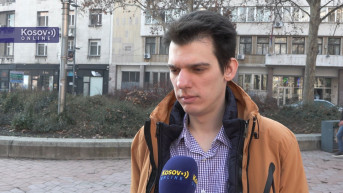
Petar Curcic from the Institute for European Studies suggests that Germany, due to reduced activity in the Western Balkans region resulting from internal political developments, European elections, and crises worldwide, is unlikely to change its strategic policy regarding Kosovo, and he adds that the implementation of the Franco-German plan will probably wait for other political circumstances.
Curcic notes for Kosovo Online that the German government and Chancellor Olaf Scholz are historically at a minimum concerning competence ratings and points out that popularity is one thing, while strategic interests toward Kosovo in Germany haven't changed for more than 30 years – certainly since the NATO aggression, and even before.
Currently, he notes, Germany is focused on internal issues such as the farmers' strike and other ongoing strikes, while German foreign policy and the domestic political scene are interested in European elections.
"That will be the center of attention, especially as it decides which of these European parties will prevail. Scholz's party is part of the bloc of socialist and democratic parties, while on the other hand, the opposition Christian Democratic Union is in the European People's Party. The struggle could be in focus, but we shouldn't expect Germany, even if it becomes less active in this area, to change its strategic policy toward Kosovo. It was one of the promoters of Kosovo's independence," Curcic states.
Regarding the Franco-German plan, Curcic says Germany will undoubtedly wait for the outcome of the US elections because it will determine broader relations between Europe and the US.
"It shouldn't be expected that either the US or European countries that recognized Kosovo's unilateral declaration of independence will withdraw their recognition. As for the right-wing, although assessments indicate it might strengthen, we should wait for election outcomes and general political circumstances; it's difficult to predict what will happen, but even in that sense, given that no right-wing government currently in Europe has changed its stance on Kosovo's secession, I don't believe Alternative for Germany would either," Curcic says.
He also mentions a process of fragmentation within the German right-wing, with the emergence of some additional right-wing parties.
"Basically, Germany won't change its stance, but the implementation of the Franco-German plan will wait for broader political circumstances; of course, one shouldn't forget the crisis in the Sahel, the crisis in the Mediterranean, the crisis in Ukraine, and the potential escalation in relations in the Pacific or the Far East," he points out.
According to Curcic, it is expected that Kurti's government, with the support of certain Quint countries, will exert pressure on the Serbian community, and one of them is undoubtedly the decision of the Central Bank of Kosovo to introduce the euro as the sole official currency.
He reminds us that although the euro is used in Montenegro and Kosovo, this wasn't done in line with the decisions of the European Central Bank. This will be a stumbling block, primarily for Montenegro as a full-fledged independent state, but also for Kosovo in terms of attempts by the Brussels administration to include them in the enlargement process or negotiations, which will be particularly problematic due to the five EU member states that haven't recognized Kosovo.
"Kosovo's perspective from that perspective is complex, and it's not expected to improve in the foreseeable future, despite the fact that leading Western countries will try to support Kosovo in their intentions," Curcic notes.
As an interesting point, Curcic mentions the dispute over the Serbian church and whether it is Orthodox or Catholic.
In that regard, he notes that Viola von Cramon, who is generally critical of the authorities in Belgrade, had an interesting stance, stating that it is a Serbian church and condemning Albanians for attempting to rewrite facts.

0 comments