
Demokracia: Tender for Ibar Bridge construction awarded to company close to the government, suspicions of abuse ahead of elections
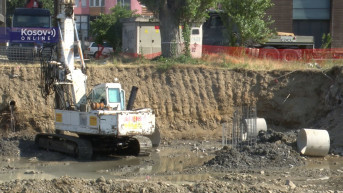
Following the initiation of an investigation by the Kosovo Special Prosecution regarding the tender for the construction of two new bridges over the Ibar River, the portal Demokracia reports that the procedure was conducted under an expedited, non-public process, with all competing companies eliminated using almost identical reasoning. Although this is a multimillion-euro project, the authorities reportedly failed to provide evidence of urgency, while the favored company is allegedly linked to the government—further deepening suspicions of tender rigging and misuse of public funds ahead of local elections.
The Ministry of Environment, Spatial Planning, and Infrastructure eliminated all companies participating in the tender for bridge construction in Mitrovica, using nearly identical justifications for each, with minimal variations—suggesting a potentially deliberate setup.
The procedure was conducted via a negotiated process without prior publication—a method permitted only in exceptional cases of urgency. However, in this instance, there is no evidence to justify the urgent need for bridge construction.
Identical Justifications for Eliminating All Firms
Documents obtained by Demokracia show that the reasons for disqualifying bidders were nearly identical. Most commonly cited reasons included: failure to meet safety conditions outlined in the tender, invalid offers, failure to submit the required number of documentation copies, and absence of subcontractor declarations.
The main concern arising from the elimination of all bidders on nearly identical grounds is that the evaluation process was not genuine, but rather a formality used to disguise a pre-determined decision on the winner.
The Ministry invited five firms to submit sealed bids through a negotiated procedure without publishing a contract notice for the construction of pedestrian and vehicle overpasses in Mitrovica.
The winner of the tender was Eurokos Holding, although some disqualified companies had significantly lower bids. All eliminated bidders were rejected with nearly identical reasoning, further deepening doubts about the integrity of the process. Such a practice is considered unusual and contrary to the core principle of independent evaluation of each offer. Even Lika, a company known for regularly winning large tenders, was eliminated for allegedly failing to meet basic conditions—something deemed highly unlikely for a firm of that caliber.
What Does the Law Say?
The tender was conducted as a negotiated procedure without publication, which, under the Law on Public Procurement (Article 35), is only permitted under the following circumstances:
* There is extreme and unforeseeable urgency;
* There are technical or artistic reasons to engage only one supplier;
* There is a legal basis for exclusive exemption.
None of these conditions were met in this case. Therefore, the use of a negotiated procedure without prior publication was unlawful.
Connections Between Winning Firm and the Government
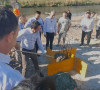
After the elimination of other bidders, the contract was awarded to Eurokos Holding, a company that has previously received contracts from the Ministry and is frequently part of consortia involving companies linked to Bageri. Photos from the construction site circulating on social media show workers wearing shirts with logos of Eurokos and Dio Bes—a second company owned by the brother of Bageri’s owner.
Suspicions of manipulation and abuse are further heightened by the fact that the project is being carried out just before local elections in October. The construction deadline is 90 days, which means the bridges would be completed just before the official start of the campaign on October 12. This raises serious concerns that the project serves as part of the government’s political campaign.
Had the procedure been conducted openly and transparently—as required by law—it would have taken several months, including a mandatory bidding period, evaluation, and the possibility for appeals. This was all bypassed—presumably intentionally—to ensure the works would be completed at a politically advantageous moment, Demokracia reports.


comments