
Dencic: Possible privileged EU-Canada partnership, but without impact on the Western Balkans
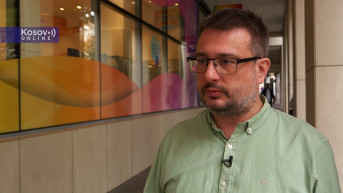
Nikola Dencic, editor of the foreign policy section at Radio Belgrade's First Program, assessed that a privileged partnership between the EU and Canada is possible, but that such cooperation will have no impact on the Union's enlargement to the Western Balkans.
Dencic sees European Commission President Ursula von der Leyen's initiative for Canada to become an associate member of the EU as an opportunity for deeper political consultations and says that this is still a long way from membership.
“The likelihood of Canada becoming a new member or receiving a privileged status in the EU is roughly on a par with the possibility of Canada becoming the 51st US state. It is really difficult to expect that,” Dencic told Kosovo Online.
He explains that it could be a matter of talking about a privileged partnership, signing agreements, of which there are already many, and reaching certain agreements that would enable closer economic cooperation, or perhaps even entering into a sphere of deeper political consultations.
“This could happen particularly when we see that the EU's response and that of the current Canadian authorities are, above all, directed at the position that US President Donald Trump has taken toward both Canada and the Union. I think that all their perhaps somewhat sharper, bolder statements, whatever we may call them, are primarily directed toward that,” Dencic said.
Therefore, he says, such initiatives absolutely cannot affect the status of any current candidate.
He added that some progress could have been expected in the case of Iceland, namely a possible renewal of Reykjavik's negotiations with Brussels, but Iceland's citizens rejected the continuation of those negotiations in a referendum.
“We will see what happens on the political scene in EU countries, by the end of the year or perhaps over the next year. It depends on which political forces win elections, in what direction the Union itself will go, but agreements and any talks with Canada will not affect that. The negotiating process will most likely continue along the same course as it is on now. At present, Montenegro is clearly the only, or one of the few, candidates that is genuinely progressing in the full sense. It was said that Albania had made major progress, but there is now a certain standstill there,” Dencic explains, recalling that Serbia has not opened a cluster for a long time.
He is convinced that, before any decisions, which are also geopolitical, such as talks with Canada, the status of the negotiations in the coming period will primarily be affected by political relations within the EU, especially within its most powerful member states.
Asked whether the case of Canada and the EU can be compared with the initiative of Aleksandar Vucic and Edi Rama on gradually joining the Schengen Area, Dencic says that it is difficult to implement ideas of accession that would not follow the existing methodology – that negotiations are first formally completed, followed by the country becoming a full member – because all EU member states would have to agree to this.
“The question is how willing they would be to do that. There are ideas, and in fact, within the framework of the Growth Plan for the Western Balkans, the process has allowed candidate countries to be included – whether in a privileged position regarding the common market or certain customs protocols. There has been discussion about whether, if a candidate makes significant progress, it could in some way participate in the work of the Union's institutions, without voting rights,” Dencic said.
Nevertheless, he notes that the idea of a European Union “in several circles” or “at multiple speeds” has been promoted by certain European officials, above all French President Emmanuel Macron, but there has never been agreement on it, so the question is whether it would be feasible at this point.
“As for joining Schengen, what we have also heard from certain EU leaders is that it may actually be easier to become a member of the Union than a member of Schengen. Not all members of the community are part of the Schengen Area. When it comes to the initiative of President Vucic and Prime Minister Rama, it was certainly just a message they wanted to send to the European institutions. They wanted to convey that the two countries are ready to make progress toward membership, but for this to produce any formal results, it is really quite difficult at this point,” Dencic concluded.



0 comments