
Dizdarevic: Natural gas is neither a quick nor a long-term solution for Kosovo
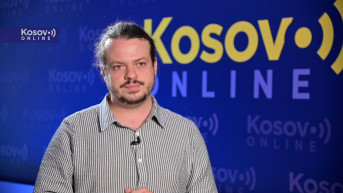
Damir Dizdarevic, Program Coordinator at the BFPE Foundation for a Responsible Society, says that from a political perspective there may be some interest for Pristina in joining the American gas supply chain, but from an energy standpoint this is not the case because natural gas is not a long-term solution for Kosovo.
In his view, the only incentive for Kosovo to join the US gas project would be support from Washington for the authorities in Pristina, as signing such an agreement could potentially lead to closer cooperation. However, he adds that there is no fundamental interest because Kosovo lacks gas infrastructure.
“According to their estimates, which are on the conservative side, it would take between seven and ten years to develop everything, from new pipelines and transmission networks to distribution systems. Given the political instability of the entire region, it will likely take considerably longer. Kosovo has spent €700 million on electricity imports over the past several years, while its power plants are extremely outdated. It needs decarbonization for the sake of energy security, but I am afraid that this natural gas solution is not fast enough for its needs. Politically, there may be some interest, but fundamentally and from an energy perspective, I would say that is not really the case,” Dizdarevic assessed.
Looking at the issue from the perspective of European integration, he adds, Kosovo will eventually have to move away from coal, but in his opinion natural gas is not a long-term solution.
“There are other, much better projects that could provide stable and at the same time flexible energy, such as biomass and similar initiatives. Nevertheless, coal will most likely remain, at least in the medium term, if not the central element under an optimistic scenario, then certainly a very important factor in Kosovo’s energy system,” he said.
Dizdarevic believes Kosovo will not suffer consequences if it does not sign a gas agreement with the United States because Kosovo is one of Washington’s most important partners in the region and is practically free of Russian influence.
“Whether they accept or reject this project, I do not think it will have any long-term or lasting consequences for relations between the authorities in Pristina and the United States, even though the US is quite persistent when it comes to selling its liquefied natural gas to Kosovo,” he said.
In his opinion, the issue is more about connecting other markets through a hub that would likely be North Macedonia and selling American LNG than about exercising political leverage.
“There may be some positive outcomes, but we have to look at Donald Trump’s foreign policy and ask whether this is a typical transactional project, where he is trying to place some of his own associates, as in the case of the Southern Interconnection project in Bosnia and Herzegovina, where his former attorney from his first term, who was also part of his campaign team, is the chief executive of a company with little experience in energy projects, or whether this is part of a more stable and long-term American energy diplomacy toward Kosovo. At the moment, we do not have an answer to that question, and it is a crucial one. If this is part of a lasting energy diplomacy toward Kosovo, then perhaps some political points could be gained. If not, there are no political points to be gained, just as Albania has not gained any long-term political advantages from the situation on Sazan Island,” Dizdarevic assessed.
As for Washington’s interests, he says that since Russia’s invasion of Ukraine, the primary American objective has been to push Russia out of the energy sector in the Western Balkans, or at least reduce Russian influence.
“That is the primary interest. We can see it in the US sanctions against NIS, which originated under the Biden administration before Trump returned, in their planned projects related to the Southern Interconnection in Bosnia and Herzegovina, and in various memorandums of understanding and other natural gas projects in North Macedonia, Montenegro, and Albania. The secondary interest is that the United States has been one of the world’s largest producers and exporters of liquefied natural gas since the shale revolution of the 2010s, and its goal is to place its natural gas on the Western Balkan market and thereby increase its influence,” Dizdarevic said.
Through economic and energy diplomacy, he added, the United States is trying to reduce Russian influence, expand its own influence, and sell its natural gas on both the Western Balkan market and the wider European market.


0 comments