
Djogovic: Solution to the dinar issue will move toward the licensing of the Postal Savings Bank
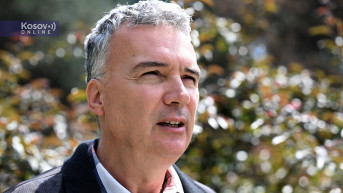
Economist Sasa Djogovic says he expects the solution to the problem arising from the decision of the Central Bank of Kosovo to halt payments in dinars will move toward licensing the Postal Savings Bank by Kosovo authorities, enabling it to process payments for all entitlements received by Kosovo's Serbian population.
As Djogovic tells Kosovo Online, returning to the previous system won't happen, and a new solution needs to be found.
"It is inevitable that payments will shift to euros. From statements by our representatives, I could gather that they are ready for euro payments and that there is a willingness to license our Postal Savings Bank by Kosovo authorities, through which we could then process payments for all entitlements received by our citizens. It will go in that direction, but of course, it is not just an economic factor, there is also a political factor in terms of whether this indirectly or directly acknowledges the authority of the Central Bank of Kosovo. However, considering that personal IDs, license plates, and customs seals are already acknowledged, and there's integration in the energy sector, I don't see any particular difference why licensing our Postal Savings Bank would be unacceptable for Pristina, as this would facilitate life for Serbian nationals," Djogovic says.
He stresses that the focus should be on the population rather than political posturing because people have been living in uncertainty for months, dealing with additional costs, and self-organizing to access their money.
"Whether this solution will be reached today, tomorrow, or in some subsequent period, I don't know, but the longer this period lasts, the more the citizens in northern Kosovo will pay," our interlocutor says.
Pristina's chief negotiator in the dialogue, Besnik Bisjimi, stated that "licensing a Serbian economic entity in Kosovo is unacceptable" for Pristina, without specifying if this referred to the Postal Savings Bank. Djogovic says he doesn't see why licensing the Postal Savings Bank would be unacceptable for Pristina.
"Statements from the Central Bank of Kosovo indicated that any bank wishing to operate in Kosovo needs to be licensed, and in that regard, they had already sent messages in February toward licensing our Postal Savings Bank. It would be beneficial for Serbia to have its bank in Kosovo and for that bank to gradually expand its operations to other areas of Kosovo as tensions ease. Because if you have financial influence in Kosovo, it means you can exert other influences and have other levers of power. It would be desirable for our bank to be present across Kosovo because the license wouldn't just be for the north. Of course, in the current circumstances, this is a mission impossible, but by obtaining a license, you already have documented potential to expand operations in the future," Djogovic believes.
Asked about how this will affect institutions registered in the Serbian system, our interlocutor says this issue should have been resolved before the currency issue, as these problems are now intertwined.
"I think it was a bad move to start with a unilateral decision on the dinar and not first agree on which authorities public institutions would fall under. Based on that, a decision could have been made regarding the currency, i.e., the payment currency. For now, from what I see, official Belgrade will certainly make payments to these institutions until a different solution is reached. Just as they will make payments for pensions and social assistance recipients in the same way that Belgrade and Pristina agree on. Later on, I believe there will be discussions on where these institutions, health centers, hospitals, and post offices, will be integrated, in which system they will continue operating," Djogovic says.
He concludes that the problem in this whole situation is the lack of political will on both sides, while "everything is at the expense of Kosovo's Serbian population," because both sides are posturing and trying to gain better political points. That is why, he says, we see unilateral moves and conditions being imposed.
"We have imposed solutions, after which additional solutions are sought for issues that should have been resolved first. Some knots are being tied, time is passing, and essentially, both sides understand that an agreement will have to be reached sooner or later. I believe the question of public institutions and enterprises will be subject to further discussions between Belgrade and Pristina after reaching an agreement on the payment currency in northern Kosovo," Djogovic states.



0 comments