
Djukic: Sarrazin frequently in Kosovo because he is the most suitable person to obtain information of interest to the EU
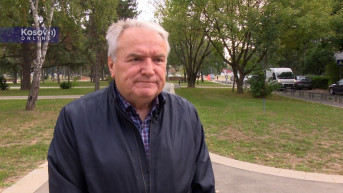
German Special Envoy for the Western Balkans, Manuel Sarrazin, has visited Pristina twice since the tragic events in Banjska on September 24 as the only official from the international community responsible for regional issues, and diplomat Srecko Djukic believes that these visits are not only related to Kosovo-Germany relations but that he was chosen by Brussels as the most suitable person, someone who can easily obtain information of interest to the EU.
"The close ties between Germany and Pristina are well-known, dating back not only to the proclamation of the so-called independence of Kosovo. However, I wouldn't view Sarrazin's visits to Pristina solely in the context of Kosovo-Germany relations. He went there on a mission for the European Union. After all, he is the most suitable person," Djukic said to Kosovo Online when asked about his perspective on Sarrazin's frequent visits to Pristina.
The German envoy arrived in Pristina immediately after the events in Banjska on September 25 and then again several days later, on October 1. On both occasions, he met with Kosovo Prime Minister Albin Kurti, who, during his meeting with the German diplomat, called for severe sanctions against Serbia due to the events in Banjska.
According to Djukic, the EU Special Envoy for the Belgrade-Pristina dialogue, Miroslav Lajcak, could not have come because he would have had to visit Belgrade as well. France has a different perspective on the entire Serbia-Kosovo relationship, as does the Special Envoy of the United Kingdom.
"The German envoy was the one who could best obtain information about what interests Europe. What are the problems in the relationship between Pristina and Belgrade, and what are Pristina's views on overcoming the current very serious, ongoing crisis," Djukic says.
He points out that in diplomacy, there are various nuances used at a given moment, and he believes that this is a characteristic of the visit by the German envoy.
"The EU needs to carefully assess the entire truth of this event, decide what can be done, make a plan, and then work accordingly. I think Europe does not yet have all the necessary arguments. When I say Europe, I mean the EU and Brussels. We will wait for some more time, and then we will have a plan to overcome this crisis," Djukic concluded.

0 comments