
Djuric: Criticism from Belgrade of the “non-transparent alliance” of Zagreb, Tirana, and Pristina is understandable
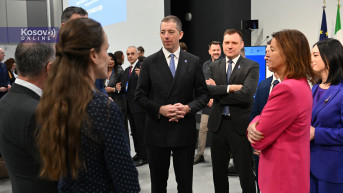
Serbian Minister of Foreign Affairs Marko Djuric stated that greater transparency is needed when addressing security issues in the region, emphasizing that there is no reason for security cooperation to be conducted in a non-transparent manner. He stressed that Serbia prioritizes stability and economic development and does not wish to create new military alliances in the region.
“There is a need for greater transparency when dealing with security matters. Criticism from Belgrade directed at this non-transparent military alliance announced between Croatia, Albania, and Pristina is understandable,” Djuric said in an interview with the Italian agency Nova, on the sidelines of a meeting marking the 30th anniversary of the Executive Secretariat of the Central European Initiative, held in Trieste.
The head of Serbian diplomacy recalled that the Balkans is a region that experienced a severe civil war three decades ago, and that any military developments beyond existing frameworks—such as NATO or other regional bodies—should be discussed and agreed upon in advance. He added that, following the Dayton Agreement, a convention limiting certain categories of armaments remains in force.
“There is no reason to go beyond existing formats, and especially no valid reason for this type of cooperation to be conducted in a non-transparent manner. When that happens, it naturally raises concern and triggers certain reactions,” he noted.
However, he reiterated that Serbia prioritizes stability and economic development and does not seek to form new military alliances in the region.
“We too could seek partners or attempt, in a non-transparent way, to alter the balance of military power in the region. But I would much prefer greater cooperation in the field of security,” Djuric said.
Speaking about relations between Italy and Serbia, he emphasized that they are particularly strong and that Italy is one of Serbia’s key strategic partners in Europe and a very close friend. He highlighted Italy’s support for the preservation of Serbian cultural heritage, a topic also addressed during the CEI conference by Senator Stefania Craxi.
He also pointed to the role of Italian troops in Kosovo.
“Italian Carabinieri and soldiers have been protecting Serbian monasteries in Kosovo, for example the Decani Monastery, for many decades. Serbs know this, and they appreciate and respect it,” Djuric noted.
He added that there are “widely open doors” for further strengthening economic, political, and cultural cooperation between the two countries.
“We truly see Italy as one of the friendliest countries in the world,” Djuric underlined, thanking Rome for its understanding of the complex regional situation and Serbia’s national priorities.
He reiterated that Serbia remains firmly on its path toward the EU, rejecting the idea that Serbia’s relations with Russia and China could represent a strategic obstacle.
“Serbia has traditionally pursued a very diverse and balanced network of international partnerships. However, Serbia is firmly on its path toward the EU, and there should be no doubt about its geopolitical orientation in that regard,” the Serbian foreign minister stated.
In that context, he indicated that Serbia’s “unique relationships could, in this situation, even serve as a comparative advantage for Europe,” explaining that this applies not only to eastern partners but also to countries in Africa, Asia, and Latin America, with which Belgrade, as a founding member of the Non-Aligned Movement, has traditionally maintained strong relations.
He also emphasized that Serbia firmly supports the principles of territorial integrity and sovereignty and, recalling that its position on the conflict in Ukraine has been “very clearly” expressed, noted that there are no major differences between Belgrade and most European countries in terms of foreign and security policy.
“There are nuances, but no strategic differences,” Djuric stressed.
He described the Central European Initiative as still a useful instrument for fostering continental integration and accelerating the Balkans’ path toward the European Union.
He recalled that the organization was conceived and launched at a time when Europe was still divided by the Iron Curtain, when—thanks to the vision of Italian Foreign Minister Gianni De Michelis, Yugoslav Foreign Minister Budimir Loncar, and the ministers of Hungary and Austria—a bridge was created between East and West, at a time when Europe needed such a bridge to realize the vision of a united continent.
That function remains relevant today, 30 years later, Djuric is convinced, as there is still a need for greater unity and stronger integration of the region into the European Union.
“The Central European Initiative has been an effective tool for integrating many countries at the infrastructural, political, and social levels, making them more cohesive and aligned with the broader European vision. For that reason, CEI can still play the same role today, and it is necessary to give new momentum to the Central European Initiative and use it as a means for the rapid integration of the Balkan region into Europe,” Djuric said.
In his view, this is in the best interest not only of the countries of the region but also of Italy and Europe as a whole. He therefore expressed gratitude to Prime Minister Giorgia Meloni and Minister Antonio Tajani for their vision of a united Europe.
He placed particular emphasis on the concept of “unification,” which he considers more appropriate for the current historical phase Europe is going through.
“I like the word ‘unification’ because it reflects the geopolitical reality that Europe must consolidate if it wants to survive. If it does not consolidate, within just a few years it will be completely overtaken by other global actors and will no longer be relevant. In that case, internal competition within Europe—along regional, political, national, and ideological lines—would risk producing only one outcome: we will all be marginalized, pushed aside, and turned into a chessboard for the real great powers,” Djuric warned.
He added that there is even a risk that Europe could “become a theme park for visitors from other regions.”
To avoid this, Europe must “rejuvenate and strengthen itself” by integrating the Balkans and other regions that have the potential to become members.
In that context, he emphasized that Serbia is “strongly supported,” also because, as the country with the largest number of immediate neighbors in Europe after Germany, it represents not only an economic factor but also a central element of stability.
He also pointed out that Serbia accounts for 53 percent of the Balkan economy and said he is “very enthusiastic” about the idea of accelerating the construction of high-speed railway links between Belgrade and Trieste, which he also discussed with Tajani.
“I believe this is something very good and mutually beneficial,” Djuric said, recalling that Italy is one of Serbia’s main trading partners and investors, and that both Italian and Serbian companies benefit from this relationship.


0 comments