
Djuric from Dayton: The era of divisions in the region should remain behind us
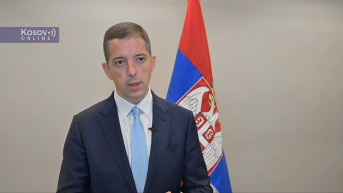
Serbian Foreign Minister Marko Djuric stated today in Dayton, where he is attending the 30th anniversary of the Dayton Peace Agreement, that Serbia used the event to send an important message to the world — that it is a country undergoing rapid and dynamic development, looking toward the future, and extending a hand of cooperation.
The Serbian diplomat emphasized that the participation of the Serbian delegation at the gathering was another opportunity “to refresh many people’s image of our country.”
“In my address to the NATO Parliamentary Assembly here in Ohio, I sent a clear message that Serbia does not see Bosnia and Herzegovina as a monoethnic state, nor as a country where one side should impose its political will on the other two. With strong support for the Dayton Agreement, we demand that all sides treat each other with respect and resolve open issues exclusively through internal dialogue, not through any form of imposition,” Djuric said, according to a statement from the Ministry of Foreign Affairs.
He added that this was also an opportunity to present Serbia’s vision for the future of the Balkans, because Serbia believes that the time of division in the region should be left behind, and that the time of economic cooperation, infrastructure, cultural, and educational connection should be strongly prioritized.
“In the 21st century, a new generation has emerged in the Balkans — one that doesn’t believe that checkpoints, barriers, and physical borders are the way to prove statehood, identity, or cultural uniqueness. None of our Balkan countries will be less sovereign because people are allowed to move freely, trade freely, collaborate freely, and build relationships that will ensure lasting peace and a secure future in the region,” Djuric stated.
That is why, he explained, in the context of the Dayton Agreement, he insisted that respect and mutual understanding — not imposition — should be the tools to achieve that goal.
Djuric noted that he had a number of important meetings in Dayton, primarily with members of the U.S. administration.
“I spoke with a group of U.S. Congress members from both political parties. I think it’s very important for Serbia to connect with prominent American political leaders and present our positions. I heard many positive sentiments during this meeting with U.S. congressmen, and I believe Serbian-American relations have a good dynamic,” he said.
He particularly emphasized the importance of the messages delivered in Dayton by U.S. Deputy Secretary of State Christopher Landau, which he described as encouraging for Serbia and for Serbs in the region.
“From that speech and the excellent meeting we had with Mr. Landau, we can conclude that the U.S. administration truly wants to build a new, positive type of relationship with both Serbia and the entire region. Regarding Bosnia and Herzegovina, the idea of creating a unitary state and imposing solutions from outside clearly does not have support in the current U.S. administration,” Djuric stated.
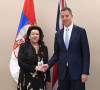
He also noted that during his stay in Dayton, he had a very productive meeting with the UK Special Envoy for the Western Balkans, Karen Pierce, with whom he exchanged views on how to follow up on recent talks held in Belgrade with British Foreign Secretary David Lammy, aiming to open a new chapter of cooperation and launch a strategic dialogue to better connect the two countries’ economies and societies.
Djuric announced that he would also attend an important dinner this evening, which will bring together the NATO Secretary General and representatives from countries and territories of the region.
“I don’t expect it to be an easy discussion for the Serbian representatives, but I am fully confident that the principles we advocate — namely cooperation, mutual respect, and respect for territorial integrity — mean as much to all participants today as they did 80 years ago when the UN enshrined them in its Charter,” Djuric concluded.


0 comments