
Djuric: Serbia has turned a new leaf, no longer remains silent but actively presents the truth about Kosovo
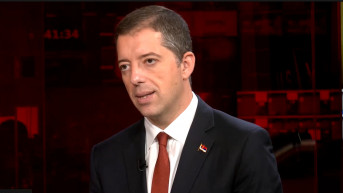
After the UN General Assembly session where the resolution on Srebrenica was adopted, it is completely clear that opponents of Serbia will face serious, organized opposition to any unilateral efforts to insert Kosovo into the bodies of world organizations, said Serbian Foreign Minister Marko Djuric.
Djuric, speaking on the "Usijanje" TV show on Kurir television, said he wants every embassy and consulate, when it comes to explaining and advocating for the Serbian position, to be "small offices for Kosovo and Metohija" in the domain related to Kosovo.
"We will provide strong support to the President's team and the Office for Kosovo and Metohija. Over the past few years, the state team has achieved an impressive result in the number of countries that have withdrawn recognition of Kosovo - as many as 28 countries, or at least 27. This is incomparable to the situation a decade ago. Now it is completely clear, especially after the UN General Assembly and the Resolution on genocide, that our opponents on this issue will face serious, organized opposition to any unilateral efforts to insert Kosovo into the bodies of world organizations. Preserving Serbian national interests in Kosovo and Metohija remains one of the key priorities," Djuric emphasized.
He highlighted that Kurti's regime is not democratic but ethnonationalistic and aimed at realizing a "national romantic" vision of Albin Kurti, demonstrating throughout his work a desire to be the unifier of all Albanians in the Balkans.
Djuric pointed out that sanctions for Kurti's regime for unilateral moves were absent, reminding that there is no agreement he has not violated, nor any European or democratic value he has not violated.
He noted that Serbs are denied participation in elections, and as far as freedom of trade is concerned, Serbian goods have been unable to enter Kosovo for a year now.
"Finally, our compatriots and all those who feel part of the Serbian state have been denied the right to child benefits, pensions, and salaries. The ethnonationalistic regime in Pristina is focused on abusing the Serbian community, diminishing their collective rights. The fact that today we have so-called mayors who did not win a single percent of the vote speaks to the lack of democracy in Kosovo," Djuric explained.
He noted that Kurti is sometimes skilled in spinning and political propaganda abroad, adding that Kosovo invests significant resources in this.
However, he added that Serbia has turned a new leaf and no longer remains silent but actively presents the truth about events in Kosovo.
"The fact that Kosovo's attempt to enter the Council of Europe failed did not happen by itself," Djuric stressed.
He pointed out that Kurti wanted to complete Kosovo's accession to the Council of Europe in May, before the elections in Kosovo, and that attempt failed.
"Unfortunately, Kurti's regime will continue to try to ensure that countries that supported that project continue to push for it to be accepted into the Council of Europe," Djuric is convinced.
He pointed out that due to the war in eastern Europe, part of the countries on the European continent has, at least temporarily, replaced the principle of supporting minority communities and respecting collective rights with actions aimed at consolidating the so-called statehood of Kosovo.
"It is up to us to point out the danger in this because Europe cannot afford to allow the creation of an autocratic state based on trampling Serbian and all other non-Albanian communities in Kosovo in its southeast," Djuric concluded.
Djuric said that Serbia was faced with a kind of "perfect storm" of events related to Kosovo, the efforts of Kurti's regime to enter international institutions outside of all agreements, as well as the campaign regarding Srebrenica, where there was a risk that the international community would be persuaded by propaganda to accept that the Holocaust, the genocide in Rwanda, and the events in Srebrenica - are on the same level.
"We opposed this and stood up. Our campaign does not only relate to and have consequences in this area but also brings a wider network of contacts to Serbia, which will bring benefits in economic and other areas. We want to change Serbia's image in the international community. This was an attempt to push Serbia down, which we will not allow," said Djuric.
Serbia, he emphasized, is a rapidly developing country that has changed the paradigm of its economy.
"Look at how much better relations are today with Hungarians, Roma, and Bosniaks in the country," the minister observed.
He pointed out that the methods used against Serbia are of a hybrid nature, deliberately designed, with the aim of creating a political atmosphere and circumstances in which it will not be able to realize its national priorities.
"We have made our point, strongly opposed the stigmatization of our people, and created a new image of what happened in the 1990s. Our efforts to highlight the truth about the events of the '90s will not end with this Resolution. We will continue to tell the story of our victims," Djuric emphasized.
He stressed that it was extremely irresponsible to push the story of the Resolution without the consensus of all three peoples. Now, he added, relations within Bosnia and Herzegovina are worse than they were.
He emphasized that Serbia will note who was on which side and keep that in mind for its future votes on topics important for those countries, but will strive to have good and better relations with those countries in the future.
"We will not demonstrate arrogance or hostility towards anyone. In New York, in the most difficult moments for us, we showed that we love our own, that we do not hate anything foreign, that we have no animosity, especially not towards our neighbors in the region, but we will not allow Serbian victims to be humiliated," Djuric added.
He emphasized that Serbia and Germany, which initiated the Resolution, are significant partners, reminding that Germany employs nearly 80,000 people in Serbia and that the trade exchange of over 11 billion euros is at a record high.
"We are partners striving to become part of the same political community - the EU. Within that community, certain values based on the inclusion of all citizens are shared. We should look to the future of German-Serbian relations, and it must be positive," Djuric emphasized.
He announced a "charm offensive" for Serbia, saying that the "charm of Serbian policy lies in its openness to everyone, as a country that reaches out in all directions in the world."
"We must strive to convince others of the value of our country, our policy on key issues, to go, if necessary, to the capitals of countries that have a negative attitude towards us and try to change that. It is not just a phrase when I say that Serbia is pursuing an independent and libertarian policy. Precisely as such, Serbia assesses that it is important to improve relations with the United States. The US has become the number one partner when it comes to trade in services, especially in the IT sector. We have many reasons to be proud of more than a million people of our origin in the US, who are a significant bridge of cooperation," he noted.
He expressed his expectation that the Serbian Ambassador to the US will be appointed very soon, but adding that the position is not vacant because Serbia is represented by a great diplomat, Ambassador Vladimir Maric, who is currently acting in Washington.
Asked about the elections for the European Parliament, he said that in terms of personnel, the next year could bring a completely different political "topography" on the international scene, but that geopolitical constants and strategic and military partnerships and alliances will remain unchanged.
"For Serbia, it is very important to be prepared to work and develop relations regardless of who wins the elections, in which we cannot participate. Our imperative is what is in Serbia's interest. We have defined national priorities. First, to preserve peace and stability in the country and its immediate surroundings. The second is to preserve independence in decision-making, as it is a precondition for achieving the third priority, which is economic development. The fourth priority is the demographic picture of Serbia, which we must improve and enhance in order to survive as a nation. The fifth is the preservation of the identity, culture, language, and script of the Serbian people, but also of all others living in Serbia. Our priority is always future-oriented policy. These priorities are not new. Our foreign policy will be guided by those principles outlined by Aleksandar Vucic in September 2019," Djuric emphasized.
Speaking about tomorrow's All-Serbian Assembly, he said it will be a celebration of Serbian unity and harmony in preserving the national identity, language, culture.
"It will be an opportunity to discuss how to jointly address common issues. There will certainly be much talk about Kosovo and Metohija and the need to respect the Dayton Agreement," Djuric said.

0 comments