
Djuric: Situation in Kosovo the worst in the last two decades
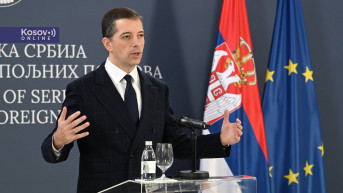
Serbia’s Foreign Minister, Marko Djuric, stated that the situation in Kosovo is the worst it has been in the past two decades, emphasizing that Belgrade is always ready for dialogue and that the process of normalizing relations will continue in the near future.
In an interview with Kurir, when asked if he sees genuine will and desire from international actors to unblock the dialogue between Belgrade and Pristina, Djuric responded that the past months were a period in which such expectations were unrealistic.
“The European Union was preoccupied with its internal administrative and staffing matters, Kosovo was in the midst of an election campaign, the situation on the ground is the worst we’ve seen in the last two decades, and the EU’s foreign policy attention has been focused on other regions. Despite our consistent commitment to reviving the dialogue, this issue was evidently not at the top of the EU’s priority list,” the minister noted.
He added that the issue of normalizing relations between Belgrade and Pristina is always on the table in Serbia's foreign policy discussions, but European political attention has shifted due to acute challenges on the EU’s eastern borders.
“We are always ready to engage in dialogue with Pristina under EU mediation, and the process of normalization will inevitably be substantively resumed at some point in the near future,” Djuric affirmed.
Speaking about expectations regarding the decision to open Cluster 3, Djuric pointed out that Serbia has received recommendations from the European Commission over the past three years to open this negotiating cluster and has long been ready for this step.
He stated that a positive decision by EU member states to initiate the procedure for opening this cluster would be a recognition of Serbia's efforts in the reform process so far and an encouragement to continue aligning with EU policies.
“Serbia would see it as an expression of trust from our European partners and a gesture of goodwill, and we would make sure to justify that trust. Serbia is a country at the heart of Europe and sincerely wishes to become part of the EU family. Every gesture of encouragement is primarily important symbolically, not only for those working hard on reforms but especially for citizens who haven’t received a clear political message about real progress in the EU enlargement process for quite some time,” said the Foreign Minister.
He emphasized that it is crucial for the EU to remain present in Serbia in every possible way and to send clear messages that the prospect of EU membership remains open.
Djuric stressed that Serbia would be ready for full EU membership by the end of 2026 if the reform process continues as planned.
“We have publicly committed to this timeline with both our citizens and international partners. I am confident that our effectiveness in this regard will reaffirm both our political credibility and administrative capacity. The topic of enlargement is definitely returning to a prominent position on the EU’s political agenda, and I believe that both we and our European partners will be ready for the next political step by then,” Djuric said.
He added that credible interlocutors have assured Serbia that the doors to EU membership will remain open for candidates from the region, but the outcome will primarily depend on strategic decisions by European partners. What those decisions will be in two or three years, the minister said, remains to be seen.
“With the geopolitical situation becoming increasingly complex, many find it difficult to predict what will happen in a month, let alone in two or three years. The EU’s enlargement policy has been its most successful policy over the past decades, reflecting the core idea of creating a unified European political, economic, and security space. We will, therefore, be ready, while the EU will need to undertake a serious political reflection and resolve some internal issues,” Djuric concluded.
Regarding relations with the United States, the minister explained that although Serbia is politically oriented towards the EU, which is its most significant economic partner and immediate political environment, with the goal of full membership, the U.S. remains the epicenter of global political and economic power. Serbia stands to learn and gain much by continuing to invest in improving Serbian-American relations.
He reminded that the U.S. significantly influences global processes and has unparalleled political capacity and economic resources.
“Serbia defines its political and economic interests rationally, and the decision to continue building a strategic dialogue with the U.S. stems from deep consideration and understanding of our long-term interests. The most immediate benefits would be in the fields of economy and technological development. As ambassador to the U.S., I took significant steps in this direction, increasing our political visibility, creating a different image and reputation for Serbia, and building mechanisms for cooperation on various levels. We will continue to develop mutually beneficial bilateral relations with the Trump administration, and I believe we have reasons to hope that the next four years will perhaps be the most fruitful in the history of Serbian-American relations,” Djuric said optimistically.
Regarding the meeting between Serbian Prime Minister Milos Vucevic and Donald Trump at the opening of the restored Notre Dame Cathedral, the minister explained that in diplomacy, ceremonial events, which at first glance do not appear to carry significant political weight, are often the most important.
“In Paris, at the opening of the restored Notre Dame Cathedral, all those who hold political significance in Europe gathered. The event was given special political and diplomatic weight by the newly elected U.S. President Donald Trump, and it was an opportunity for many to establish their first direct contact with the man who will lead the most powerful country in the world for the next four years. President Trump is familiar with the situation in our region, is well-informed about Serbia, and is aware of the political and economic potential our country possesses. Over the past years, we have worked hard to build communication channels with the political structures that will lead the U.S. in the upcoming period, and in that sense, Prime Minister Vucevic made excellent use of the opportunity and established an important contact for Serbia,” emphasized Djuric.
When it comes to Elon Musk, Djuric pointed out that in recent years there has been a significant increase in investment activity by U.S. companies in Serbia, and that of the total amount of investments, which is not small, it is more important that Americans invest most in high-tech industries, directly influencing the growth of productivity and competitiveness of our ICT industry, the level of exports of such services, and the development of a knowledge-based economy.
This, he added, helps retain a large number of domestic IT experts in Serbia, while also opening space for building a more modern and functional energy system with American partners.
“Musk’s business empire is the flagship of the U.S. high-tech industry, but it is much more than that. A potential decision by Musk to invest in Serbia would, of course, also send a clear political message, given his position within the new political establishment in Washington,” said Djuric.
When asked if Trump’s reentry into the circle of the world’s most influential politicians could lead to an end to the war in Ukraine, Djuric responded that Trump is a serious man and politician whose words carry great weight and that he used his visit to Europe after his election victory to also raise that issue.
The head of Serbian diplomacy expressed no doubt that the situation in Ukraine would be one of the foreign policy priorities of the Trump administration but also noted that one must not overlook the fact that many stakeholders are involved in the events in Ukraine.
“It will, therefore, be necessary to reconcile many interests, which is not an easy political and diplomatic task. It is in Serbia’s interest, as well as that of all humanity, for this war, which has claimed a horrifying number of lives and completely disrupted political and economic relations globally, to be brought to an end in a lasting and sustainable manner. We wish Trump’s administration success in this and are ready, as a nation that maintains brotherly relations with both Ukrainians and Russians, to help in any way possible to achieve peace,” said Djuric.
When asked how challenging and difficult it is for him as Serbia’s foreign minister to lead the diplomacy of a country striving to be the voice of reason in international politics, he clearly stated that Serbs have neither gained nor preserved their freedom and independence easily.
He added that while some European nations practically received statehood on a platter, Serbia’s independence and sovereignty were earned through countless human lives.
“When you ask me if today’s generation finds it difficult to defend such a Serbia, the answer is yes, but the sacrifices we make are nothing compared to the sacrifices our ancestors endured. Our current political and international position is the result of both our historical experiences and our strategic commitments. It is true that we live in a time when those who feel threatened gather into blocs, and uniformity is often valued in international politics today. But we are who we are, and although we are in every sense a constructive and credible international partner, we jealously guard our freedom, independence, and military neutrality. This does not threaten anyone; on the contrary, it makes us a factor of peace and stability. We are not alone in pursuing such a policy, as more and more countries worldwide share similar values, but in our immediate region, we are certainly a unique presence,” Djuric stated.
Asked how Serbia views the collapse of the regime and events in Syria, Djuric noted that international relations are currently in a turbulent and transitional phase, expressing hope that international communication will return to a “peacetime mode” and that crisis situations will be resolved through existing multilateral channels and instruments.
He emphasized that Serbia respects international law and believes that international law is the best framework for resolving geopolitical challenges.
“The destructive geopolitical processes we witness today began in our region, and we can only sympathize with the suffering people of Syria and wish them peace above all. In the past period, we have provided nondiscriminatory humanitarian aid to the people of Syria in the form of medicine, food, and clothing, and we are ready to continue doing so in the future,” the minister outlined.
Regarding Serbian citizens in Syria, he stated that according to the records of the Ministry of Foreign Affairs, there are currently about ten Serbian citizens in the country, primarily individuals with dual citizenship.
He noted that Syria is a vast country and that the situation there is so challenging at the moment that it is impossible to provide a precise answer on whether these people are in danger.
“In conditions of disrupted or difficult communication and such intense social and political upheaval, it is impossible to maintain constant contact with our citizens, but I believe we will have more precise information once the situation stabilizes. At this moment, for instance, we know based on information received from international humanitarian organizations that a certain number of our citizens are in refugee camps in eastern Syria controlled by the Kurdish SDF,” said Minister Djuric.


0 comments