
Djuric: The strategic dialogue between Serbia and the U.S. opens the door to political and economic partnership
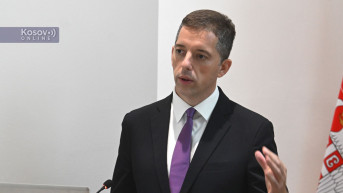
The agreement to launch a strategic dialogue between Serbia and the United States by the end of the year is a very significant step forward in bilateral relations, says Serbia’s Foreign Minister Marko Djuric, emphasizing that this dialogue will cover political, economic, and all other important topics, and that it should culminate in a strategic partnership between Serbia and the U.S.
“The agreement to begin a strategic dialogue by the end of the year is a very big leap in our bilateral relations, something we have worked on long and devotedly. This brings a different valuation and perspective of the U.S. administration toward Serbia—certainly more understanding for our positions and issues of the highest importance,” Djuric said in an interview with Kurir.
He cannot yet publicly discuss the concrete content at this moment, but stressed that the dialogue will certainly encompass, besides political and economic matters, all other topics significant to relations between the two countries.
He notes that Serbia, a country of just under seven million inhabitants, is entering into a strategic dialogue with the United States, the world’s strongest economy and military power with around 340 million inhabitants, and that the end result of this dialogue should be a strategic partnership between Serbia and the U.S.
“The start of such a dialogue is, to put it figuratively, the crafting of a very beautiful, golden frame for a large painting, on whose canvas we will jointly depict everything that is important to us. We have previously concluded a strategic partnership with the U.S. in the energy sector, and now we are moving into other fields: the overall strengthening of economic ties, cooperation in artificial intelligence, high technologies, the area of defense…” the minister noted.
He underscores that the issue of currently high tariffs on exports of Serbian products must be resolved in parallel.
“We will inform our public about all of this in due time. The strategic dialogue carries, without exaggeration or false modesty, very serious political weight, because no other state in the region has anything similar with Washington, and that invariably also has an economic dimension—increased American investments, a higher volume of trade, as well as exchange in the services sector,” Djuric stressed.
Asked whether President Donald Trump’s second term is now far enough along to assess how the change in Washington has affected Serbian-American relations, he replied that through diplomatic efforts during his ambassadorial term in the U.S., as well as through other channels, intensive contacts have been established with people who make or influence decisions in Washington and who now understand Serbia’s position much better.
“During the past period, President Trump—aside from addressing important domestic political and economic issues—had several complex geopolitical priorities, such as achieving a peace settlement in the Russia-Ukraine conflict, de-escalating the conflict in Gaza, the question of relations between Israel and Iran, U.S. relations with China, and other important topics. What matters to us is that through diplomatic work during my ambassadorial term in the U.S., as well as through other channels, we established intensive contacts with decision-makers and influencers in Washington who now better understand our position on Kosovo and Metohija, our military neutrality, and independent foreign policy. This is also reflected economically, through investments and cooperation in ICT—in which the U.S. is our number-one partner by value of exported services—programs of cooperation in the military sphere, and what I have already mentioned: a view of the truly real picture in Kosovo and Metohija and the difficult position of our people there,” Djuric explained.
The minister again condemned the killing of American activist Charlie Kirk, emphasizing that Serbia strongly opposes political violence and stands firmly with its American friends.
Asked how difficult it is, amid global turbulence, to defend Serbia’s military neutrality, the foreign minister indicated that military neutrality is Serbia’s choice, in line with its own interests, while the state simultaneously pursues a balanced policy of cooperation with all major powers.
“Certainly, it is not simple to defend such a position, especially if someone else wants to insist on ‘you’re either with us or against us.’ But precisely such a policy has led some countries into instability and conflict. On the other hand, there are still militarily neutral states, such as Switzerland and Austria, Ireland, Malta, and Moldova, each with its specificities and adjustments to new geopolitical challenges, as well as many other countries outside Europe that are not aligned with military alliances. Serbia firmly upholds the principles of military neutrality, which does not mean that we lack clear political positions and commitments, especially when it comes to respect for international law and the UN Charter, because by doing so we protect both our interests and those of other states,” Djuric said.
Responding to the assertion that “neither the West nor the East fully trusts Serbia, because both would like Serbia’s undivided support,” Djuric said he disagrees with that view and stressed that both the West and the East trust Serbia and its state leadership.
“Both our President Aleksandar Vučić and I, as foreign minister, use the same rhetoric and advocate the same positions with all interlocutors—be it in Washington, Moscow, Brussels, Beijing, in Turkey, Kazakhstan, South America, or the Pacific. I believe that Serbia’s principled position is very clear to all relevant political leaders and is respected, even if some of them may not always fully agree with our policy,” the minister stated.
Speaking about military alliances in the region—first among Croatia, Albania, and Kosovo, and then between Croatia and Slovenia—he pointed out that these steps were non-transparent, that regional dialogue and the usual consultations on a very sensitive issue such as forming military alliances and cooperation agreements for joint arms procurement were lacking, along with violations of international documents and agreements.
“Such moves raise concerns, because military alliances are, as a rule, formed as a threat or counterweight to a third party, which brings tensions and deepens divisions—something nobody needs. We all know how turbulent the Balkans’ history has been 30, 80, or 120 years ago; we know who was on the right side of history, who was the aggressor, and against whom the interests of the regional actors you mentioned were directed,” Djuric recalled.
He stated that Serbia sincerely and consistently advocates peace, the strengthening of both national and regional stability, and comprehensive cooperation in the region.
“We will continue with an outstretched-hand policy—if others wish to take it,” Minister Djuric said.
Regarding how he sees Serbia’s future foreign policy, and in connection with the results of the “Compass—Attitudes on Serbia’s Foreign Policy” survey, Djuric emphasized in an interview with Politika that the world is becoming increasingly multipolar, which Serbia sees as an opportunity, not a threat, and that the country’s strategic goal remains EU membership, while simultaneously developing partnerships with BRICS countries, the U.S., Russia, and other actors.
“Military neutrality and openness to cooperation allow us to balance relations between East and West, diversify economic ties, and use our geostrategic position to build bridges. Such an approach ensures stability and prosperity for citizens without abandoning our core values,” he added.
Commenting on survey results showing that nearly half of respondents—47.4 percent—see the Russian Federation as the greatest protector of Serbia’s national interests and territorial integrity, while a majority—64.2 percent—oppose imposing sanctions on Russia, Djuric said these results confirm the deep historical and cultural ties between the Serbian and Russian peoples, as well as Serbia’s identity as part of the broader Slavic community, which is a component of its historical identity.
He underlined that Serbia pursues a policy based on dialogue and respect for international law.
“We value Russia’s support in international forums when it comes to preserving our sovereignty and territorial integrity, especially regarding Kosovo and Metohija. At the same time, we have clearly expressed that our priority is preserving peace and stability and that sanctions are not a tool we consider effective in achieving that goal. Serbia will continue to cooperate with all partners in the search for diplomatic solutions that contribute to restoring peace and broader stability in Europe,” the foreign minister said.
Asked how Serbia balances economic benefits and risks in relations with China—given that 73.3 percent of survey respondents believe Serbia is accumulating too much debt to that country for infrastructure projects, while 92 percent demand stricter environmental standards from Chinese companies and 46 percent see those projects as contributing to economic development—Djuric replied that Serbia has had a positive experience in cooperation with China, which has significantly improved infrastructure and created new jobs, while also recognizing the need for sustainable development.
He noted that contracts with Chinese partners are concluded so that financial terms remain manageable, while at the same time insisting—with companies from all countries—on compliance with the highest environmental standards, in accordance with domestic and European regulations.
“‘Steel friendship’ for us means lasting mutual friendship and respect—China supports us on key international issues, while Serbia remains open to cooperation with all global actors. A balanced approach enables us to achieve economic growth while safeguarding citizens’ interests and the natural environment,” he said.
Although the survey reveals pessimism about the EU—since 59.2 percent of respondents do not expect Serbia ever to join the Union, and cooperation with the EU over the last 10 years is mostly rated neutral or negative—respondents still see the Union as the largest investor and trading partner. Djuric notes that Serbs are historically a European people, centrally positioned in Southeastern Europe, which would not be complete without an equally treated Serbia at the table.
“The European Union is our biggest economic partner and source of investments and technologies, something citizens recognize. At the same time, the slower pace of enlargement and political conditions—especially regarding Kosovo and Metohija—sometimes create a sense of disappointment. Serbia remains committed to the European path, but it is important that this process unfolds with respect for our interests and the specificities of the region. We will continue to implement reforms and develop economic cooperation with the EU, while also maintaining good relations with other global partners, because we believe that a multi-vector policy best protects the interests of our citizens,” Djuric added.
In the regional context, the survey sees Romania and Hungary as Serbia’s closest friends in the neighborhood. Commenting on these views, the minister underscores that Serbia is committed to a policy of good-neighborly relations and that, at the level of ordinary people, “we mostly even like each other,” so these results show that citizens recognize the value of stable relations with Hungary and Romania.
“As for defense agreements in the region, it is important that every such initiative be transparent and contribute to collective security, rather than creating new dividing lines. Serbia will continue to build bridges through economic and energy projects, as well as through initiatives like ‘Open Balkan,’ firmly maintaining its stance of military neutrality and promotion of peace,” Djuric reiterated.
Given that the survey shows Viktor Orbán with the highest positive rating, followed by Vladimir Putin and Xi Jinping, while Edi Rama and Ursula von der Leyen receive low marks, Djuric notes that public perceptions often reflect experiences and public messages coming from those countries.
“Serbia values all partners who support our sovereignty and regional stability, but our diplomacy is not based on fleeting popularity; it is based on long-term interests and dialogue. We are building close relations with Hungary, China, and Russia, but we are also actively working with the EU and our neighbors, including Albania, so that together we can advance peace and economic development. In the long run, the success of our foreign policy is measured by our ability to maintain constructive relations with all key actors, regardless of current polling. President Vučić’s personal relationships with the leaders of the world’s major powers are Serbia’s comparative advantage,” Minister Djuric concluded.

0 comments