
Djuric: Warsaw meeting confirms Serbia’s clear European future
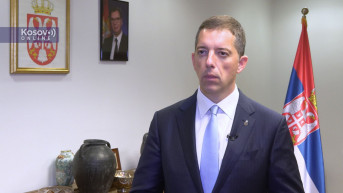
Serbian Minister of Foreign Affairs Marko Djuric stated that today’s Informal Meeting of Foreign Ministers of the EU and candidate countries in Warsaw once again confirmed that Serbia has a clear European future. He noted that there were also attempts at distortion of the truth by representatives of Pristina, which were not well received.
"The meeting confirmed that Serbia—as a country that prioritizes strengthening institutions, reducing societal tensions, fostering social dialogue, boosting the economy and infrastructure, and improving the regional climate—will soon be accepted as a full-fledged member with the right to participate in decision-making at the very table we are sitting at today," said Djuric.
He added that, following today’s meeting, he views the pace of Serbia’s European integration with greater optimism.
"As Njegoš said—‘a cup of honey requires a cup of gall’—not everything was rosy, but after this meeting, I can say that I am more optimistic about the dynamics of Serbia’s European integration than I was upon arriving in Warsaw. I am encouraged by the energy I see in support of EU enlargement, from High Representative Kaja Kallas, Commissioner Marta Kos, and many of our European friends," Djuric said.
He noted that some countries voiced criticism of Serbian President Aleksandar Vucic’s participation in the Moscow event—such as Luxembourg, Belgium, and Croatia—but emphasized that clear support was also expressed for Serbia’s European path, reforms, economic progress, and all the positive efforts the country is making.
“There was also support from those who reject equating Serbia with various other negative trends on the European continent, and from those who refuse to draw an equal sign between Serbia’s policies and the policies of any major power,” said the Serbian Foreign Minister.
He expressed special gratitude to the representatives of Italy and Hungary for their support.
“The Italian representative spoke strongly in favor of Serbia, perhaps as a result of talks between President Vucic and Prime Minister Giorgia Meloni or due to our traditional friendship. We are grateful to our Italian and Hungarian friends for their words of support, as well as to the organizers—Poland and the hosts from the European Union,” Djuric added.
One of the central topics of today’s talks in Warsaw, as Minister Djuric pointed out, was the situation in Bosnia and Herzegovina.
He stated that there is clearly significant pressure on the leadership of the Republic of Srpska, particularly President Milorad Dodik, and noted that the number of those expressing such pressure is growing.
“Our message has been consistent at this meeting, as it has been over the past 30 years—we support the Republic of Srpska in its Dayton-defined competences and the territorial integrity of Bosnia and Herzegovina. At the same time, we encourage dialogue within Bosnia and Herzegovina among all relevant and involved parties, and we believe it is extremely important that this dialogue includes all democratically elected representatives, without exclusions. Some other countries echoed this message, although a number of countries took a very harsh stance toward Dodik,” Djuric noted.
He pointed out that the meeting also saw labeling and disappointing distortions of the truth by the representatives of Pristina.
"This was presented in such a rudimentary and self-defeating manner that—if it hadn’t been unpleasant to listen to—we could almost be satisfied with the tone and style, which were self-destructive. From the reactions of other ministers, I saw that it was not well received," said Djuric.

0 comments