
Djuric: We oppose Pristina's membership in the Hague Conference and other organizations
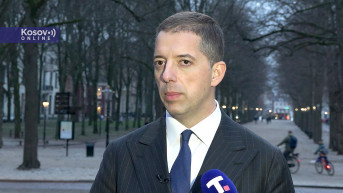
At the end of a two-day visit to the Netherlands, the Serbian Foreign Minister, Marko Djuric, emphasized that the visit was of great significance for Serbia's European perspective. He also highlighted the importance of meeting with the Secretary-General of the Hague Conference, due to issues related to Kosovo, as Serbia believes that Pristina should not be allowed membership in such organizations when the regime of Albin Kurti is threatening the human rights of Serbs and other non-Albanians.
"This visit has been extremely beneficial for the relations between Serbia and the Netherlands and is of great significance for Serbia's European perspective. We had an exceptionally high-quality and successful dialogue with members of the Dutch parliament from various parties. Among them are those who are friendly, but also those who are quite skeptical about European integration in general. In any case, we have a great story about our country, about the huge efforts we are investing in institutional reforms, economic development, and many other aspects," said Djuric after meeting with his Dutch counterpart, Caspar Veldkamp.
He noted that he had a series of important meetings in The Hague, including a visit to the Secretary-General of the Hague Conference, which was of exceptional importance for the international legal and contractual status of Serbia.
"The Hague Conference deals with agreements in the field of international private law and increasing Serbia's contractual base. This actually creates a better business environment and strengthens our country's economic ties with other states. For example, through agreements that guarantee that companies can regulate legal relations according to the highest international standards. The discussion with the Secretary-General of the Hague Conference was also significant due to issues related to Kosovo and Metohija, as we believe that Pristina should not be allowed to join such organizations at a time when the regime of Albin Kurti is endangering the human rights of Serbs and other non-Albanians. Every month we see a new step back in the dialogue," emphasized Minister Djuric.
He also took the opportunity to inform his Dutch interlocutors about the position of Serbs in Kosovo.
"In yesterday's conversation with the OSCE's Special Envoy for Human and Minority Rights, we discussed respecting the minority rights of national communities in Serbia. I particularly highlighted the efforts Serbia is making to protect minority communities and the pride we have in their diversity. On the other hand, I also pointed out the difficulties that Serbs face in Kosovo and Metohija," Djuric conveyed.
The talks also touched on accelerating Serbia's European integration.
"Some members of the ruling party directly asked me what they can tell their voters—why they should support Serbia's further approach to the European Union. This is a concrete and important issue," stated the head of Serbian diplomacy.
He pointed out that, for example, when it comes to cybersecurity or illegal migrations, which are key issues in the Netherlands, it is clear that the European Union cannot be complete without Serbia.
"Our country plays a significant role in preventing illegal migrations, as we stop more than 70 percent of illegal crossings along the 'Balkan route', even though we do not occupy 70 percent of the Balkans. Thanks to efficient police and security forces, as well as cooperation with Frontex, we help ensure that this part of Europe is not overwhelmed by waves of illegal migrations. This is one of many reasons why members of countries like the Netherlands should support Serbia's further approach to the European Union," Minister Djuric emphasized.
He added that fundamental reasons also lie in the fact that Serbia is today the fastest-growing economy in Southeast Europe, and it is possible that this year, if it does not create problems for itself through internal turmoil, it will become the most successful economy in terms of growth in Europe.
He noted that the talks took place in an exceptionally good atmosphere and that, although conclusions are yet to be drawn, he can say that after this visit, discussions with Dutch businessmen, parliamentarians, and top representatives of the Dutch government, relations between Serbia and the Netherlands are moving forward visibly.
"This visit will not be the end—we will continue to develop economic, political, cultural, and other ties with the Kingdom of the Netherlands," Djuric said.
He also reminded that a large number of expatriates from Serbia live in the Netherlands, and that it is a country with immense scientific and technological potential.
"Tens of thousands of people in Serbia already work in Dutch companies, and some Serbian firms also operate successfully here. Because of all this, I am very satisfied that we had the opportunity to spend these two days in the Netherlands. Regarding the meeting with investors, the Netherlands is one of the biggest investors in Serbia. Dutch companies that already operate in Serbia have nothing but praise for the business climate in 90 percent of cases. We discussed strengthening economic cooperation, and I presented to our hosts the complex system of incentives that the Serbian government offers for innovative technologies and the start-up sector. Tomorrow, some Dutch companies will have discussions with representatives of the Serbian government in Belgrade as a result of today's meetings, and I expect a visit from a Dutch business delegation in the coming period," concluded Minister Djuric.
The head of Serbian diplomacy met today, on the second day of his visit to The Hague, with Dutch Foreign Minister Caspar Veldkamp, as well as with representatives of the Committee on European Affairs of the Dutch Parliament.



0 comments