
Djuric: We presented what Serbs in Kosovo are going through without hatred or anger, with an outstretched hand of cooperation

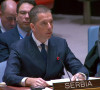
Serbia’s Minister of Foreign Affairs, Marko Djuric, stated following the session of the United Nations Security Council on Kosovo that Serbia used the opportunity to make its voice heard and, at a time of unprecedented global crisis, to present the facts about what Serbs in Kosovo are going through—without anger or hatred—demonstrating that it is a country that supports international law, the UN Charter, and the inviolability of borders at a time when the international order is being undermined.
Djuric told journalists that he spoke today at the UNSC session not only as a diplomat and Minister of Foreign Affairs, but on behalf of those whose voices cannot be heard—on behalf of mothers, sisters, sons, and daughters whose fathers are behind bars in Kosovo simply because they are Serbs, as well as on behalf of pensioners who must undergo humiliating treatment under the policies of Albin Kurti in order to receive their hard-earned pensions, and on behalf of healthcare workers who are denied the right to uphold the Hippocratic Oath by treating Serbs, Albanians, and others alike.
“We used the UN Security Council session on Kosovo and Metohija, at a time of unprecedented global crisis, to present the facts about what Serbs are going through in Kosovo and Metohija—without anger or hatred. We demonstrated consistency as a country that supports international law, the UN Charter, and the inviolability of borders at a time when the international order is being undermined,” Djuric said, emphasizing that Serbia supports the work of United Nations Interim Administration Mission in Kosovo.
He pointed out that, on the other hand, the representative of Pristina attempted to “sweep things under the carpet” and portray Pristina as an “oasis of democracy, progress, and development,” while depicting Serbia as an aggressor and a center of regional destabilization.
“However, the rhetoric and tone demonstrated by Glauk Konjufca, in my view, did not resonate with member states that are tired of the fact that those who continuously destabilize the situation through unilateral moves attempt to present themselves as something entirely different from what they truly are,” Djuric stated.
He added that today’s debate was fully utilized as an opportunity for Serbia’s voice to be heard and for facts to be presented before the 193 member states of the United Nations.
“To point out that the process of recognition is not only incomplete, but that 28 states have withdrawn their recognition in the recent period, and to demonstrate that Serbia, under the administration of Aleksandar Vucic and this government, is a country oriented toward the future, dialogue, cooperation, and respect,” the Serbian Foreign Minister said.
He added that in New York he spoke not only on behalf of Serbs, but also on behalf of Bosniaks and Gorani, who are exposed to assimilation and pressure in Kosovo—yet, he emphasized, without hatred, with respect toward the Albanian people, and with an outstretched hand of cooperation.
“In a completely different manner from that practiced by Albin Kurti and his regime,” Djuric added.
He conveyed that his address in New York was praised by representatives of the United States and other Western countries, in addition to Russian and Chinese representatives.
“They told me: ‘Excellent—you supported the Serbs, Christians, but maintained a balanced approach, without hatred, unlike the representatives of Pristina.’ And that is what makes the difference. It is always easier to resort to the harshest rhetoric, but we are armed with facts—and they are the most powerful weapon, which ultimately prevails,” Djuric emphasized.
He underlined that truth, law, and justice are on Serbia’s side.
He recalled that Kosovo’s independence was declared in 2008 without a referendum—even in Kosovo itself—and in violation of United Nations Security Council Resolution 1244, not during the war, but ten years later.
Djuric stressed that Serbia’s territorial integrity and sovereignty are no less important than those of any other country in the world.
“We are oriented toward compromise, toward a mutually acceptable solution—not toward imposition. That is why I believe it is not good that some have called for the recognition of Kosovo. We call for dialogue, international law, respect, and compromise. And we will always be ready to decisively counter any campaign aimed at securing further recognitions. We have official notes from 28 countries that have withdrawn their recognition, and that is the result of the policy of President Aleksandar Vucic, this government, and my predecessors,” Djuric said.
Regarding the future of UNMIK, he noted that France and several other countries, including those from Africa and Asia, supported the continuation of the UN mission, which he described as very important. As for the position of the United States, he said it is well known and not new, and does not relate only to UNMIK, but to the UN more broadly.
He pointed out, however, that a new element in the statement of the U.S. representative was the clear and unequivocal assertion that the United States considers Serbia and the Serbian people to be friends.
“We have not heard that expressed in that manner in previous debates. These are important diplomatic nuances and steps forward. We will continue to work on improving dialogue with representatives of countries that hold different views on Kosovo. We will not insult or condemn anyone, but rather seek to build friendships,” Djuric said.
He reiterated that the representative of Pristina did everything in his address to portray Serbia as a country of tyranny, focused on the past.
“There was also an interesting moment when Konjufca took part in political debate within central Serbia, expressing support for certain opposition groups. As a citizen, but also as a representative of the government, I even find that useful—it is good to see who supports whom. I believe it is positive that Konjufca actively participates in the political life of his country; he has the right to do so and can also run in upcoming elections. People in Serbia know well who best protects national interests in a measured and balanced way,” Djuric said.
The United Nations Security Council today considered the regular six-month report on the work of United Nations Interim Administration Mission in Kosovo, which was presented for the first time by the new head of the mission, Peter Due. Due emphasized the importance of Belgrade and Pristina continuing to build on the progress achieved and to implement all agreements reached, including the establishment of the Community of Serb-majority Municipalities.
0 comments