
Drecun: The alliance of Pristina, Zagreb, and Tirana serves to achieve their goals contrary to Serbia’s interests
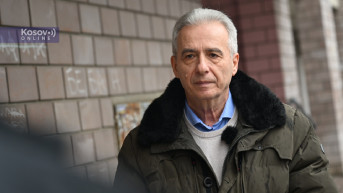
The military alliance between Pristina, Zagreb, and Tirana is necessary for Kosovo in order to prepare for NATO membership, Milovan Drecun, Chairman of the Serbian Parliament’s Committee on Defense and Internal Affairs, said today, adding that Croatia needs Kosovo to weaken Serbia’s geopolitical position, while Albania’s goal is to eventually annex part of Serbia’s territory, RTV reports.
Speaking to Tanjug, Drecun stated that transatlantic integration is one of the four objectives defined in the Memorandum on the military alliance between Croatia, Albania, and Kosovo.
In that context, he recalled that Croatia and Albania are already integrated into NATO.
“They support the aspirations of the so-called Kosovo for NATO membership. That is one of the four objectives. And to have such aspirations, you must build a military formation according to NATO standards, train, equip, and arm it according to NATO standards, ensure interoperability with other NATO armies, and be able to say: ‘We contribute to peace, we are producers of stability, we do not destabilize the situation,’” Drecun said.
According to him, the alliance is needed to prepare Kosovo for membership and to open the accession process to the Alliance.
Noting that NATO is the highest form of collective security an alliance can provide, Drecun questioned why a sub-alliance is being formed among countries that are already NATO members.
“Do they face some threat? The United Kingdom and Poland formed an alliance under the pretext of a threat from Russia. But what threat does Croatia face? From Serbia? Not at all. The question is who needs this alliance. Albania and Croatia do not need it because of any potential threats. Obviously, Kosovo does,” Drecun said.
He added that Kosovo is important to Croatia because its long-term strategic goal is to completely weaken Serbia’s geopolitical position in all aspects, while Albania aims to eventually formally annex part of Serbia’s territory.
“Albania created the terrorist KLA. On its territory, they trained, prepared, and deployed forces. Albania wants to realize its Greater Albanian strategic projects. They have an interest in destabilizing Serbia — first by recognizing the false state of Kosovo, by supporting the creation, training, and arming of a military formation that should not exist under UN Security Council Resolution 1244, and by lobbying in international forums for the so-called Kosovo to become a member. That is causing harm to Serbia — a kind of hybrid warfare against Serbia on political, military, media, and international fronts — wherever they can inflict damage. That is why they need the so-called Kosovo: to achieve goals that are contrary to the interests of the Republic of Serbia,” Drecun stated.
He further claimed that the Kosovo Security Force narrative is being used to wage a classic proxy war against Serbia within the framework of hybrid activities.
“The priority goal of Pristina and those who recognized the false state of Kosovo is not EU membership or unification, but primarily NATO membership. And that is now evident,” Drecun stressed.
Speaking about the laws on foreigners and vehicles adopted by the Pristina administration, Drecun argued that by not contesting these laws, the European Union is effectively removing those issues from the Belgrade–Pristina dialogue.
He noted that Pristina adopts laws using its parliamentary majority regardless of whether Serbian political representatives agree, and that when Serbs protest, the EU responds by saying that Serbs should be consulted.
“That is their old tactic. That is how they operate. As for the dialogue, those issues are either no longer on the agenda or Pristina refuses to discuss them, claiming they are internal matters of the so-called Kosovo. When it comes to the Community of Serb Municipalities, it was supposed to deal with issues such as education and healthcare. There were disputes over whether the CSM would have executive powers or merely monitoring and advisory functions,” Drecun said.
He added that once the Franco-German proposal for an agreement emerged — now treated as an agreement and expected to be fully implemented by Belgrade — Albin Kurti was given an opportunity to push the CSM, which had been a priority issue, into the background.
“Kurti then said he first wanted de facto recognition and for Kosovo to be treated as a state. The European Union accepted that and even supported Pristina by incorporating the implementation of this agreement into Serbia’s negotiating Chapter 35 with the EU. By doing so, they killed the dialogue and eliminated the possibility of resolving such issues within the dialogue framework,” Drecun emphasized.
Responding to claims that the purpose of such laws is to integrate Serbs into Kosovo society, Drecun argued that integration into the “false state of Kosovo” would entail the loss of the Serbian people’s national identity.
“It would mean that Serbs renounce their script, their language, their culture, their history — everything — and then they could integrate as some kind of citizens of the so-called Kosovo,” Drecun added.
According to him, such policies are also aimed at reducing the number of Serbs in Kosovo.


0 comments