
Drecun and Milivojevic: Belgrade to insist that the investigation be carried out to the end
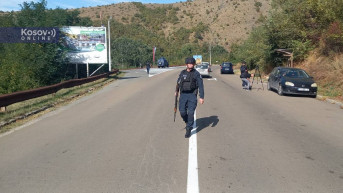
After the events in Banjska, it is important for Serbia to act politically and diplomatically and to make it clear to Pristina and the international community that the Rubicon has been crossed. The risk of escalation is now ten times higher than it was on Sunday, Milovan Drecun, President of the Committee for Kosovo and Metohija in the Serbian Assembly, and former diplomat Zoran Milivojevic agree.
They emphasized, while appearing on Euronews Serbia, that it was important for Belgrade to continue insisting on a thorough investigation, and for Serbia to remain consistent in proving that the claims made by Kosovo's Prime Minister Albin Kurti regarding their direct involvement in the conflict are not true.
According to Milivojevic, it was clear that Kurti would use the situation to his advantage.
"His strategy is clear: to establish control in the north through the use of force. Dialogue is not his primary concern. He has not changed his political stance. He has gained legitimacy for a policy he has chosen," Milivojevic said.
Drecun believes that KFOR should now play a crucial role in resolving the crisis but doubts that it will get involved to the extent necessary.
"As long as the KFOR command, or the leading Western political countries, interpret KFOR's mandate as the third ring of security, we will not see the withdrawal of special militarized units from the north. According to this interpretation, the first level of security is the Kosovo Police, the second is EULEX, and only the third is KFOR. As long as they are there, there will be continuous harassment of the Serbs, and at some point, we will face a general explosion where the Serbs will have to defend their survival by all means. Pristina's behavior does not indicate a calming of the crisis, nor will KFOR hinder Pristina," Drecun believes.
Milivojevic added that Kurti had always had an unchanged stance: recognition of Kosovo's independence by Serbia. He also noted that some Western powers indirectly supported this goal through different methods.
"That is the most important goal. It is not new. The first point of the Ohrid Agreement states that it is an agreement between two equal partners. The UN Charter is mentioned, and that is de facto recognition. If we have moved into the realm of law, the Brussels Agreement is older and has not been implemented. It should now be reminded that the dialogue that is being conducted should be based precisely on the Brussels Agreement. This further means that the issue of the Community of Serb-majority Municipalities (CSM) should still be crucial in all of this," Milivojevic adds.
However, Drecun stressed that recognition of independence could not be expected from Belgrade, which was currently under significant political pressure without receiving anything in return.
"Who will take responsibility for the murder of the Serbs after they surrendered on Sunday? Our side has uncovered a brutal execution of people; they didn't have to kill them. We have evidence. The Serb List has requested an independent investigation. Foreigners say it's a terrorist action. No one has been held accountable for it. All of this is happening so that Belgrade can endure political pressure. Everything must proceed within the boundaries of a controlled crisis. However, the West won't do anything to stop the terror. It can only stop when the special units are withdrawn from northern Kosovo," Drecun believes.
When asked if Serbs in the north were left to fend for themselves, Milivojevic said they were not, but they were in a complicated situation that remains tense.
"This means there are risks of further escalation with significant consequences. Many circumstances have changed. The primary goal is to conclude the issue of Kosovo's verification as a state. This is a serious strategic goal at the moment. In a situation where Serbia refuses to recognize it, resistance has now become something inevitable. There are no more questions about status; that issue is closed. Now, all of this is a test for the international community," Milivojevic believes.
Pristina claims that Milan Radoicic, the Vice President of the Serb List, was seen in a group of armed men in Banjska on Sunday. On the other hand, Serbian President Aleksandar Vucic said that Radoicic would be questioned about the event. Drecun believes that this is a crucial issue, in addition to the need for de-escalation in the north.
"The strategy of the West will depend on the results of the investigation currently being conducted, both by Pristina and international institutions in Kosovo and Metohija. The question of Milan Radoicic is crucial," Drecun says.
Furthermore, he emphasizes that it is important for Serbia to respond to the attacks by Pristina's authorities claiming that Serbia is connected to the Banjska incident.
"The most important thing is to prove all the lies of Pristina, which claims that official Belgrade is behind this group of people, that Serbia armed and trained them... Kurti accused Belgrade even before of similar things. This is a gift from heaven for them. Belgrade has denied that our state is behind it. This does not suit us; it would be a suicidal political move to put ourselves in a situation where we become a target for punishment. Are we giving Kurti, who is seen as a problem, a chance? That's a matter for individuals who couldn't bear the agony Kurti created. If our state defends itself from this, then we will have a position that will significantly relax us," Drecun believes.
He also points out that Pristina is now raising questions about the activities of the Serb List in Kosovo, stating that this is another direction Kurti wants to turn in his favor.
"Another direction is to eliminate the Serb List, which is the most important political factor of the Serbs. It unites the people and their actions. That's why it was compromised. Now they will try to ban its activities. Kurti says that an alternative to the Serb List must be created and that the Serbs must have a choice. He wants to create a political scene that is completely different from the position of the Serb List," Drecun says.
Regarding the negative reaction of Albanian Prime Minister Edi Rama to Serbia declaring a Day of Mourning due to the events in Banjska, Milivojevic says he is not surprised.
"Rama wants to make it clear that Tirana has a say in everything relevant to the Albanian community in all areas. That's his policy. I don't see anything exclusive about it," Milivojevic says.
He believes that key factors in the situation are the actions on the ground and the future relations between Belgrade and Pristina.
"I don't see any possibility of calming the situation in northern Kosovo as long as there is a single member of the militarized police units present there. Those are Kurti's shock troops for terrorizing the Serbs. He intends to move along the administrative line with these forces; they already have permanent bases," Drecun says.


0 comments