
European Commission on Kosovo: Unilateral actions do not contribute to normalization of relations with Belgrade
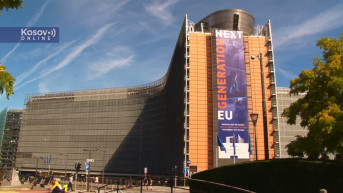
The EU-facilitated dialogue on the normalization of relations between Kosovo and Serbia continued during the reporting period, despite being significantly affected by domestic political developments, with regular meetings at chief negotiator and technical level in both bilateral and trilateral formats, according to this year’s European Commission report on Kosovo. The document states that some progress was achieved, but implementation of the remaining Dialogue obligations remained limited and was further hampered by unilateral actions and rhetoric that do not contribute to normalization.
“Apart from the issue of missing persons, neither side made tangible progress in implementing the 2023 Ohrid Agreement. Both sides need to demonstrate greater commitment to their obligations, refrain from unilateral actions and rhetoric detrimental to normalization, and engage constructively in resolving outstanding issues,” the report states.
The report recalls that in April 2026 Kosovo appointed Ambassador Agron Bajrami as chief negotiator, replacing former Deputy Prime Minister Besnik Bislimi.
“EU High Representative and Vice-President of the European Commission Kaja Kallas remains ready to convene a high-level Dialogue meeting as soon as conditions allow,” the report adds.
The document states that Kosovo and Serbia are expected to implement all their obligations arising from the Agreement on the Path to Normalisation and its Implementation Annex—the 2023 Ohrid Agreement—as well as all previous Dialogue agreements, in line with their formal recommitments of September and October 2024, without delay or preconditions.
“This includes arrangements for self-management for the Serbian community in Kosovo. Kosovo is expected to launch the process leading to their establishment, while Serbia is expected to begin, in parallel, recognizing Kosovo’s documents, symbols and institutions. Neither side has made sufficient progress,” the European Commission states.
The 2023 Ohrid Agreement remains valid and legally binding on both sides, and no formalities, including those concerning its adoption or “formalization,” should stand in the way of its implementation.
“Normalization and implementation of Dialogue obligations remain essential conditions on the European path of both parties, and in the absence of progress both risk missing important opportunities,” the European Commission warns.
Security situation
During the reporting period, the situation in northern Kosovo remained calm but fragile. There was an increase in actions and statements that did not contribute to the normalization of relations. The European Commission warns that Kosovo repeatedly took measures contrary to its Dialogue obligations or measures that undermined the normalization process.
“These include police and administrative actions targeting Serbia-supported structures and services, arrests of Kosovo Serbs, as well as the refusal to accept the withdrawal of resignations by judges and prosecutors from the Serbian community, thereby undermining their reintegration. On July 21 and August 28, the European Union expressed deep concern, including over the lack of coordination and the negative impact on local communities and their access to basic public and social services,” the report states.
The Commission adds that Serbia, for its part, repeatedly acted contrary to its obligations under the 2023 Ohrid Agreement, including by lobbying against Kosovo’s membership in international organizations, particularly the Council of Europe and Interpol.
“These actions and repeated inflammatory rhetoric by Serbian officials continue to undermine the normalization of relations. Serbia has not taken any significant steps to ensure accountability for the armed attack on the Kosovo Police carried out by armed Kosovo Serb assailants in Banjska on September 24, 2023,” the document adds.
According to the Commission, the withdrawal of Kosovo Serbs from Kosovo institutions in November 2022 constituted a violation of Serbia’s Dialogue obligations under the April 2013 First Agreement of Principles Governing the Normalisation of Relations and resulted in the reversal of key achievements of the 2015 Justice Agreement.
“Since November 2022, the EU has consistently called on Belgrade to support the reintegration of Kosovo Serbs into Kosovo institutions and on Pristina to enable it. The Union therefore welcomed the participation of Kosovo Serbs in all electoral processes in Kosovo during 2025 and 2026, including the assumption of office by newly elected mayors from the Serbian community in the four northern municipalities in December 2025,” the document states.
In line with the EU’s call for Serbia to take the first step, judges, prosecutors and administrative staff from the Serbian community withdrew on July 15, 2026, the resignations they had submitted three and a half years earlier.
“This represented an important first step toward reversing the consequences of the 2022 withdrawal from institutions and opened the possibility for the reintegration of Serbian judicial personnel. Subsequent decisions by the Kosovo Prosecutorial Council, Kosovo Judicial Council and acting president to accept the withdrawn resignations prevented further progress. Those decisions are not in line with Kosovo’s objectives and obligations under the 2015 Justice Agreement,” the report states.
Kosovo did not enable the reintegration of Serbian judicial personnel. A subsequent recruitment procedure, which included a quota for prosecutors from the Serbian community, was unsuccessful.
Community of Serb-majority Municipalities
Regarding the Community of Serb-majority Municipalities, the European Commission found that no progress had been made toward its establishment, as provided for under the 2013 Brussels Agreement and the August 2015 Agreement on General Principles/Main Elements.
Kosovo is expected to launch the process in accordance with its Dialogue obligations, including those arising from the 2023 Ohrid Agreement. Both sides are expected to engage constructively without further delay.
“The status of Serbia-supported structures and services in Kosovo needs to be resolved fully in accordance with the Dialogue agreements and Kosovo law, rather than through uncoordinated measures. The EU insists on structured consultations with representatives of the Serbian community in Kosovo to ensure their meaningful participation,” the report states.
According to the document, the process should take place in close cooperation with the EU Special Representative for the Belgrade-Pristina Dialogue.
Ibar Bridge
“Works on the Ibar Bridge in Mitrovica, including additional assessments and consultations, have been completed. The EU’s position remains that the bridge should be opened,” the document states.
Although the technical conditions have been met, effective coordination and meaningful consultations between the relevant municipalities and central-level institutions need to be improved to ensure that the bridge serves all communities.
“Implementation of the 2013 and 2015 energy agreements, as well as the 2022 Energy Roadmap, continued. Serbian transmission system operator EMS has still not determined the net transfer capacities on the interconnection with Kosovo, preventing the allocation of cross-border capacity to market participants. This negatively affects security of supply and competition and increases electricity import prices,” the European Commission states.
Serbia should resolve this long-standing issue, including by fulfilling its obligations under the Energy Community Treaty.
Regarding implementation of several technical Dialogue agreements dating from 2011–2012, both parties should continue implementing the arrangements on regional representation and cooperation, which enable Kosovo’s participation in regional forums.
“Neither side should block regional forums over bilateral disputes. Implementation of the agreements on cadastre and recognition of university diplomas remains pending due to Serbia,” the report states, adding that Serbia has yet to resolve the issue of relocated administrative customs structures operating on Serbian territory under Kosovo designations.
Temporary common crossing points between Kosovo and Serbia remain operational, but their implementation has not been fully completed. Of the six permanent common crossing points, only two—Merdare and Mutivode—have been established. The Commission calls on Serbia to close illegal roads and bypasses and enable the resumption of EU-facilitated Joint Integrated Border/Boundary Management meetings at all levels—local, regional and central.
Limited progress was made in addressing shortcomings in the maintenance of temporary crossing points on Serbian territory, but significant problems remain, including health and safety issues.
Kosovo should ensure the free movement of goods through all designated common crossing points in accordance with its Dialogue obligations.
“The EU welcomes the overall satisfactory implementation of the March 14, 2026 agreement on the application of the Law on Foreigners, as well as the opportunities created for registering civil status facts in the Kosovo system on the basis of documents issued in Serbia. Kosovo is encouraged to find a long-term solution ensuring an effective registration procedure for everyone living, working or studying in Kosovo so that they can obtain the necessary documentation,” the report adds.
The Commission states that no progress was made in resolving outstanding issues under the telecommunications agreement. It therefore calls on both sides to fully respect the agreements, resolve mutual interference in the use of frequencies between Serbian and Kosovo mobile operators, and ensure an adequate quality of postal services for all communities.
The European Commission notes that limited progress followed the Serbian Government’s decision to take steps toward restoring cooperation on mutual legal assistance after a prolonged interruption caused by Belgrade. Serbian courts have resumed using mutual legal assistance channels in a very limited number of cases.
Official visits
Both sides continued to fall short of fully implementing the arrangements on official visits, with announced visits being rejected by both parties.
The EU welcomed the fact that two visits by the Patriarch of the Serbian Orthodox Church to Kosovo, including a visit during Orthodox Easter, as well as a visit by Kosovo’s acting Minister of Culture and Tourism to Presevo, Medvedja and Bujanovac, took place without incident.
“Kosovo and Serbia should facilitate visits by their chief negotiators, other government officials and religious representatives when these are announced and organized in accordance with the applicable arrangements. This was not the case for most announced visits. Official visitors are expected to refrain from statements and conduct that deepen divisions,” the report states.
The EU welcomed the first meeting of the Joint Commission on Missing Persons, held in January 2026 with the aim of advancing implementation of the Political Declaration on Missing Persons adopted in May 2023. This was followed in April by a technical meeting on access to archives.
The Commission describes this as progress in the operational implementation of the 2023 Declaration, although further cooperation is required. Both sides are expected to refrain from politicizing this humanitarian issue and to improve mutual cooperation.
Amendments to the Law on the Specialist Chambers
On October 6, 2026, the Assembly adopted amendments to the Law on the Kosovo Specialist Chambers and Specialist Prosecutor’s Office. On October 22, the President returned the legislation to the Kosovo Assembly for reconsideration.
“The proposed amendments raise serious concerns regarding Kosovo’s international obligations and respect for fundamental rule-of-law principles, particularly with regard to judicial independence, the protection of victims and witnesses, continuity of procedural rights and effective accountability for war crimes,” the Commission states.
The amendments also raise questions regarding their constitutionality.
“Challenges in ensuring the effective implementation of amendments to the Law on the Kosovo Prosecutorial Council indicate limited awareness of accountability and commitment to reform, as well as the continued influence of certain interest groups. Arrest warrants issued with retroactive effect, as well as the application of relevant procedures and safeguards, are of particular concern,” the report adds.
Regarding governance, Kosovo’s caretaker government operated with limited powers during the period in which the Assembly was not functioning. It briefly regained full powers in February 2026 and then again, after the period covered by the report, in September 2026.
“Challenges in relations between central institutions and municipalities persist. Coordination remains reactive, while municipalities face delays and capacity constraints. Despite de-escalation and progress achieved through peaceful and inclusive local elections, as well as the election of Kosovo Serb mayors in the northern municipalities, those municipalities remain constrained in exercising their competences.”
Fundamental rights
The legal and institutional framework for the promotion, protection and enforcement of human rights is largely in place, but more effective implementation is required. Ongoing efforts to align legislation with international human rights standards, including those contained in the United Nations Convention on the Rights of Persons with Disabilities, are commendable but require greater momentum, the report states.
Following the establishment of institutions after the 2026 elections, the Assembly should also urgently launch a transparent procedure for the election of the Ombudsperson and their deputies.
“Recent law-enforcement operations in northern Kosovo, including the demolition of private property without adequate due process, point to shortcomings in the effective protection of property rights. Irreversible measures are being implemented while court proceedings are still pending, raising concerns regarding access to an effective legal remedy,” the Commission warns.

0 comments