
Western Balkans not a primary terrorist target, but not immune to risks: How can potential attacks be prevented?
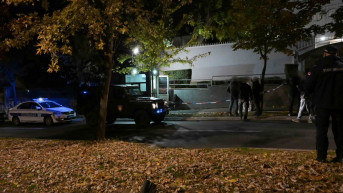
Although the Western Balkans is currently not among the primary targets of terrorist organizations and there are no indications of tightly connected terrorist cells operating in the region, potential threats remain. Kosovo Online’s interlocutors offer differing assessments of the security situation in the region—from the view that there is no cause for alarm to warnings that intelligence services are not sufficiently prepared to respond to potential attacks.
Written by: Veljko Nestorovic
The attack on the Israeli Embassy in Belgrade and arrests in Italy have once again raised concerns among security experts in the Western Balkans.
Security studies researcher Nikola Vujinovic told Kosovo Online that the region was not significantly threatened by terrorism, although a potential threat certainly existed.
“There are isolated cases of terrorism and radicalization under the influence of Islamist ideas, but so far we have not seen a more organized group or a more tightly connected cell. That is why I do not think there is any need to raise the alert level, because it seems to me that this is more a consequence of individual cases—what are known as ‘lone wolves’—than the activity of an organization,” Vujinovic said.
Vujinovic stressed that the region was not a primary target for Islamist terrorists.
“They tend to cluster in parts of the region where Muslims make up the majority of the population. Vienna, Budapest and other European cities are much more attractive targets to them than countries in the Western Balkans. The reason is simple: a large number of Muslims live here, so there is concern that their activities could provoke retaliation against them and harm their fellow citizens. I would say that this is primarily a transit area, as well as an area for the mobilization and recruitment of various individuals, but, I fear, also a source of weapons and tactical knowledge,” Vujinovic said.
He noted that cooperation among police forces across the region was essential to preventing terrorist attacks.
“No one can combat these kinds of cross-border threats alone. Decentralization and networking are precisely what give terrorist groups an advantage. They enable individual cells to continue functioning even when a central figure is removed. Such an organizational structure requires everyone in the region to cooperate and exchange information in a timely manner so that they can act preventively and stop something similar from happening.”
Law professor Blerim Burjani believes that Kosovo is currently very safe when it comes to terrorist threats and that there are no indications that its security is at risk.
Speaking to Kosovo Online, Burjani nevertheless stressed that this did not mean the authorities should not be prepared for such situations.
“The police must be ready at all times to respond appropriately in the event of any incidents or circumstances that could pose a threat to security,” Burjani said.
He stressed that there was no reason for concern.
“Preparedness must be maintained at the highest level, with the police and other relevant authorities ready to respond should the need arise,” Burjani added.
Political analyst and editor of the Tirana-based daily Tema Ili Pata believes that Albanian intelligence services have not taken adequate measures to address the threat of terrorist attacks, such as the recent attack on the Israeli Embassy in Belgrade, and that Balkan countries are not sufficiently prepared to deal with this type of threat.
Pata said that Albanian intelligence services had left the issue to politicians and relied on religious tolerance within society.
“In other countries, such as Italy and France, not to mention Israel, they have managed to recognize the risk posed by these groups. Here, we have not yet understood that. That is why we are not prepared. We have the example of the attack on the Israeli Embassy in Belgrade. Serbia is one of the countries with well-developed security services, but even there they showed tolerance for years, perhaps to avoid disrupting interreligious relations in the country. These groups were given room to operate, and I do not think Serbia is sufficiently prepared for a situation like this either,” Pata said.
Analyst Dejan Andonovic believes that the Western Balkans is vulnerable to terrorism, particularly in the period following the breakup of the Socialist Federal Republic of Yugoslavia and the ensuing wars, when the former republics separated and became independent states. He argues that political upheaval and the collapse of state systems create opportunities for terrorist organizations, which can pursue their objectives more easily in unstable countries than in states with strong institutions.
Regarding the attack on the Israeli Embassy in Belgrade, Andonovic recalled that this was not the first such incident.
“Two years ago, there was an attack on the Israeli Embassy in Belgrade in which a crossbow was used. A member of the Serbian security forces was wounded, after which the security alert level was raised. Now there has been another attack, and security measures will probably be tightened again. One thing is certain—Israeli diplomatic missions are always afforded the highest level of security protection because we know the policy Israel pursues and that the country is continuously in a state of war. As a result, its diplomatic missions abroad are potential targets for attacks,” Andonovic explained.



0 comments