
Kos: We hope renewed institutional stability will enable Kosovo to make progress
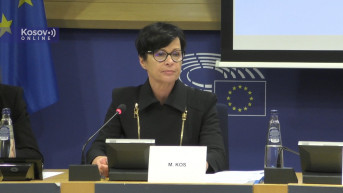
European Commissioner for Enlargement Marta Kos said today, while presenting the European Commission’s progress reports on candidate countries before the European Parliament’s Committee on Foreign Affairs, that Kosovo had remained committed to its European path, while Serbia had experienced backsliding in areas related to the EU’s fundamental values, although the new government now had an opportunity for a fresh start.
Kos said that Kosovo had remained committed to its European path throughout the reporting period and that public support for European integration remained high. However, the institutional deadlock had affected the implementation of EU-related reforms.
“Kosovo has recently intensified the implementation of its Reform Agenda. The EU welcomed the election of the new president, and we hope that renewed institutional stability will enable Kosovo to make progress,” Kos said.
Turning to Serbia, the European Commissioner said that backsliding had been recorded in areas fundamental to European integration, particularly fundamental rights, freedom of expression and academic freedom, as well as public administration.
At the same time, she pointed out that Serbia was among the candidate countries with the highest level of alignment with the EU acquis and was well prepared in the areas of the single market and competitiveness.
“Serbia’s new government has an opportunity for a fresh start. It has the opportunity to turn the page, strengthen democratic institutions and fundamental rights, and take the necessary steps for Serbia to advance on its path toward EU membership,” Kos said.
Regarding North Macedonia, Kos said that the country had demonstrated its commitment to EU reforms under the Reform Agenda, but now needed to show the same determination in advancing along its European path.
“The conditions are clear: North Macedonia needs to fulfil its commitment to implement the constitutional amendments, as set out in the conclusions of the EU Council of July 18, 2022. The European Commission will continue to support North Macedonia on its path toward the EU. Our goal remains to open the first cluster as soon as the conditions are met. It is now up to North Macedonia to deliver,” Kos said.
She added that progress had meanwhile been made in technical work on the opening benchmarks for Cluster 1.
At the beginning of her address, Kos stressed that the Enlargement Report was an important instrument not only for candidate countries but also for EU Member States and the expert community, as it provided an overview of the progress achieved and the areas in which further reforms were needed.
Among the new elements of this year’s Enlargement Package, she highlighted the introduction of indicative roadmaps for the four countries that had made the greatest progress over the past year, a new model for the gradual integration of candidate countries into the EU, and a stronger focus on the link between European security and the development and stability of countries in the enlargement process.
Kos announced that in the first quarter of next year, the European Commission would launch gradual integration dialogues with candidate countries to review existing measures and explore further opportunities for closer integration with the Union.
“Enlargement is about much more than assessing reforms, benchmarks and progress. It is about the future of the European Union—whether we have the courage to complete the European project, bring our continent closer together and expand the area of peace, democracy and prosperity,” Kos said.

0 comments