
Friedman: What we did in response to the Kosovo situation was a terrible mistake

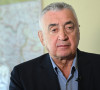
George Friedman, founder of the organization Geopolitical Futures and former president of Stratfor, one of the most influential geopolitical analysis firms, said in an interview with Kurir TV that finding a compromise solution for Kosovo is a matter for Serbia and Kosovo, noting that it is up to them to understand the issue and live with the consequences.
“It’s up to you to decide how that will happen. It’s not up to us. When we tried to solve the problem, we made terrible mistakes because we didn’t understand it,” he added.
Asked how the West and the United States can better understand Serbia’s historical and political position on the issue, Friedman stated that they actually don’t understand Serbia’s history, just as Serbia doesn’t understand the history of the United States.
“We don’t even understand ourselves. What we once did in response to the situation in Kosovo was a terrible mistake. At the time, I thought it was a dreadful mistake. What we did at the airport in Priština, when we surrounded the Russians, led to Putin — and it shouldn’t have happened. The problem with Americans is that they don’t understand Europe any better than Europeans understand Americans,” Friedman said.
He added that the U.S. and Serbia are two very different countries, and while the U.S. has made many mistakes, it also successfully protected Europe.
“It’s very important to understand that we are very different worlds. When our paths cross, that’s business. Our paths intersect in terms of technology, but we don’t have to be united militarily. We don’t have to be military competitors. I think the most important thing is to understand that we don’t understand you. You don’t understand us. And we don’t need to understand each other. It’s enough just to do business together,” Friedman said.
When asked what is realistically to be expected from Serbia’s European integration in light of the Kosovo issue, Friedman said that when he looks at the EU, he doesn’t see a very powerful force.
“Each member state tries to extract something for itself. The EU won’t solve the problem, because it doesn’t want to take risks. Doing business in this region is risky, but I think it’s very important for Serbia to understand that the EU was created for rich countries that protect their own interests. You are not a rich country, but you are a very dynamic one. You are developing quickly, like other Eastern European countries, and that should be your focus — to cooperate with Eastern European countries, and even with the United States in the field of technology, while the Germans and French continue living their quiet lives,” he told Kurir TV.
He noted that when he visits Serbia and sees the professional work being done with American companies, he realizes that the future lies there.
“The most important driver of relations with the U.S. is the business relationship Serbia has with America, and Serbia is excellent at that, which is very important. The key advice is not to get in the way of the great powers, but to truly do business with them. It’s important to understand — and Europeans have a hard time grasping this — that the State Department is not the most important part of America. Decisions are made by companies, like the tech firms present here. What matters most to America is business,” he said.
Asked whether lithium in Serbia represents an opportunity or a potential risk in relations with Western Europe and China, Friedman emphasized that Serbia will cooperate with China, with Western Europe, and with the U.S.
“These are not exclusive relationships. This is not a war. The goal of the United States is to offer the best price and the best possible economic relationship. If the Chinese offer better terms — turn to the Chinese. You don’t have to see it as a competition. In economic terms, everyone wants to be the best, and you have to make a long-term decision about who your most reliable partner is. That doesn’t have to be the United States. You can choose China or Europe, or work with all three, but there is no economic war between them. There is only healthy competition,” he explained.
When asked whether, in that competition, Serbia risks its economic security through energy diversification.
Friedman responded that energy diversification — any diversification — is necessary and that there is also a political dimension.
“Sometimes politics gets in the way. But I think Serbia’s policy of maintaining multiple relationships — with China, the EU, and the United States — is very wise. Diversification protects you from dependence on a single country. One of the problems Eastern Europe and the rest of Europe have with respect to America or Russia is that it is very important to diversify. That’s not a threat — it’s security,” Friedman stressed.
On the question of the current phase of global transition, which began with the war in Ukraine in 2022, and also in light of the latest developments on the Ukrainian battlefield and within Russian territory, Friedman stated that the most important factor is that Russia lost the war by failing to win it.
“It’s hard to imagine that the Red Army failed to take Ukraine in less than two months — and they’ve now been fighting for three years. So, we mustn’t overestimate Russian power. In the negotiations, President Putin prolonged things as much as he could. He is clearly not ready to compromise under the current terms. In that reality, he wants another shot at fighting. One of the things that happened over the weekend was a spectacular success by Ukrainian intelligence services, which attacked military, not civilian, targets and destroyed a large number of aircraft. I believe there is currently a crisis in Russia. We see that Putin hasn’t publicly addressed the citizens, and they will certainly have to reevaluate the situation, because the question is — what else have the Ukrainians managed to slip past their noses? So, we are truly at a critical point, and it’s up to the Russians to decide what they will do. This is no longer a question of negotiations, but of whether the war continues, how it will continue, and whether it can continue at all,” Friedman said.

0 comments