
Gajic: According to monetary regulations, it is not possible for Serbia to make payments in euros to Kosovo
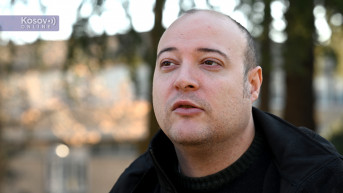
Economist Mihailo Gajic says that the Foreign Exchange Law and other monetary regulations do not allow Serbia to make payments to Kosovo in any currency other than the dinar because the territory of Kosovo and Metohija is considered part of Serbia even though it is not administered from Belgrade.
In order for Serbia to be able to make payments in euros to Serbian institutions in Kosovo, as Gajic explains, these regulations would need to be changed so that Kosovo is included in international payment transactions as an option where payments can be made in euros.
"The National Bank of Serbia would have to negotiate with the Central Bank of Kosovo to establish a mechanism for converting dinars into euros and euros into dinars when making payments between each other, and this is a political rather than an economic issue. The NBS has such payment systems with all neighboring countries. Therefore, existing solutions should be applied, but it is also necessary to change Serbia's legal framework," Gajic says for Kosovo Online.
However, he points out that previous agreements from the dialogue envisaged resolving the issue of financing Serbian institutions in Kosovo after the establishment of the Community of Serb Municipalities, but with a unilateral decision by Pristina, it was "resolved" before the formation of the CSM.
"This was done in a way that is legally questionable, but de facto, Kosovo has the right to decide what their national currency is, just as the dinar is the legal means of payment in Serbia," Gajic says.
In addition to the legal regulations in Serbia, he notes that there is also a problem in Kosovo because a large part of Serbian institutions are not registered under Kosovo's laws.
"Kosovo does not recognize them because they are not registered in accordance with their laws. In order to officially receive money into your bank account, if you are a school or health center, you must have a foundation, that is, you must be established within the administrative structure of Pristina. This step also needs to be resolved. So even if Serbia starts paying in euros, which I think will be the final result of any negotiations that will be conducted, there may still be some problems in that payment system. These problems are already arising in the private sector. For example, when individuals from, for instance, Belgrade and Pristina carry out transactions with each other, there is often a problem even with whether the bank seal used to certify the payment contains the information 'Kosovo' or 'Republic of Kosovo'," Gajic says.
As he assesses, the Serbian side is in a much worse position here because the survival of institutions in Kosovo that are linked to Serbian institutions, as well as the lives of employees in those institutions, including people receiving pensions, social assistance, and various types of supplements, directly depend on resolving this issue as soon as possible, perhaps even today.


0 comments