
General Krga: Military diplomacy tried to prevent NATO aggression, but failed
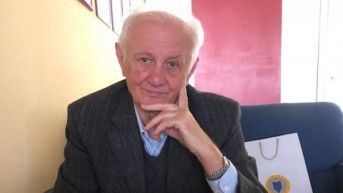
Military diplomacy tried to prevent the NATO aggression but was unable to influence events, retired General Branko Krga, the wartime chief of the Intelligence Directorate of the Yugoslav Army General Staff, told RTS.
He emphasized that the Federal Republic of Yugoslavia entered the war with NATO without formal allies, although it had sympathies within the Russian military and public. He also mentioned that satellite imagery was used in the defense against NATO, but it was already considered outdated at that time.
General Branko Krga was a member of the Supreme Command Staff that led the country's defense during the NATO aggression in 1999. This body was part of the war formation and organization of the General Staff. The war began at a command post, the location of which remains secret, with all generals and the presidents of FR Yugoslavia, Slobodan Milosevic, and Serbia, Milan Milutinovic, present.
He pointed out that the dissolution of the SFRY resulted in the new state lacking strategic documents from 1992. Strategies for all-people's defense were discarded, and no new national security or defense strategy was adopted, which, he says, was a problem.
"However, this was somewhat overcome by relying on various experiences we had from wars in other countries and crises in the territory of the former Yugoslavia, in other parts of Croatia, Bosnia, and Herzegovina. We kept all these experiences in mind when drafting our documents that were valid at the beginning of the war, for the defense of the country in the initial period of the war," General Krga explained.
He highlighted that the intelligence service had four levels of operation before and during the NATO aggression, which aligns with the theoretical frameworks of intelligence services worldwide.
"The first level was to provide information about past events, what had happened, from various forums, conclusions, troop movements, changes, deployment of weapons and military equipment, principles of use. We had been doing this for years through our documents, bulletins, and information. All of this was available to the most responsible people in the General Staff and the state," he emphasized.
The second level of operation was to provide real-time information about current events, enabling the state and military leadership to make decisions.
The third level of operation of the Intelligence Service of the Yugoslav Army was to provide assessments of the development of events, again to the highest military and state leadership.
"We assessed that there would be a war," the wartime chief of the Intelligence Directorate pointed out.
Based on the assessment that there would be a war, the Yugoslav Army relocated people and equipment from barracks and other military facilities and moved units to wartime locations. As a result, NATO aviation struck empty military facilities starting March 24.
Krga notes that at the fourth level of operation, which was to influence events, the military intelligence service was not successful.
"We gave instructions to our military attachés around the world to act in that sense, to explain that there was no need for any armed conflict, that all problems could be solved peacefully," said the general.
He added that the military intelligence service was most active during the stay of the OSCE Verification Mission, led by William Walker, and its attempts to blame the Yugoslav side for incidents in Kosovo.
He notes that the Yugoslav Army only responded to attacks on its units during the verifiers' stay.
In March 1999, it was too late
"For example, I had a conversation with the American military attaché and offered him to convincingly verify every accusation on the ground. To check whether it happened or not. And he said it was a good idea. He left, that was around March 10, 1999. He went and came back two or three days later, saying, it was assessed, probably in America or in Brussels, that the idea was good, but it was too late. That is, it was too late, they already had all the mechanisms in place," General Krga recalled.
He added that he had contact with the German ambassador at the General Staff, Von Gruber.
"I tried to explain to him that we have various, historically bad experiences with Germany. And that now was an opportunity for Germany to act to prevent the war, to somehow, let's say, overcome that historical misunderstanding with the Germans. He also said it was too late," Krga recounted.
From other contacts with foreign representatives, he highlighted a meeting with the Japanese military attaché.
"An interesting contact was with the Japanese military envoy. He came to me a few days earlier and was pleadingly conveying his own, probably also his superiors' opinion and suggestions that we should definitely avoid conflict with America. If we could possibly avoid conflict, he probably had their World War II experience and what happened to them in mind," Krga pointed out.
Particularly interesting was the way the military intelligence service collected information, and some methods were first revealed in an interview for the show "Dozvolite."
"The Intelligence Directorate and service is a system or subsystem within the defense system that has numerous elements. It includes military diplomacy, troop reconnaissance from the army, air force, navy, electronic reconnaissance, satellite reconnaissance, cryptanalysis. We had all this engaged significantly earlier and it was functional," the general explained.
He says that there were intelligence centers in the country and abroad, or agent operations, and it was a system that was very actively working, but he did not want to reveal more details on that topic.
He reminded that based on the information from the intelligence service, in addition to military units, the highest state and military leaders were relocated.
"Let me remind you that we met the beginning of the war, as I have already said, when this dispersion had already been done, but also everyone else, including the General Staff, at their places, including the presidents. Two were at the command post, the President of FR Yugoslavia and the President of Serbia. The President of Montenegro was not at that command post," the wartime chief of the Intelligence Directorate stated, but did not want to reveal the location or locations of the command post.
Satellites and drones
However, he disclosed that satellite reconnaissance was used by the military intelligence service since the time of the SFRJ and that it was by current standards a very outdated method of gathering information.
"That is, a satellite is leased, satellite images from some country that has satellites and they orbit, as they orbit around the Earth, they record certain bands and those informations are delivered to us. Then our people in the Center for Satellite Reconnaissance perform an analysis of it, whether there have been some changes in terms of the arrangement of units, facilities, infrastructure. For current conditions, this is an outdated method, especially when there are these drones, unmanned aerial vehicles," Krga explained.
He did not mention which countries sent us satellite images.
"We concluded already during the war it was obvious, and after the war that it was inadequate, that it did not provide the quick responses that the situation required," Krga emphasized.
He added that by the early 90s, Yugoslavia had a drone with a high completion percentage at the Military Technical Institute.
"We lacked some electronic equipment. However, when sanctions were already introduced, it was difficult to acquire and we insisted on efforts to go in that direction, to develop these drones. However, we did not find enough understanding," said Krga.
Seeking Allies
Branko Krga, at the end of and after the war in Bosnia, was the head of the Intelligence Directorate and from that position, along with several generals, proposed after the Dayton Peace Agreement to define a National Security Strategy and to include a stance on alliances as one of its elements.
"And we did not find understanding until 1999. I even have some papers, where it is seen how we tried. We tried even after, even after October 5, and it was not sufficiently understood at the state level. So we entered the war without allies. Without a formal ally," the former wartime chief of the Intelligence Directorate pointed out.
He explained that despite sanctions, contacts were maintained with various countries in the region, with Russia, China, and even with Western countries. But still, the war was met without allies.
"Of course, there was a lot of reaction, in the public it was presented the reaction of these foreign countries that opposed the war. Among the most active in this sense was Russia. Its army, its media, some people from politics, scientists, and so on, pointed out the harmfulness of such measures that were taken against us, but these were not allied relations, that is, based on some agreement where it would be exactly known who does what in terms of help when such a situation arises," Krga explained.
He emphasizes that this is a warning for the current times. As he says, it has shown that an ally is not sought when trouble arises, but that it should be nurtured continuously.
In the intelligence war, units for electronic reconnaissance and counter-electronic actions, which dealt with eavesdropping and electronic disruption of the enemy, played a very important role.
"Of course, they were technically inferior compared to that aggressor, but an interesting assessment was made by an American general, McMaster, who was Trump's national security advisor. In one of his statements, he pointed out that we, despite being technically inferior, essentially outsmarted NATO and concluded that the NATO intervention, as he assessed, was unsuccessful," Krga emphasized.
On trust in the military and state leadership
He also said he had confidence in the then military and state leadership. He believes everyone tried to do the best they could, especially the generals who made up the military leadership. Particularly since generals on the way to the highest ranks went through numerous filters.
Regarding the state leadership, Krga emphasizes: "We from the army, how to say, related to them in a correct way. They were elected presidents and we respected that circumstance that someone is president and we delivered information. When the change of power occurred on October 5, we again continued cooperation with others, those who were at the head of the state, in the same measure."
He adds that everyone can find some fault, and that more could have been done and he includes generals in that as well.
"It would have been best if we could have repelled all the NATO forces' attacks. If we had shot down 20-30 planes on the first day, the war would have unfolded differently. Thus, the issue of trust and mistrust, especially when a situation like war arises, I think it's somewhat harmful to raise it because it distracts attention and disperses potentials that should all be united in the function of defending the country," the general believes.
Ahtisaari, Chernomyrdin, and Kumanovo
Branko Krga was present, along with General Ojdanic (then Chief of the General Staff of the Yugoslav Army) and General Kovacevic, when Martti Ahtisaari and Viktor Chernomyrdin brought a document on June 2 that was intended to end the war.
"The situation was very difficult, all our representatives, politicians, and President Milosevic, President Milutinovic, and Minister Zika Jovanovic, so everyone reacted that it was unfavorable for us, that document that was brought, that it was unfavorable," Krga conveys.
Then Ahtisaari left, but Viktor Chernomyrdin stayed with the Yugoslav delegation along with several Russian generals.
"Then President Milosevic had a more detailed discussion with Chernomyrdin about it. He asked him, since the document was unfavorable for us, whether Russia could help us defend ourselves and resist NATO aggression. Chernomyrdin said they would not help us, that they could not help us. And then the president asked him, Milosevic, whether they would help us get a good resolution in the Security Council, concerning the end of the war. He said – 'we will help you'," Krga recalls.
However, he says it later turned out that they did not give any instruction to their representative.
"At that time, Sergey Lavrov was the Russian ambassador to the United Nations, they did not give him the instruction on how to support us in that sense," the general highlighted.
He also explained that after 25 years, at an event dedicated to the anniversary of the bombing, he learned from Russian representatives that Chernomyrdin acted contrary to the instructions he had from President Boris Yeltsin and the Russian Government, that he exclusively acted upon the orders or demands of the Americans.
The reaction of the Russian generals who were part of the delegation with Viktor Chernomyrdin was also interesting.
"Russian generals were strongly against such actions by Chernomyrdin, even publicly reacted during that meeting, with General Ivashov leading that group, saying that how he represented it was unfavorable for our side," Krga recounted.
He further notes that when the military part of the Yugoslav delegation (Generals Ojdanic, Kovacevic, and Krga) left the White Palace where the negotiations were held, around midnight from June 2 to 3, they met Mira Markovic and Vojislav Seselj at the door.
"And during the night, the National Assembly of the Republic of Serbia and the Government of the Federal Republic of Yugoslavia made a decision to accept that document. Why did this happen? Probably the politicians who make decisions at that level concluded that big problems would arise in our country. Summer was coming, the EPS system was at risk, there was a threat of attacks on some chemical, food industry factories. Around 'Vinca,' there were also some insinuations. Probably they analyzed all that and concluded that the document should be accepted," the chief said.
Generals of the Yugoslav Army, on the orders of President Milosevic, first went to Kosovo on June 4, and then to what was then the FRY Macedonia to meet with KFOR representatives and negotiate the military-technical agreement.
"The army members were not the ones who made the decision whether to accept the document or not. If it historically turns out that it was good, that is the merit of the politicians. If it turns out to be bad, again it is their responsibility," Branko Krga believes.
In the end, he said the atmosphere in the military top, i.e., the Supreme Command Staff, during the negotiation of the details of the military-technical agreement and at the time of signing the document was mixed.
"On one hand, we were of course glad that there was going to be an interruption, a stopping of the war, an end to the suffering of the people and destruction of the country. On the other hand, we immediately noticed a distinctly negative element of that paper, and that was that our units and armies and police withdraw from Kosovo and Metohija. We knew, it wasn't difficult to know, that this would cause major problems for our compatriots in Kosovo and Metohija," said the wartime chief of the Intelligence Directorate of the Yugoslav Army General Staff.
He concluded that it is easy for those who criticize the actions of the time to be generals after the battle. On the other hand, if the war had continued, we would have huge casualties as we see in wars that are being fought today.


0 comments