
FEUILLETON 25 Years of NATO Bombing of Serbia (42): Epilogue - A Decisive Event at the End of the 21st Century
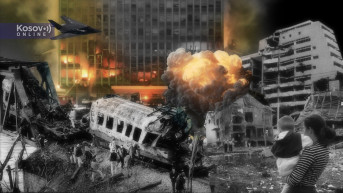
Written for Kosovo Online by Dragan Bisenic
With particular enthusiasm, American President Clinton read John Kigen's commentary confirming the victory by "air power," and he recounted it to everyone, making its way into numerous memoirs of participants in the events at that time. Advocates of air power cheered, and others, like John Kigen, hailed it as the beginning of a new era in warfare. Or was it?
Kigen wrote: "There are certain dates in the history of warfare that mark real turning points. One is November 20, 1917, when at Cambrai, the tank showed that traditional infantry, cavalry, and artillery dominance on the battlefield had been shattered. November 11, 1940, is another, when the sinking of the Italian fleet at Taranto showed that the aircraft carrier and its planes had abolished the centuries-old superiority of the battleship. Now, on the calendar, there is a new date to fix: June 3, 1999, when the capitulation of President Milosevic proved that war could only be won by air power... All this can be said without reservation, and it should be acknowledged by those who doubt, among whom I was, with generosity. Some war critics are already engaging in rude revisionism, suggesting that we did not witness a strategic revolution and that Milosevic was humiliated by the threat of deploying ground troops or the processes of traditional diplomacy, in this case – should be grateful for their skill - by the Russians and the Finns. To this it can only be said that diplomacy did not work before March 24, when the bombing began, while the deployment of a large ground force, although it was obviously an increasing threat, would still have taken weeks to carry out at the moment when Milosevic gave in. Revisionists are wrong. This was a victory by air power."
Years later, it would show that this assessment was entirely wrong, and no one attempted to win solely by air power again.
Russian President Yeltsin and American Bill Clinton met on June 20 in Berlin. It was their 17th meeting. Yeltsin handed over all copies of Russian documents on the Kennedy assassination. "If you give it to someone, let it be reliable hands." It was given to Talbott, which everyone greeted with laughter.
Yeltsin complained, "Since Kosovo started, I've had so many phone calls that I can't sleep."
Clinton thanked Yeltsin for helping to overcome "a very tough test" and proposed a discussion on ensuring broader peace in Europe, on the economic revival of Russia, and on reviving joint work on arms control and non-proliferation. Yeltsin agreed that the cooperation for Kosovo had reached the brink of collapse. Yeltsin praised mutual openness, which prevented things from getting out of control. "During our last conversation, I directly said that our friendship had reached its limits, including our cooperation in Europe and the world. Then I said, let's see if we can continue to be friends, and you said 'yes'. We decided to do that, and that's it. We agreed. Why did we do that? Because everything depends on these two powerful states. So we continued to cooperate," said the Russian President.
Clinton pointed out that cooperation on Kosovo had a positive impact worldwide, so it was the right time to revive efforts for Russia's economic revival. The American President added that after Kosovo, there was renewed interest in investing in Russia. Yeltsin confirmed that the Kosovo crisis had eased many common problems.
Both presidents accepted the doctrine formulated by American diplomat heavily involved in Bosnia and later ambassador to NATO and then Russia, Alexander Vershbow. "The Kosovo initiative to end the problem can become a model for cooperation between Russia and NATO. No joke," Vershbow wrote in a confidential memorandum.
Just a few days later, Clinton, as reported by The New York Times, admitted that he had "underestimated the Serbs."
Today, President Clinton admitted for the first time that he underestimated Serbia's ability to withstand the NATO bombing campaign. During a lengthy press conference this afternoon, Mr. Clinton stated that he believed Yugoslav President Slobodan Milosevic would capitulate to the demands of the allies and cease the Serbian attacks on Kosovo after "a few days" of bombing.
NATO and the administration were initially criticized for this misjudgment of Serbian resilience, as well as for the lack of a strategy for an extended air campaign, which ultimately lasted 78 days.
The President and his top advisers have not previously admitted their error in expecting Mr. Milosevic to capitulate after a few days of limited air strikes.
Mr. Clinton said he realized, as Mr. Milosevic withstood the initial days of bombing, that the conflict would last for many weeks until the damage compelled the Yugoslav leader to relent in his campaign of terror in Kosovo," noted this journal.
Prominent military experts Andrew Bachevich and Elliot Cohen believe that "the Kosovo war was, for a conventional military historian, a small bite. A massive imbalance of power completely tilted to one side: the U.S. defense budget was fifteen times larger than the total gross domestic product of Serbia, and this figure didn't even include the budgets of U.S. allies in NATO. However, despite the eventual capitulation of Slobodan Milosevic and the remarkable absence of combat casualties on the allied side, the unexpectedly prolonged bombing campaign, lasting two and a half months, left a bitter taste... No self-congratulation or spinning in Brussels or Washington could hide the war's discomforts and anomalies, the bickering and mistakes of its leaders, their failures and erroneous assessments," they concluded.
The American president was correct. How did this happen? The Yugoslav Army itself investigated. During the war, the Yugoslav Army Moral Directorate conducted extensive field research among its members on various aspects of the conflict with NATO. The project was approved by the Chief of the General Staff of the Yugoslav Army (in the role of Chief of the Supreme Command Staff), with the consent of the then Federal Minister of Defense, Pavle Bulatovic, after the NATO aggression against FR Yugoslavia.
The Project Council, Scientific Council of the Project, President, Vice President, Secretary of the Project Council, and Project Manager were formed.
The Project's implementation was entrusted to the Moral Directorate of the General Staff of the Yugoslav Army, and within the Directorate, the project manager was Colonel Prof. Dr. Neđo Danilovic. The Institute for Sociological and Criminological Studies and Research from Belgrade was designated as the executive coordinator for the implementation of the entire project.
Participants in the project implementation included: 1) Institute for Sociological and Criminological Studies and Research; 2) Institute for Comparative Law; 3) Institute for International Politics and Economy, 4) Institute for Strategic Research of the Ministry of Defense; 5) Sector for Legal Affairs of the Ministry of Foreign Affairs of the FRY, 6) Federal Statistical Office; 7) Republican Statistical Office; 8) Faculty of Law in Belgrade; 9) Faculty of Law in Novi Sad; 10) Faculty of Law in Kragujevac; and 11) Moral Directorate of the General Staff of the Yugoslav Army. All project participants were engaged on a voluntary basis, in addition to their regular duties and responsibilities, which made this responsible job even more complex.
The macro-scientific project "Defense of the Federal Republic of Yugoslavia against NATO Aggression" included four aspects of resistance to NATO aggression, each constituting a separate scientific project:
1. International Legal Aspect of NATO Aggression against FR Yugoslavia;
2. Armed Resistance to NATO Aggression against FR Yugoslavia;
3. Social, Moral, and Psychological Factors of Resistance to NATO Aggression; and
4. Informational Aspect of Aggression and Defense against NATO Aggression against FR Yugoslavia.
Since the project envisaged field research on the attitudes of citizens throughout the territory of the Federal Republic of Yugoslavia, the sample for this research in the Republic of Serbia and Montenegro was conducted by a group of experts from the Federal Statistical Office.
The sample was three-stage and included 4,571 adult citizens of the Republic of Serbia aged 18-92 and 794 adult citizens of the Republic of Montenegro, also aged 18-90. The results of this project are not yet available to the public.
At the regular NATO press conference on May 16, spokesperson Jamie Shea, when asked whether NATO acknowledges the jurisdiction of the International Criminal Tribunal for the former Yugoslavia (ICTY) for its actions, responded "that theoretical and practical distinctions must be made" and that
"Arbour will initiate an investigation in Kosovo because NATO has afforded it to her, and if her court, as we desire, is granted access, it is because of NATO, which is a friend of the Tribunal and arrests the accused in Bosnia - 14 of them so far," and "NATO member states have provided the necessary finances for the establishment of the Tribunal, and among its majority donors are" with "the assurance that we and the Tribunal are one on this" and Arbour "will continue to indict people from Yugoslavia, and I don't expect anyone else there, for now."
The International Criminal Tribunal for the Former Yugoslavia (ICTY) indicted Milosevic and the leadership of Serbia and the FRY for war crimes on May 22, 1999. In early June, the International Court of Justice (ICJ) declared itself incompetent regarding the provisional measure to suspend the bombing because the FRY did not inherit UN membership from the SFRY. No international court has accused the US or NATO of so-called "collateral damage," i.e., targeting civilian sites where hundreds of people of various ethnicities were killed.
The spokesman for the Committee on International Relations in the US House of Representatives said: "You are more likely to see the United Nations building collapsing brick by brick and thrown into the Atlantic than NATO pilots being tried for war crimes," and statements supporting this were also made by Jamie Shea, NATO spokesperson. American Congressman Tom Campbell and a group of colleagues sued Clinton for violating the war powers act, but the federal court in the District of Columbia, where Washington, D.C., the capital of the United States, is located, decided that there was no basis for the lawsuit and noted that the judiciary is not there to resolve political disagreements. Later, the appellate court of the same district confirmed the finding that there was no basis for the lawsuit.
The US War Powers Act that Congressman Campbell referred to when suing Clinton is the 1973 War Powers Resolution, passed by the US Congress after the Vietnam War to limit the president's ability to send US troops into combat without congressional approval. The president is allowed to send troops into combat or into areas of imminent hostilities without a declaration of war by Congress or specific authorization from Congress for 60 days and has the right to extend this period without congressional approval while the troops are in combat for an additional 30 days, making a total of 90 days. It is not specified what Congress can do if the president refuses to comply with these provisions, but it could suspend funds for those troops and thus restrict the president. Democrats did not limit Clinton, and Republicans view war as a tool of foreign policy to a greater extent than Democrats.
On September 21, 2000, in the crowded hall of the Belgrade Palace of Justice, leaders of the most powerful NATO countries were sentenced to 20 years in prison for "war crimes committed during the bombing of the Federal Republic of Yugoslavia in 1999."
Since they were tried in absentia, the defendant's chairs had nameplates with the names of US President William Clinton, Secretary of State Madeleine Albright, British Prime Minister Tony Blair, Foreign Ministers, and Defense Ministers of these three countries, as well as Javier Solana, former Secretary-General of NATO, and Wesley Clark, NATO Commander for Europe.
This was reported by world media such as the BBC and CNN, the indictments were translated and sent through diplomatic channels, but the reactions of the accused mostly remained absent. All this happened in the last week before the presidential elections on September 24, when the hitherto unquestioned leader Slobodan Milosevic was defeated by opposition candidate Vojislav Kostunica.
Belgrade prosecutor Andrija Milutinovic needed three hours to read the 183-page indictment and then the names of 890 victims of NATO bombing - 503 civilians, 240 soldiers, and 147 Serbian policemen.
In the large hall of the Palace of Justice, above the court panel, there was a framed picture of President Slobodan Milosevic. Each of the 14 accused had a duty lawyer, who were lawyers from different cities in Serbia.
On brown leather chairs, instead of the accused, nameplates were pasted with names in Cyrillic and English. The trial, which some compared to the Nuremberg trials of the Nazis and others called a farce, lasted several working days. There were lawyers, students, and retirees in the audience.
"At the beginning of the trial, which was delayed by 40 minutes, the president of the panel (Veroljub Raketic) said that the injured parties and witnesses were not invited to the hearing because almost all citizens of Serbia and the FRY could be heard, for which an 'unpredictably larger' courtroom would be required."
Dragoljub Jankovic, the then Minister of Justice, also expected some of the accused to be extradited to Yugoslav judicial authorities. "As international opinion changes about our country, I expect some of them to be extradited," he said.
It was done hastily, for the dynamics of modern trials in Serbia, so closing arguments were presented the same week. The largest courtroom in the building was full of the public, there were also foreign observers, but no representatives of the political leadership of the FRY.
A court guard stood next to the defenders of the accused, probably to prevent any incidents, wrote the then Glas javnosti. The defenders requested acquittal for all clients except for Clinton, whose lawyer pointed out mitigating circumstances.
"Mr. Clinton comes from an incomplete family, he lived with a stepfather, and this probably left a mark on his overall behavior," said his lawyer, Tomislav Vojnovic.
They were convicted of "incitement to aggressive war, war crimes against the civilian population, use of prohibited means of combat, attempted murder of representatives of the highest state organs, as well as for violating the country's territorial sovereignty," as stated in the judgment.
When the convicting judgments were read, applause broke out in the courtroom, especially when the name of the convicted Clinton was read, reported the journalists of "Glas javnosti."
President of the court panel Veroljub Raketic said that an arrest warrant had already been issued against the accused, that they had been remanded in custody, and that their sentence would be calculated from the day they were arrested. In a brief explanation of the judgment, the president of the court panel said that the accused, by aggression against the FRY, violated the UN Charter and that they were the most responsible in NATO at that time.
"The accused were afraid to come to court or were afraid to face the truth and their own conscience," Raketic said, adding that the judgments and detention orders would be sent to the accused.
District Public Prosecutor Andrija Milutinovic emphasized that the punishment "was expected," but that "the most innocent among them deserve much greater punishment."
Who were all convicted and what functions did they hold then?
William Clinton, US President
Madeleine Albright, US Secretary of State
William Cohen, US Secretary of Defense
Tony Blair, British Prime Minister
Robin Cook, British Foreign Minister
George Robertson, British Defense Minister
Jacques Chirac, President of France
Hubert Védrine, French Foreign Minister
Alain Richard, French Defense Minister
Gerhard Schröder, Chancellor of Germany
Joseph Fischer, German Foreign Minister
Rudolf Scharping, German Defense Minister
Javier Solana, former NATO Secretary-General
Wesley Clark, NATO Commander for Europe.
Defender of Jacques Chirac, Kragujevac lawyer Slavisa Mrdakovic, led the team of "French defenders" during the trial.
"Unfortunately, that's our tragedy, but I'm proud of how the court handled the evidence and the entire process, how it was conducted, and how they let the lawyers, led by me, work freely on the defense," Mrdakovic said.
He reminds that the trial took place just a year after the bombing, at a time when the authority of Slobodan Milosevic was severely shaken.
He is convinced that the authorities of the then government or state security were monitoring the work of the lawyers, but that they "let them work."
Mrdakovic says he prepared the case by frequently visiting the French embassy, but no one prevented him from doing so.
"What would have happened if they had banned us? They would either have killed us or imprisoned us, and they could have come to exert pressure. I guarantee that no lawyer was under pressure.
"When we requested an acquittal, it was a bombshell for the whole world, and we won at the Supreme Court to have the verdict overturned," the lawyer said.
Studying the case, Mrdakovic says, he and his colleagues came to the common conclusion that there is no evidence of criminal proceedings against any statesman or official, except "against Clinton."
Although comments during the trial suggested it was a staged process, Mrdakovic insists it wasn't so.
"That was during Milosevic's time when he was most vulnerable, lawyers demanded that the procedure be strictly conducted according to the law, and that's how it was done, and they sought acquittals for everyone except for Clinton.
"(...) If it had been a farce, we would have kept quiet or asked for small penalties, but as lawyers, we opposed it and appealed the verdicts," Mrdakovic said.
He also adds that no one ever objected to the evidence collected and the "three volumes of documentation."
Verdict - a war diary
A professional member of the panel of the District Court that issued the guilty verdict was Goran Petronijevic.
Then a judge, now a lawyer, Petronijevic says the procedure was "a bit unusual because it was tried in absentia, but the procedural conditions were met to hold it."
"Invitations were sent through embassies and foreign ministries of the accused countries, they refused to accept, but that could be considered as served, and conditions for a trial in absentia were met.
"The verdict itself is a war diary, and that's its greatest value, everything else proved to be relative, including the sentence," Petronijevic said.
Preparation for the trial lasted for months, and more than 30 people worked in the prosecution and courts' team to systematize the material and "tons of material," he adds.
There were transcripts, video recordings, photographs, and thousands of pages of documentation.
"In that verdict, every day of the war is listed, what happened, what was targeted, who was killed or injured among civilians and soldiers and police, which civilian and military objects were destroyed.
"It's the diary of those 78 days with all the evidence, investigation reports, expert testimonies, ballistic, and others," Petronijevic said.
He particularly emphasizes the area of environmental pollution and the targeting of chemical plants like Petrohemija in Pancevo and oil facilities, as well as the dumping of depleted uranium, which belonged to the prohibited type of weaponry.
"At that time, Professor Cikaric spoke about how there would be an epidemic of cancerous diseases in 15 to 20 years in the area where everything was emitted, and see what has been happening in the last five years," Petronijevic said.
Representatives of NATO confirmed in the United Nations that depleted uranium was used during the war in Kosovo.
Since one of the criminal offenses fell within the jurisdiction of the military court, according to the laws at the time, it should have been tried in a military, not a civilian court.
"That's why it wasn't a big problem to annul that decision because it was an incompetent court," says Dragomir Milojevic, a former judge of the Supreme Court, who on June 19, 2001, overturned the verdict and returned the case to the trial court to decide.
The next year, the prosecutor dropped the charges.
"The case against William Clinton was discontinued on September 12, 2001, and against all others on September 15, 2001, by the decision of the District Court in Belgrade, after the competent prosecutor's office dropped further criminal prosecution, i.e., charges," the Higher Public Prosecutor's Office in Belgrade announced.
Conclusion
On the occasion of the 25th anniversary, we dealt extensively with the NATO attack on FR Yugoslavia, but it still seems to us insufficient, considering its importance and the consequences that undoubtedly make it "the most important development in international relations at the end of the 20th century," as it was written and said not many places. The NATO attack on FR Yugoslavia had a huge impact on all military actions of the United States and NATO in the 21st century, but also on today's and undoubtedly future events. The events in Kosovo, it can be freely said, decisively affect the shaping of the 21st century.
(End)


0 comments