
FEUILLETON 25 years of NATO bombing of Serbia (41): Nerve game at Slatina airport - how Jackson refused Clark's order

Writes for Kosovo Online: Dragan Bisenic
From the words of General Ivashov, it is evident that the General Staff was either not informed about the troop movements or opposed it. This situation is unprecedented for the armed forces. No combat operation is conducted outside the General Staff. It turns out that the military operation was led by the head of the department of international military cooperation? Actually, his duty is to send the minister on foreign business trips and receive foreign colleagues, to cooperate with the military sectors of other countries. But General Ivashov did not stop there.
The Defense Minister, Marshal Sergeyev, was neither heard nor seen. He made sure not to speak on these topics. He is much more cautious than his predecessors—Pavel Grachev and Igor Rodionov. Instead of Marshal Sergeyev, who was not accustomed to publicity, it was Lieutenant General Ivashov who spoke. He became a kind of press secretary and chief advisor to the minister, stunning the public with the sharpness of his language. Ivashov called NATO war criminals.
It might seem that this is General Ivashov's personal viewpoint. But the intelligent Marshal Sergeyev thinks differently. However, such an assumption would be naive. In the military, without direct instructions from the authorities, not a word would be said. And the marshal had plenty of opportunities to correct his subordinate. Foreign Minister Ivanov has already insisted that the military should not hold separate press conferences on NATO and Kosovo topics. But he achieved nothing. General Ivashov said what the Defense Minister had instructed him to say.
After Pavel Grachev with his jokes and the nervous Igor Rodionov, who became interested in public speaking, Sergeyev left a pleasant impression. Marshal Sergeyev took into account the sad experience of his predecessor. Rodionov stated that the army was in a catastrophic situation and sought funding that was not available. Sergeyev reiterated that with money anyone can do the job, but you need to be able to do it without money.
His predecessor Igor Rodionov, when he turned sixty, had to remove his epaulets and change into civilian clothes. An exception was made for Sergeyev. He kept his uniform and was even promoted to marshal, something Grachev did not receive. Marshal Sergeyev is called a military intellectual. Even jokingly – it was said that he belonged to the Prussian military school, so he was a clean, neat person – without emotions and ambitions. His team was also praised, holding key positions in the Ministry of Defense and the General Staff: they were missile officers, trained technicians who spoke little and worked a lot.
For them, Lieutenant General Ivashov spoke. He said what they thought. It turns out that the leaders of the Ministry of Defense and the General Staff believed that NATO – which consists of 19 states of Europe and America – are war criminals, and regretted that they were not given the opportunity to provide military assistance to Yugoslavia, to enter into direct military confrontation with nineteen Western countries.
That night, Lieutenant General Ivashov directly issued orders to Major General Zavarzin, the Russian representative at NATO headquarters.
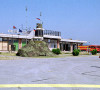
"Under cover of darkness," Chernomyrdin recalled, “a battalion of paratroopers withdrew from their positions and crossed the Bosnian-Yugoslav border. It literally sped through the territory of Yugoslavia to Kosovo and took positions near the most important strategic object – Slatina Airport near Pristina, causing confusion and surprise on the NATO side. Surprise - because the transfer was carried out at lightning speed, astonishment - because the issue of transferring the brigade was not touched upon in the negotiations."
General Wesley Clark, the supreme commander of NATO in Europe, observed the movement of Russian troops:
"My staff suggested that the Russians intended to take the airport in Pristina and wait for reinforcements there. I ordered to find out what was happening. I didn't want our troops to encounter a Russian battalion in Pristina and ask the Russians for permission to use the airport.
The danger was that if the Russians arrived first, they would demand a special sector in the north. That would lead to the division of Kosovo. They said that it was Milosevic who wanted to keep the north of Kosovo, where they have a majority, for the Serbs."
In Moscow, Deputy Secretary of State Strobe Talbott tried to understand what was happening. Foreign Minister Ivanov took him to the Ministry of Defense. Here, Talbott asked Marshal Sergeyev why Russian paratroopers wanted to enter Kosovo first, before NATO troops?
"Defense Minister Sergeyev," Strobe Talbott recorded his observations, "was furious with the whole world – not just with NATO bombers, but also with his officers, especially Ivashov and General Anatoly Kvashnin. I suspected that the generals had prepared an unpleasant surprise for Sergey, - or they presented a version of events in which he did not believe. Several times Ivashov and Kvashnin whispered to Sergeyev or passed notes, offering to withdraw to his office for the next meeting."
Around two in the morning, CNN reported that Russian troops had reached Belgrade and were heading south, and Serbs in Pristina had taken to the streets preparing to welcome them. Sergeyev obviously felt very uncomfortable, and he replied that the Russian unit would stop at the Kosovo border and would not enter the province unilaterally. At about four in the morning, CNN reported that Russian troops had entered Pristina airport. Sergeyev began to deny it, but his supporters whispered something to him and he again requested a break. This time there was no one around for about an hour. It seemed that there was chaos down the corridor; I heard a crash and the sound of objects being thrown against the wall."
General Ivashov:
"The atmosphere in Sergeyev's office was certainly not idyllic, but it was not as Talbot describes in his memoirs. No furniture was broken, but the atmosphere was tense and work-oriented. Ivanov was the most frightened, fearful of the potential for military conflict with NATO members. He insisted: the battalion could not be brought in, let's return it, hold it back. From interviews and remarks made by Sergeyev, I saw that the marshal was afraid of unprovoked fire on our contingent.
Based on intelligence data and NATO's decision-making practices, they claimed that the Americans would not strike without a NATO Council decision..."
However, General Ivashov was not confused by the possibility of an armed conflict with American troops:
"There was another option, a backup: to fly to Belgrade and, in case of a conflict with NATO, to conduct swift negotiations on jointly opposing threats to our peacekeepers. The Yugoslav Army would have gladly avenged the aggressors for the victims and the tarnished honor, even in a fraternal alliance with the Russians. This argument became decisive."
But the Chief of the General Staff, Anatoly Kvashnin, did not intend to start a war against NATO over disagreements about Kosovo. This follows from General Ivashov's words:
"General Zavarzin reported on his mobile phone: he had just received an order from the Chief of the General Staff, Kvashnin, to redirect the battalion in the opposite direction (at that time, the column had already crossed the border and was moving across Kosovo territory, however, only a few present in the defense minister's office knew this) 'I had to remind Zavarzin that the decision to send the battalion was made by the Supreme Commander-in-Chief – the President of Russia, and the order was given by the defense minister. This order is mandatory. Thus, no deviations and stopping – only forward.'"
The Chief of the General Staff, by official duty, is the first deputy defense minister. Conducting a military operation without his knowledge is unprecedented. But Kvashnin's order was not executed, and what's worse, he was deceived. The Chief of the General Staff had no idea that the paratroopers had already entered Kosovo.
General Ivashov:
"To protect General Zavarzin from new orders not authorized by the defense minister, I suggested he turn off his mobile phone for a while. Then, however, came another attempt by Kvashnin – through the brigade headquarters (the command and a staff vehicle with its communication equipment were in the convoy) – to transmit the order to stop the battalion. Viktor Mikhailovich, remembering our conversation, acted clearly and firmly, taking responsibility for the execution of the assigned task."
The scenario that unfolds is dramatic. Receiving only verbal orders from Moscow, the generals were prepared to use their weapons and start a small war with the United States.
Lieutenant General Nikolai Staskov, Chief of the General Staff of the Airborne Forces:
"All combat orders are only written. I did not receive a written order. I would have found a way not to give a written order. But in Bosnia, my people were subordinate. The division commander asked: will there be an order to move the battalion to Pristina?
'I will not fail you,' I said, and sent him the order in code.
First preliminary, then combat. And only at night, when the General Staff came to conduct an inquiry, did I realize the deception I had fallen into. No one had given me written orders. And the scandal had already flared up. I reached the airport, then came the command: 'Stop. Return.'
It seems that only Lieutenant General Ivashov was satisfied.
"In Sergeyev’s office," he recalls, "the situation apparently became more balanced: according to Kvashnin's report, the battalion was moving in the opposite direction, and Foreign Minister Ivanov calmed down. Suddenly, Lieutenant General Mazurkevich entered the office and said that CNN was broadcasting live the entry of the Russian battalion into Pristina.
For Ivanov, it was a bolt from the blue. He relied on Kvashnin's assurances (the Chief of the General Staff himself was convinced that his command to return the battalion had reached the executors and was effective), and then... Ivanov harbored resentment in his heart: 'They say, as soon as you get in touch with you, the army, you're sure to get into trouble. I went out to the Americans and tried to explain that a technical mistake had been made, which would be corrected immediately,' said a frustrated Ivanov, who had lost his usual composure."
Strobe Talbott:
"Ivanov took me to the next room, where there was a heavy, greasy smell of half-eaten pizzas and hot dogs that had been delivered a few hours earlier.
'I must regretfully inform you,' Ivanov said, 'that a column of Russian troops accidentally crossed the border and entered Kosovo.' They have been ordered to leave the province within two hours. The Defense Minister and I regret this development of events..."
Ivanov made an official statement and read it live on CNN.
And events unfolded as follows.
On Saturday, June 12, at half-past six, NATO forces crossed the border and entered Kosovo from Macedonia. By the end of the day, when they reached Pristina, the Russian battalion had already settled at Slatina Airport and, according to regulations, had taken up perimeter defense... in other words, prepared for combat actions.
"The next day when I spoke with Ivanov," recalls Madeleine Albright, "he said there had been a 'misunderstanding,' we misunderstood him about the withdrawal of Russian soldiers. The Russians will stay at the Pristina airport, and if NATO deploys its forces in the region before an agreement on Russia's role is reached, more Russian troops will be brought in to occupy the northern part of Kosovo. I thought: 'I'm either dreaming, or this is the worst movie I've ever seen. In just one day we've gone from celebrating a victory to a ridiculous repeat of the Cold War.'
I was concerned because Ivanov no longer knew what was happening in his own government. Clearly, there was some kind of disconnect between the civil and military authorities, although no one could be sure what Yeltsin might have ordered," Albright noted.
Lieutenant General Nikolai Staskov:
The most interesting was in the morning. The Foreign Minister is silent, so are the other officials. From the General Staff comes the order - stop, return the column. Ignatov comes to me again - What should I do? With my decision, I give him the command to hold fast in Pristina. The air-landing staff 'The General Staff commission was already on its way to find out why the order was not being executed. But then Boris Nikolayevich wakes up, and he will like everything. In short, we won.'
It all depended on who would report to the president first.
General Ivashov:
"At eleven in the morning, Defense Minister Sergeyev reported to the president of the country. After the minister's report, there was silence in the room. The pause was broken by a phrase spoken in Yeltsin’s well-known intonation:
'Well, finally I’ve given them a good smack on the nose...'
Here the president named some NATO country leaders. Immediately from the room came the obedient:
'You, Boris Nikolayevich, didn’t just smack them - you hit them in the face.'
Yeltsin got up and embraced Sergeyev... The next day, Yeltsin signed a decree awarding Zavarzin the next military rank – lieutenant general."
The operation in Pristina was rated as a great military-political success. The Russian army was triumphant. The night march, from their perspective, elevated Russia's prestige and secured it a safer position at the negotiation table. President Yeltsin was as happy as a child. One of his predecessors in the Kremlin had said in such cases: "We've put a hedgehog in their pants.
"A special impression," Chernomyrdin wrote, "was made by the forced march of Russian paratroopers on the Serbian population of Kosovo, who were ready to leave the territory of the region under the pressure of militant Albanian nationalists. The column arriving from Bosnia was greeted with flowers, flags, and fireworks from all kinds of weapons...
The airport near the capital of Kosovo was the only one not destroyed by military action and could still receive military transport planes. To control it means, in principle, to control the situation as a whole. For carrying out the action, a number of our military personnel received awards, commendations, and extraordinary military ranks. I was glad and proud of our army...", Chernomyrdin recorded.
The decision to transfer paratroopers to Kosovo is a political decision! - accepted by the military, not the politicians. The Security Council did not meet, the Government did not discuss it. There wasn't even a small meeting where the head of the government and the foreign minister could express their opinions. Anyone watching TV could understand from the expression on Minister Ivanov's face what he thought about this.
But difficulties immediately began.
"Russian army," Madeleine Albright recalled, "had prepared six transport planes to deliver its thousand soldiers to the region, which could reinforce the small contingent stationed at the Pristina airport. This force transfer never occurred because Russia was denied permission to cross the airspace of Hungary, Romania, and Bulgaria... This move smoothed over the emerging crisis, which could have resulted in something the Cold War never knew—direct conflict between NATO troops and Russia."
In Moscow, it seems, few had considered this. They probably firmly believed that the Americans would not lose their composure under any circumstances.
Strobe Talbott:
"The same day I found myself again in Putin's office in the Kremlin. 'It's all politics,' he said. Russia had already fallen into an 'electoral battle' and this fact complicated US-Russian relations. Both the USA and Russia have their 'hawks' and 'doves,' he said, and behind the attack on the Pristina airport were Russian hawks.
'There are people in the Russian government,' he said, including himself, who believe that the deployment was a mistake. But at least it did not lead to casualties. The damage caused overnight to US-Russian relations by Russian 'hawks' is minor compared to the damage the NATO air war with Serbia inflicted on President Yeltsin's prestige. It is important, Putin said, that 'now no one in Russia can call President Yeltsin a NATO puppet.'
The opportunity to smack NATO members on the nose brought immense joy to Russian politicians.
Viktor Chernomyrdin:
"When NATO troops entered deep into Kosovo on June 12, it was too late – Russian paratroopers had already occupied the airport, where, according to NATO's scenario, there should have been the command post of a British general. All attempts by the British and French military to somehow drive them away failed. They brought us in. Inevitable Russian paratroopers, blocking the road, did not let the British army inside.
President Clinton firmly believed that in this situation the main task was not to harm Yeltsin, so he did not want to escalate relations and restrained his military.
"General Wesley Clark was furious," recalled Bill Clinton. "I couldn't blame him for that, but I knew that, fortunately, we were not on the brink of World War III. Yeltsin was harshly criticized at home for his cooperation with us." sympathized with the Serbs. I believed that Yeltsin had simply decided to 'throw them a bone.' British commander Lieutenant General Michael Jackson managed to resolve this situation peacefully.
The night march, which they forgot to warn not only their Western partners but also their own Foreign Ministry about, meant playing by different rules. No need to agree on anything or seek compromises. He who dared, succeeded. The trouble is that others will want to play without rules. The mood of the NATO military was different. Some believed that the Russians had simply deceived them and were resentful. Others assumed that the main thing was to avoid confrontation.
Appointed as the commander of the peacekeeping forces in Kosovo, General Michael Jackson walked through Northern Ireland, where British soldiers were shot at – the toughest mission ever to befall a British officer. In addition, he served in the intelligence service and knew a little Russian.
Strobe Talbott:
"As our plane flew home, Clinton managed to contact Yeltsin and asked him to order the commander of the Russian troops, General Zavarzin, to negotiate with General Jackson and end the stalemate at the airport.
Yeltsin, it seems, had never heard of Zavarzin, even though he had awarded him another military rank that same day. Clinton had to write down Zavarzin's surname. Then Yeltsin changed his mind and said:
-'Screw them, these generals, Bill! Only you and I can solve this problem!'
He suggested they meet immediately, if necessary, on a ship or even a submarine."
Clinton didn't think it was a matter for presidents to discuss.
Madeleine Albright:
"Clinton made a counterproposal: let the defense and foreign ministers of the two countries meet and resolve the issue, which was eventually done after several days of vigorous mutual concessions. At the negotiations in Helsinki, it was agreed to deploy the Russian military contingent in Kosovo in areas controlled by Germany, France, and America. Russia was not given a separate sector for fear that it would lead to the actual division of the region."
But tensions did not ease. Everyone's nerves were stretched to the limit. It was very dangerous. The slightest reason could trigger hostilities.
Strobe Talbott:
"At some point in the middle of the night, NATO received a message that Russian Il-76 transport planes with 10,000 soldiers had taken off and were heading towards Kosovo, despite Hungary and Romania denying them passage through their airspace."
General Wesley Clark:
"General Jackson believed that the airport in Pristina was not significant and, therefore, it made no sense to be hostile towards the Russians. But I thought differently. This was a decisive moment. Will the Russians cooperate with us on equal terms or not? Will they deceive and seduce us or will they get used to negotiations and finding compromises?
I believed that the Russians would not engage in direct confrontation with us; they didn't have the strength for it. But I don't deny that there was a risk."
"Mike, I'm ordering you," said Clark. "If you refuse to execute it, you must hand over command. Do you understand this?"
"Yes, sir."
Jackson left and returned a few minutes later with a smile on his face:
"The British government has forbidden me to carry out this order."
Russian President Vladimir Putin, speaking about the events of 1999 when the combined battalion of Russian Airborne Forces seized the Pristina Airport 'Slatina' in Kosovo and Metohija, said that he was asked for his opinion on the possibility of carrying out that operation, to which he responded that if it was expedient, it should be carried out.
Putin, in an interview with TV Russia 1, when asked who and how the decision to seize the airport was made, recounted that he was then the Secretary of the Security Council and that the then Chief of the General Staff of the Russian Armed Forces, General Anatoly Kvashnin, told him that there was an idea to occupy the Slatina airport, reports Sputnik.
"When asked 'Why?' he replied that it was obvious that we would have to leave from there at some point, but we would have something to negotiate with," Putin said. He added that he knew that Kvashnin did not dare to coordinate it with senior officials, including the Ministry of Defense of Russia, but it was done.
A post-war study by the RAND Corporation identified five reasons behind Milosevic's abrupt decision to accept proposals to end the conflict. Firstly, his desire for coercive influence over NATO was never realized. He believed that civilian casualties from NATO bombings, along with increasing losses of allies, would weaken public support for further NATO engagement. Of course, instead, his policy of ethnic cleansing only strengthened allied resolve; moreover, NATO suffered an unprecedented zero combat fatalities. Furthermore, Milosevic assumed that Russia would continue to support him, but that too was a mistaken assumption. Boris Yeltsin believed that prolonged conflict in the Balkans would only economically harm Russia and thus was committed to a quick end to the conflict.
Secondly, the prolonged bombing campaign exhausted the Serbian population. After a month of airstrikes, public sentiment began to shift from patriotic support to concern for daily survival.
This change soon resulted in public pressure to end the bombing. It also allowed an atmosphere that enabled Milosevic to compromise with NATO. Surrendering to NATO before this shift in public opinion could have cost him the presidential mandate.
Thirdly, NATO attacks on infrastructure targets that served both civilian and military functions created immense pressure within the regime for compromise. These targets included industrial plants, oil refineries, and power plants. The loss of revenue from these facilities threatened the regime's survival. The ruling elite that supported Milosevic owned many of the affected facilities; as the cost of that support dramatically increased, so did the pressure to end the war.
Fourthly, Milosevic fully understood that NATO airstrikes would continue if he refused NATO's demands. Unlimited bombing would continue to erode his support among ruling elites. To make matters worse for him, Russia fully supported the peace plan offered by NATO. Milosevic understood the harsh reality that NATO bombing would bring if it extended into winter. If he continued to defy NATO, he risked rebellion from both the wider population and ruling elites. Therefore, to remain in power, he accepted NATO's demands on June 3, 1999.
Finally, Milosevic was offered a deal that was politically acceptable and allowed him to "save face." Unlike previous offers, there was no demand for a referendum in Kosovo, meaning that the territorial integrity and sovereignty of Yugoslavia would remain intact. This was further confirmed by the United Nations Security Council. Therefore, Milosevic could claim victory because he was able to compel NATO to abandon the referendum in Kosovo.
American President Clinton recorded in his memoirs:
"Yugoslav troops left Kosovo on June 20, and two weeks later, according to data from the UN High Commissioner for Refugees, more than seven hundred and fifty thousand residents had already returned there. I felt satisfaction and relief. Slobodan Milosevic's decade-long bloody campaign, in which he exploited ethnic and religious "Contradictions for the preservation of his regime in the former Yugoslavia have ended. Burning villages and killing innocent people are history. I knew that over time, Milosevic himself would become history."
A compromise was reached regarding the status of Russian troops - based on the experience of the Russian contingent's participation in the peace operation in Bosnia. But they didn't stay there for long. In April 2003, Chief of the General Staff Anatoly Kvashnin noted:
"We no longer have strategic interests in the Balkans, and by withdrawing peacekeeping forces, we will save twenty-five million dollars annually.
The paratroopers were sent home. The story that nearly led to war between Russia and NATO is over."
0 comments